
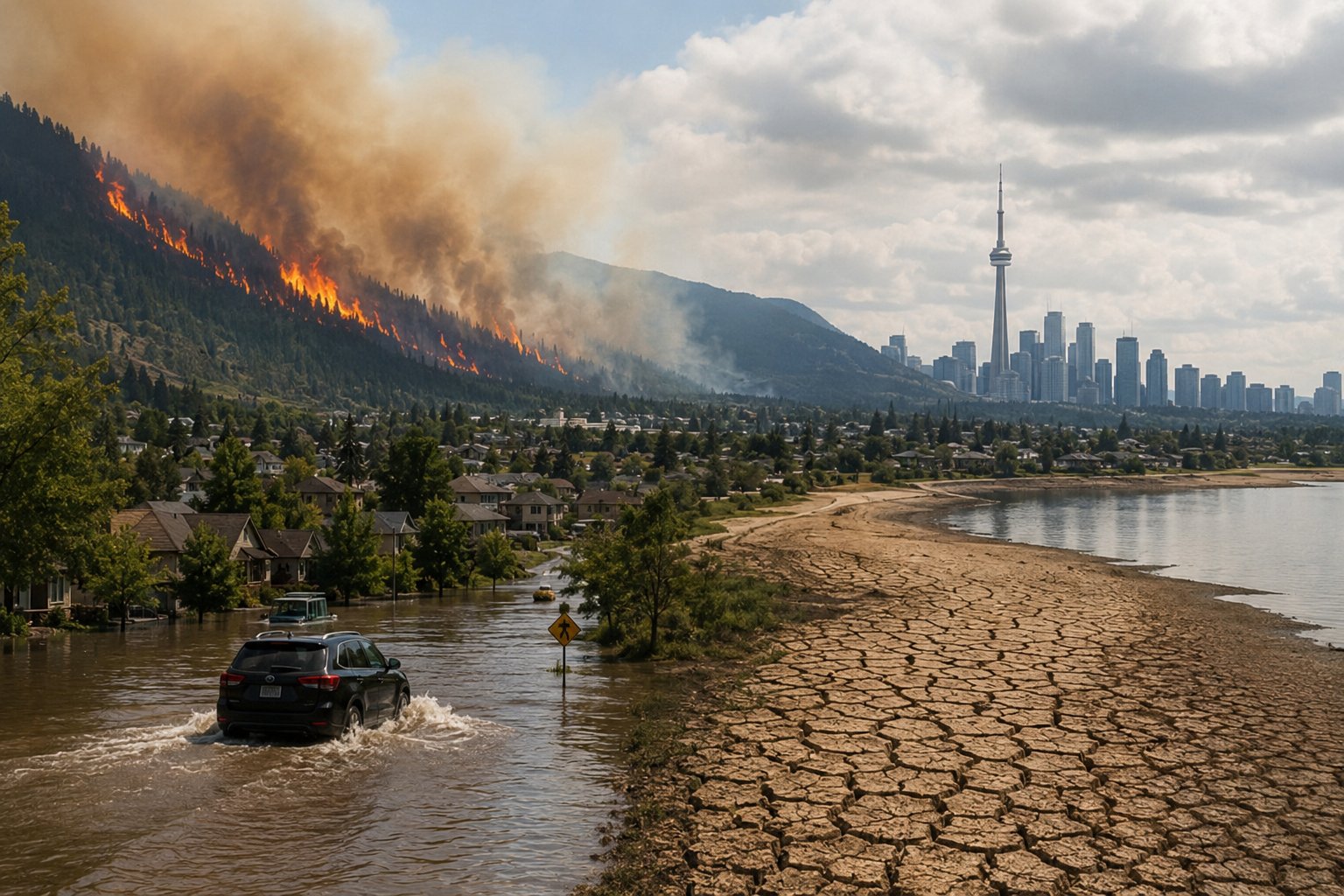
Climate change is no longer a future problem for Canadians. Rising temperatures, more intense wildfires, extreme rainfall, and prolonged heat waves are already changing daily life across the country.
What was once viewed primarily as an environmental issue is increasingly becoming an economic, health, and infrastructure challenge.
Quick Answer
Climate change is affecting Canadians through more frequent wildfires, hotter summers, extreme rainfall, flooding, droughts, rising insurance costs, health risks, food-price pressures, and damage to infrastructure. The impacts are being felt across communities, businesses, healthcare systems, and households throughout Canada.
Key Takeaways
- Climate change is contributing to more frequent and severe weather events across Canada.
- Wildfires, floods, droughts, and heat waves are creating economic and health challenges.
- Food prices and insurance costs are becoming increasingly vulnerable to climate-related disruptions.
- Infrastructure designed for historical weather patterns faces growing pressure.
- Governments, businesses, and communities are investing in adaptation and resilience measures.
- Climate change affects Canadians through cost of living, health, housing, transportation, and public services.
Extreme Weather Events Are Becoming More Common
Scientists have observed increasing risks from:
- Heat waves
- Wildfires
- Droughts
- Flooding
- Severe storms
These events can disrupt communities, damage infrastructure, and strain emergency services.
TwikUp recently examined these trends in:
- Canada's Wildfire Risk Set to Climb This Summer
- Canada's Summer 2026 Will Be Hotter Than Normal
- Canada's Wildfire Crisis Fuels Climate Tech Race
As temperatures continue to rise, experts expect weather-related risks to become a larger factor in public policy, emergency planning, and household finances.
Heat Waves Are Affecting Public Health
Higher temperatures create health risks, especially for:
- Seniors
- Young children
- Outdoor workers
- Individuals with chronic illnesses
Extreme heat can increase hospital visits and place additional pressure on healthcare systems.
Longer and more intense heat waves can also affect productivity, outdoor recreation, and workplace safety. Urban areas may be particularly vulnerable due to the "urban heat island" effect, where buildings and pavement trap heat.
Food Prices Are Becoming More Vulnerable
Climate-related disruptions increasingly affect agriculture and transportation.
Droughts, floods, and wildfires can reduce crop yields and disrupt supply chains.
TwikUp recently explored these pressures in:
Food affordability is becoming closely linked to environmental conditions. Extreme weather can reduce agricultural output, increase transportation costs, and create volatility in food markets.
Insurance Costs Are Rising
Natural disasters are becoming more expensive.
Wildfires, flooding, and severe weather events have increased claims and placed pressure on insurance providers.
As a result, homeowners and businesses may face higher premiums in the years ahead.
Insurance industry data shows that severe weather losses have reached record levels in recent years, highlighting the growing financial impact of climate-related events across Canada.
Infrastructure Faces New Challenges
Roads, power systems, water infrastructure, and transportation networks were often designed for historical climate patterns.
More frequent extreme weather events are forcing governments and businesses to invest in adaptation and resilience.
Infrastructure challenges include:
- Flood-damaged roads and bridges
- Electrical grid disruptions
- Water management pressures
- Increased maintenance costs
- Greater demand for climate-resilient construction
These investments are becoming increasingly important as communities adapt to changing conditions.
Climate Change Is Becoming an Economic Issue
Environmental risks increasingly influence:
- Productivity
- Energy markets
- Agriculture
- Supply chains
- Government spending
The effects are spreading across sectors far beyond the environment.
Businesses are increasingly evaluating climate-related risks when making investment decisions, while governments face rising costs associated with disaster response, infrastructure upgrades, and recovery efforts.
How Climate Change Is Affecting Different Parts of Canada
British Columbia
British Columbia continues to face significant wildfire risks, drought concerns, and periods of extreme heat. Forest-dependent communities and water resources remain particularly vulnerable.
Alberta
Alberta faces challenges related to drought, water availability, agricultural impacts, and wildfire activity, especially during warmer and drier seasons.
Ontario
Ontario experiences growing concerns related to urban flooding, heat waves, infrastructure stress, and severe storms affecting both urban and rural communities.
Quebec
Quebec faces flooding risks, heat-related health challenges, and increased pressure on infrastructure during extreme weather events.
Atlantic Canada
Atlantic provinces are experiencing coastal erosion, rising sea levels, stronger storms, and increased flooding risks affecting coastal communities.
Northern Canada
Northern regions are warming faster than many other parts of the world. Melting permafrost, ecosystem changes, and impacts on Indigenous communities remain major concerns.
Key Climate Change Impacts in Canada
| Impact | How It Affects Canadians |
|---|---|
| Heat Waves | Increased health risks and pressure on healthcare systems |
| Wildfires | Evacuations, poor air quality, and property damage |
| Flooding | Infrastructure damage and rising insurance claims |
| Droughts | Agricultural impacts and water shortages |
| Food Prices | Supply chain disruptions and higher costs |
| Insurance | Increased premiums and claims costs |
| Infrastructure | Higher maintenance and resilience investments |
Adaptation Is Becoming More Important
Experts increasingly emphasize the importance of adaptation alongside emissions reductions.
Communities, businesses, and governments are investing in:
- Early warning systems
- Climate-resilient infrastructure
- New technologies
- Emergency preparedness
- Flood mitigation projects
- Wildfire management strategies
These measures aim to reduce vulnerability to future shocks and improve long-term resilience.
Why Climate Change Matters to Everyday Canadians
Climate change is affecting more than temperatures.
It influences:
- Cost of living
- Food prices
- Insurance costs
- Health outcomes
- Infrastructure reliability
- Economic stability
For Canadians, the issue is becoming increasingly personal rather than abstract.
Whether through higher grocery bills, smoky summers, flood risks, or rising insurance costs, the effects are becoming more visible in everyday life.
FAQ: Climate Change in Canada
Is Canada warming faster than many parts of the world?
Yes. Scientific studies indicate that Canada is warming at roughly twice the global average.
How are wildfires connected to climate change?
Warmer and drier conditions can increase wildfire risks and lengthen fire seasons, creating larger and more intense fires.
Does climate change affect food prices?
Yes. Extreme weather can disrupt agricultural production, transportation networks, and supply chains, contributing to higher food costs.
Are insurance costs rising because of natural disasters?
Increasing losses from floods, storms, and wildfires are contributing to higher claims and insurance costs across many regions.
Why is climate change considered an economic issue?
Its effects extend beyond the environment and influence productivity, infrastructure spending, healthcare costs, food prices, and household expenses.
What are the biggest climate risks facing Canadians?
Wildfires, flooding, heat waves, droughts, severe storms, and rising infrastructure costs are among the most significant climate-related risks.
Related Perspectives
-
Why Grocery Bills Keep Rising in Canada Despite Slower Inflation
Sources
-
Environment and Climate Change Canada https://www.canada.ca/en/environment-climate-change.html
-
Natural Resources Canada https://natural-resources.canada.ca
-
Intergovernmental Panel on Climate Change (IPCC) https://www.ipcc.ch
-
World Meteorological Organization https://wmo.int
-
Insurance Bureau of Canada https://www.ibc.ca