
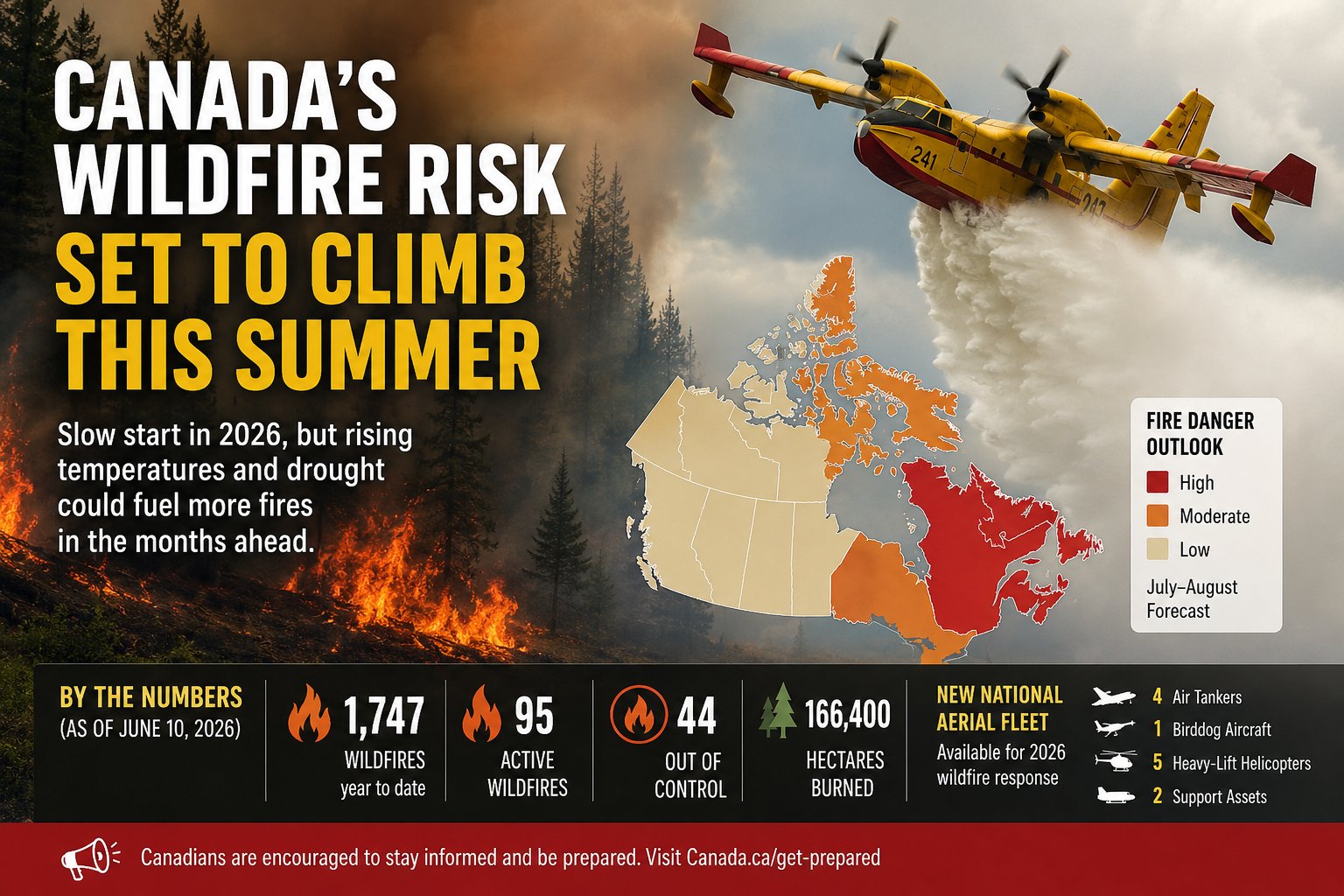
Canada's 2026 wildfire season has so far avoided the devastating pace seen during the country's worst fire years. Yet federal forecasts suggest that calm conditions may not last. As temperatures rise and vegetation dries out, wildfire activity is expected to intensify across much of the country during the heart of summer.
The contrast is striking: a relatively slow start followed by growing concern that the most dangerous period may still be ahead.
Wildfire Numbers Show a Moderate Start but Growing Risks
As of June 10, Canada has recorded 1,747 wildfires since the beginning of the year.
Current wildfire conditions include:
- 95 active wildfires nationwide
- 44 fires classified as out of control
- 166,400 hectares burned so far in 2026
While these figures remain below the levels seen during the historic wildfire seasons of 2023 and 2025, officials say emerging weather patterns could rapidly change the outlook.
Warmer-than-normal temperatures are forecast across most of Canada during the summer months, creating conditions that can accelerate fire growth and spread.
Why Fire Danger Is Expected to Increase Across Canada
Recent precipitation has helped reduce immediate fire danger in some regions, but that advantage may fade as summer progresses.
Several factors are expected to increase wildfire risk:
- Rising temperatures across much of the country
- Drying forests, grasslands, and ground vegetation
- Ongoing drought conditions in select regions
- Seasonal weather shifts that favor fire ignition and spread
Forecast models indicate that Alberta, Saskatchewan, and southern Manitoba should experience relatively low fire danger through June.
However, conditions are expected to worsen in other areas.
Particular concern remains focused on:
- Eastern Northwest Territories
- Atlantic Canada
- Regions experiencing ongoing drought conditions
Nationally, fire danger is projected to rise further during July and August as above-average temperatures become more widespread.
Federal Preparations Reflect Lessons from Previous Fire Seasons
The federal government says it remains prepared to support provinces, territories, and Indigenous communities if wildfire conditions worsen.
Canada's emergency management system follows a layered approach:
- Municipal and local authorities respond first.
- Provinces and territories provide additional support when required.
- Federal assistance can be requested if local and provincial resources become overwhelmed.
Recent investments suggest governments are preparing for another potentially demanding season.
Through Budget 2025, Canada allocated $316.7 million over five years to strengthen national wildfire response capabilities through the Canadian Interagency Forest Fire Centre (CIFFC).
That funding has already helped establish a dedicated surge fleet for the 2026 season.
New Firefighting Aircraft Fleet Adds National Response Capacity
To strengthen readiness, the CIFFC has secured a specialized aerial firefighting fleet that can be deployed wherever fire activity becomes most severe.
The national fleet includes:
| Asset Type | Quantity |
|---|---|
| Air Tankers | 4 |
| Birddog Aircraft | 1 |
| Heavy-Lift Helicopters | 5 |
| Support Assets | 2 |
These aircraft will be positioned strategically based on forecast conditions and moved as wildfire activity shifts across the country.
The objective is simple: place resources where they are needed most before fires escalate into larger emergencies.
What Canadians Should Watch in the Months Ahead
The next several weeks could determine whether 2026 remains a manageable wildfire season or develops into a more significant national challenge.
Although current wildfire totals remain below recent record years, forecasters warn that hotter weather and drying landscapes may quickly alter conditions.
Officials continue to encourage Canadians to monitor local fire danger ratings, weather alerts, evacuation notices, and emergency preparedness guidance throughout the summer.
Preparedness, they say, remains one of the most effective tools available before wildfire threats emerge.
FAQ: Brief Insights on Canada's 2026 Wildfire Season
Why is wildfire danger expected to rise this summer?
Forecasts indicate above-normal temperatures across most of Canada, combined with drying vegetation and ongoing drought conditions in some regions.
How many active wildfires are currently burning in Canada?
As of June 10, there were 95 active wildfires nationwide, including 44 classified as out of control.
What does "out of control" mean?
It means a wildfire is actively spreading and has not yet been contained within established control boundaries.
Which regions face the highest wildfire concerns right now?
The eastern Northwest Territories and parts of Atlantic Canada face elevated risk due to continuing drought conditions.
What new resources are available for wildfire response in 2026?
Canada has added a national surge fleet consisting of air tankers, helicopters, support assets, and a birddog aircraft that can be deployed based on changing wildfire conditions.