
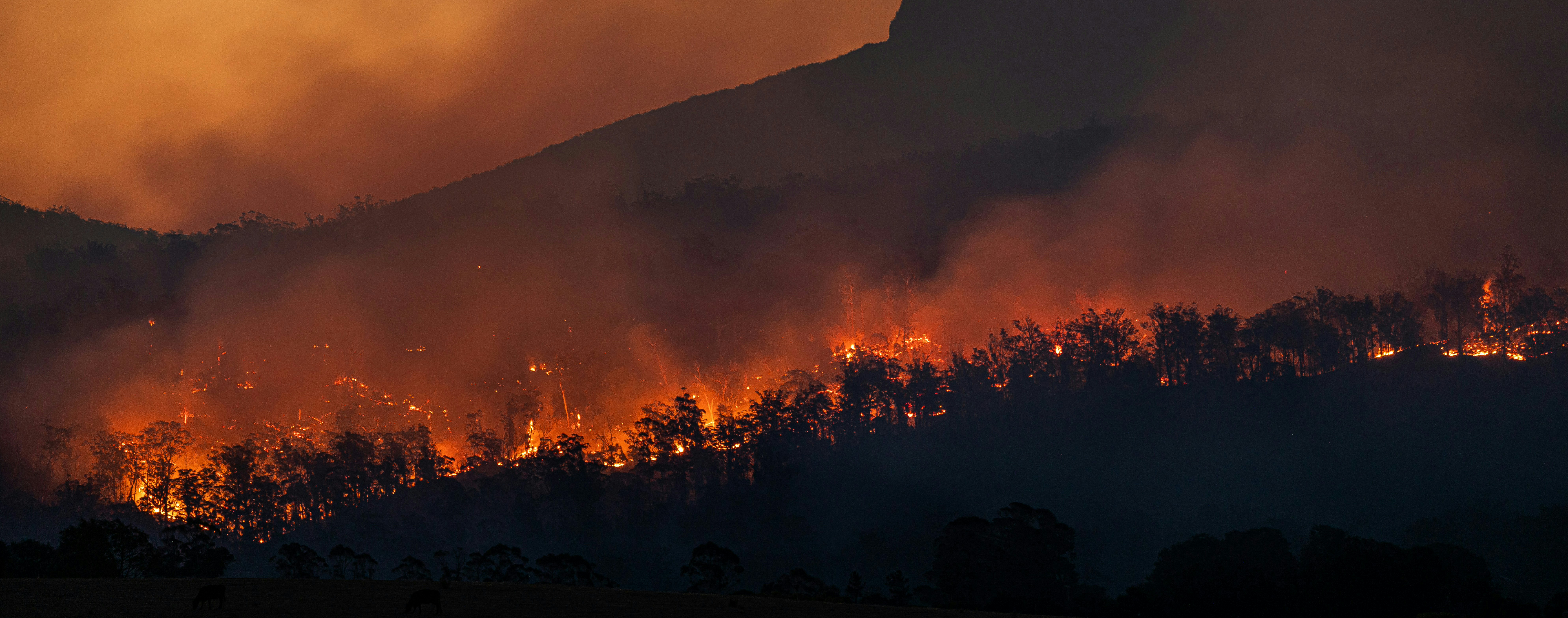
Canada’s wildfire emergency has become a technology market overnight — and the stakes are huge. Hotter seasons are producing record blazes that both accelerate climate change and expose critical infrastructure, prompting investors and governments to pour money into detection, prediction and suppression tools.
Immediate shock: fires, record heat and economic knock‑on effects
In 2025 wildfires released roughly 250 megatonnes of carbon in the first ten months, against Canada’s 2024 national emissions of 661.5 MT. Some analysts note that if Canada’s wildfire emissions were counted as a country in 2023, they would rank eighth globally. Wildfire seasons in 2023 and 2025 are the worst on record, and even urban heat anomalies—Vancouver hit 23.9°C in May, a 128‑year record—are intensifying risk.
The human and economic toll is concrete. Alberta briefly paused up to 7% of its oil production during a major blaze last year while pipelines sat perilously close to active fires. Those disruptions are pushing governments and private funds to treat wildfires as a material sector for investment.
Why money is flowing now: policy shifts and climate feedback loops
Several forces combined to accelerate capital toward wildfire solutions:
- A feedback loop: hotter summers create more intense fires, which in turn release large greenhouse emissions and weaken climate resilience.
- Visible infrastructure risk: energy and transport assets are increasingly threatened, raising the cost of inaction.
- Public pressure and government response: Ottawa raised wildfire funding by $70 million to reach $629.8 million through 2030, while some defence assets are being eyed for dual civilian wildfire uses.
At the same time, broader energy investment trends show shifting priorities: global clean energy spending is set to nearly double fossil fuel investment in 2026, with overall energy investment climbing to US$3.4 trillion. That macro appetite for climate solutions helps channel capital toward wildfire tech.
Where Canadian innovation is focused — and why it matters
Canada’s emerging wildfire sector emphasizes hard, actionable technology rather than advocacy or offset schemes. Key areas include:
- Predictive AI for ignitions and hotspots, using aerial and ground sensors.
- Lightning detection and rapid-response platforms.
- Integrated aerial monitoring and suppression systems, potentially using defence logistics for peacetime firefighting.
- Cross-border scalability: some Canadian firms already operate globally, giving exporters an edge.
Example: Vancouver’s NorthX Climate Tech has invested CA$5.5 million into wildfire tools, including a CA$2.2 million round split across three firms: Crwn.ai (AI to predict powerline ignitions), Nova (aerial-data hotspots) and Skyward Wildfire Technologies (lightning-focused detection). Nova serves about 200 jurisdictions worldwide, illustrating export potential.
Systemic implications: early market, urgent timelines
Experts warn the sector remains nascent even as risks accelerate. Natural Resources Canada policy advisor Stacey Sankey, author of the Blueprint for Wildland Fire Science in Canada (2019–2029), says the pace of change in fire severity outstrips current capacity.
However, progress is measurable. The federal government and NSERC funded a Wildland Fire Research Network at the University of Alberta, producing 68 trained wildland‑fire professionals and expanding academic programs. Community firefighter training has also increased. Still, the severity and geographic variability of fires demand rapid scaling of both human and technological resources.
What’s next: funding, deployment and contested priorities
Near‑term milestones to watch:
- Implementation of the $629.8 million wildfire funding envelope through 2030 and how funds allocate between research, frontline staffing, and tech procurement.
- Commercial pilots scaling AI detection and aerial suppression technology into operational firefighting across provinces.
- Integration debates over using defence assets for civilian aerial monitoring and suppression, including procurement timelines and legal frameworks.
- Export growth for Canadian wildfire firms already operating in hundreds of jurisdictions.
Related Perspectives
NorthX Climate Tech
Natural Resources Canada — Wildland Fire Research Network
FIA Sustainable Innovation Series