
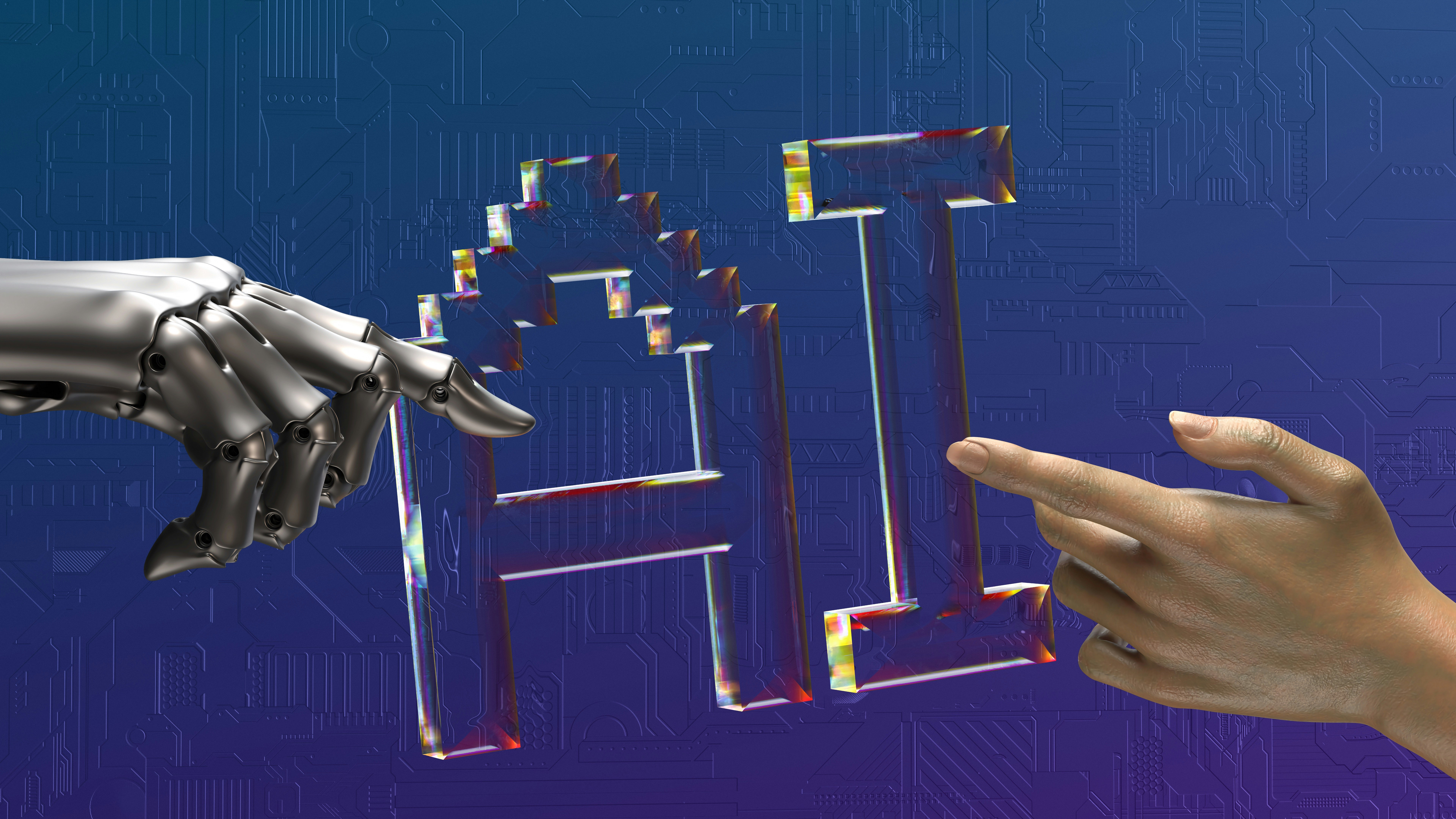
Artificial intelligence has become one of the defining issues at the 2026 G7 summit in Évian, France. Once viewed primarily as a technology topic, AI is now being discussed alongside wars, trade tensions and economic risks, reflecting how deeply the technology is influencing global power and security.
The presence of leading AI executives alongside heads of state highlights a profound shift. Governments are increasingly treating AI not simply as an innovation race but as a strategic asset that could shape economies and international relations for decades.
AI has moved from laboratories to geopolitics
Artificial intelligence is no longer confined to research centers and technology companies.
Its rapid expansion is influencing healthcare, finance, defense, manufacturing and scientific research. At the same time, governments are becoming increasingly concerned about misinformation, cybersecurity threats and the concentration of technological power.
French President Emmanuel Macron's agenda for the summit places AI among the major issues confronting advanced economies.
Executives from companies such as OpenAI, Google, Anthropic and Mistral AI are participating in discussions surrounding opportunities and risks associated with advanced AI systems.
Artificial intelligence is increasingly becoming part of a broader geopolitical competition. TwikUp previously explored this transformation in The Race for AI Is Becoming a Geopolitical Contest (https://twikup.ca/world/global-politics/the-race-for-ai-is-becoming-a-geopolitical-contest), which examined how technological leadership is becoming intertwined with national security and economic influence.
Why governments are worried about AI risks
The promise of AI is accompanied by growing concerns.
G7 countries have emphasized that advanced AI systems could expose societies to several challenges:
- Cybersecurity vulnerabilities.
- Disinformation campaigns.
- Online child safety concerns.
- Malicious use by hostile actors.
- Economic disruption caused by automation.
Officials increasingly believe that these risks cannot be addressed by individual countries acting alone.
The technology's global nature requires international cooperation.
Economic competitiveness is becoming a central concern
AI is also emerging as an economic issue.
Governments view artificial intelligence as a driver of productivity, innovation and long-term growth. Countries that lead in AI development may gain advantages across multiple sectors.
The race extends beyond software.
It involves:
- Data centers.
- Semiconductor supply chains.
- Energy infrastructure.
- Cloud computing.
- Scientific research.
As a result, AI policy is becoming intertwined with industrial policy and economic strategy.
The battle over rules and standards has already begun
Another reason AI occupies a prominent place at the summit is the growing debate over regulation.
G7 members are attempting to develop common principles for safe and trustworthy AI.
Building on the Hiroshima AI Process launched in 2023, leaders are seeking greater transparency and responsible deployment of advanced systems.
The challenge lies in balancing innovation with safeguards.
Too much regulation could slow technological progress.
Too little oversight could increase risks.
Finding that balance is becoming one of the defining policy questions of the decade.
AI is increasingly linked to national security
Artificial intelligence is also transforming the security landscape.
Governments worry about cyberattacks, information warfare and the misuse of emerging technologies by adversaries.
At the same time, AI offers opportunities to strengthen resilience and modernize critical infrastructure.
This convergence of technology and security explains why AI discussions are taking place alongside conversations about Ukraine, Iran and economic instability.
In the eyes of policymakers, technological leadership and geopolitical influence are becoming inseparable.
The prominence of AI at this year's gathering reflects a wider transformation underway inside the Group of Seven. TwikUp examined this evolution in From Growth to Geopolitics: How the G7 Is Changing (https://twikup.ca/world/global-politics/from-growth-to-geopolitics-how-the-g7-is-changing), which explored how security concerns, supply chains and strategic competition have moved to the center of the forum's agenda.
Why the G7's decisions could matter globally
Although the G7 cannot impose global rules, its decisions often influence international standards.
Agreements reached among major advanced economies frequently shape broader debates involving emerging markets and international organizations.
The summit therefore represents more than a meeting about technology.
It is an attempt to define how the world manages one of the most transformative innovations in modern history.
AI discussions are only one part of a broader shift taking place at the summit. As discussed in Why This Year's G7 Summit Is About More Than Economic Growth (https://twikup.ca/world/global-politics/why-this-years-g7-summit-is-about-more-than-economic-growth), leaders are increasingly focusing on geopolitical tensions, technological rivalry and economic resilience rather than traditional growth concerns.
FAQ: Brief Insights on AI at the G7
Why is AI being discussed at the G7 summit?
Governments increasingly view AI as an issue affecting security, economic growth and international competitiveness.
Which companies are involved?
Executives from OpenAI, Google, Anthropic and Mistral AI are participating in summit discussions.
What risks concern world leaders?
Cybersecurity, misinformation, child safety and malicious uses of AI are among the major concerns.
What is the Hiroshima AI Process?
It is a G7 initiative launched in 2023 to promote safe and trustworthy AI development.
Why does AI matter for geopolitics?
Technological leadership increasingly influences economic power and national security.
Related Perspectives
How Critical Minerals Are Becoming the New Oil
Why Cybersecurity Has Become a National Security Issue
How AI Is Reshaping the Global Economy
Sources
-
Reuters
-
Reuters
https://www.reuters.com/world/what-is-g7-whats-agenda-evian-les-bains-summit-2026-06-15/
-
G7 Digital and Technology Ministerial Declaration
-
French Ministry of Economy – G7 Numérique