
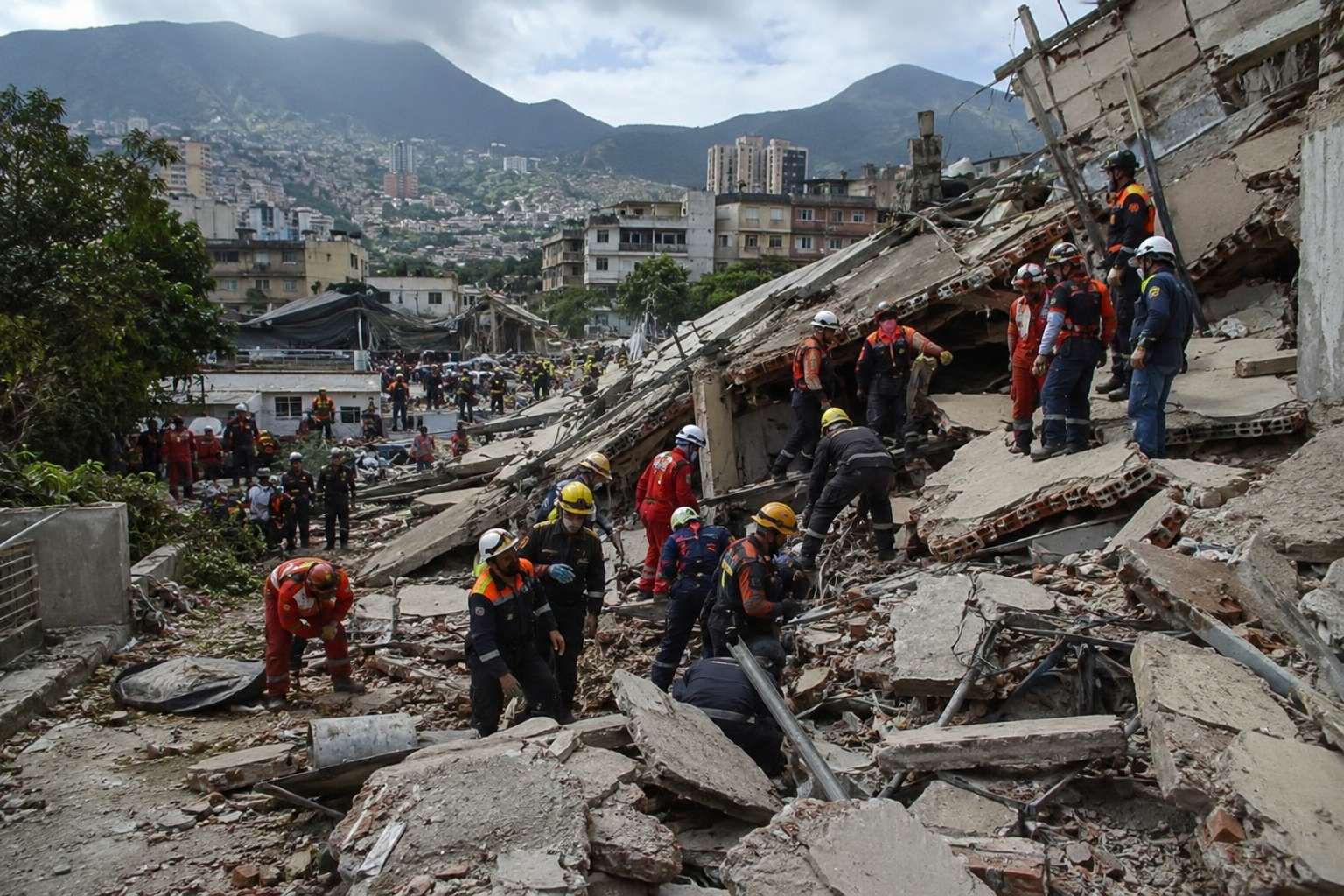
Venezuela Earthquake Disaster: Twin Quakes Kill Over 160 as Rescue Crews Race Against Time
Thousands feared trapped as one of Venezuela's strongest earthquakes in decades devastates communities near Caracas.
Quick Answer
A pair of powerful earthquakes measuring 7.2 and 7.5 struck Venezuela within seconds of each other, causing widespread destruction across Caracas and surrounding regions. Authorities have confirmed at least 164 deaths and nearly 1,000 injuries, while rescue operations continue amid fears that the toll could rise significantly.
Key Takeaways
- Two major earthquakes struck Venezuela less than one minute apart.
- Magnitudes were reported at 7.2 and 7.5.
- At least 164 people have been confirmed dead.
- More than 970 people have been injured.
- Thousands may still be trapped beneath collapsed buildings.
- Rescue teams from multiple countries are being deployed.
- Aftershocks continue to threaten damaged structures.
One of Venezuela's Deadliest Natural Disasters in Years
Venezuela is facing a humanitarian emergency after two massive earthquakes struck the country in rapid succession, causing extensive destruction across the capital Caracas and nearby coastal regions.
The first earthquake, measuring 7.2 magnitude. Less than a minute later, a second and even stronger 7.5 magnitude earthquake hit the same region.
The back-to-back tremors created devastating conditions for residents, giving people little time to react before buildings began collapsing.
As darkness fell, emergency workers searched desperately through mountains of rubble while families waited for news of missing loved ones.
What Happened?
According to early reports:
| Detail | Information |
|---|---|
| First Earthquake | Magnitude 7.2 |
| Second Earthquake | Magnitude 7.5 |
| Time Between Quakes | Less than 1 minute |
| Epicenter Region | Near Morón, Venezuela |
| Confirmed Deaths | At least 164 |
| Confirmed Injuries | At least 971 |
Seismologists note that multiple powerful earthquakes occurring within such a short timeframe can significantly increase structural damage because buildings weakened by the first quake are often unable to withstand the second.
Caracas Suffers Major Damage
The Venezuelan capital experienced severe shaking that caused:
- Residential buildings to collapse
- Ceiling failures in public facilities
- Infrastructure damage
- Power disruptions in some areas
- Transportation interruptions
Videos shared by witnesses showed scenes of panic as people rushed into the streets while debris fell from buildings.
Several apartment complexes reportedly suffered catastrophic structural failures, leaving rescue crews searching for survivors through the night.
Airport and Coastal Areas Among Hardest Hit
Authorities say some of the most severe damage occurred in coastal regions, including parts of La Guaira state.
Social media footage appeared to show:
- Collapsed ceilings
- Damaged transportation infrastructure
- Large crowds evacuating public buildings
- Emergency response teams mobilizing across affected areas
Officials warned that some remote communities remain difficult to access, raising concerns that casualty figures may continue rising as assessments continue.
International Rescue Efforts Underway
Venezuela has requested international assistance as emergency resources become stretched.
Search-and-rescue specialists, medical personnel, and humanitarian aid teams are expected to arrive from several countries.
Foreign governments have also offered support in the form of:
- Urban search-and-rescue teams
- Emergency medical supplies
- Temporary shelter equipment
- Humanitarian relief assistance
Rescue operations remain focused on locating survivors trapped beneath collapsed structures.
Why Twin Earthquakes Are Especially Dangerous
When two major earthquakes strike within seconds of one another, the impact can be significantly worse than a single event.
Key Risks Include:
- Buildings weakened by the first quake collapsing during the second
- Greater infrastructure failure
- Increased landslide risk
- More extensive transportation disruption
- Complicated rescue operations
Engineers often describe these events as particularly destructive because structures rarely have time to absorb or recover from the initial shock.
Twikup Insight
Natural disasters often reveal vulnerabilities that remain hidden during normal times.
The Venezuela earthquake tragedy highlights the importance of:
- Modern earthquake-resistant construction
- Emergency preparedness planning
- Rapid communication systems
- International disaster cooperation
While rescue efforts remain the immediate priority, experts say rebuilding could take years depending on the extent of infrastructure damage.
What Happens Next?
Authorities are expected to focus on:
- Search-and-rescue operations.
- Medical treatment for survivors.
- Temporary shelter for displaced residents.
- Structural assessments of damaged buildings.
- Restoration of critical infrastructure.
The full scale of the disaster may not be known for several days as emergency crews continue searching affected areas.
Bottom Line
The twin earthquakes that struck Venezuela have already become one of the country's most devastating natural disasters in recent years. With at least 164 confirmed deaths, hundreds injured, and many people still unaccounted for, rescue teams are racing against time to find survivors.
As aftershocks continue and damage assessments expand, officials warn that the human toll may rise further in the coming days.