
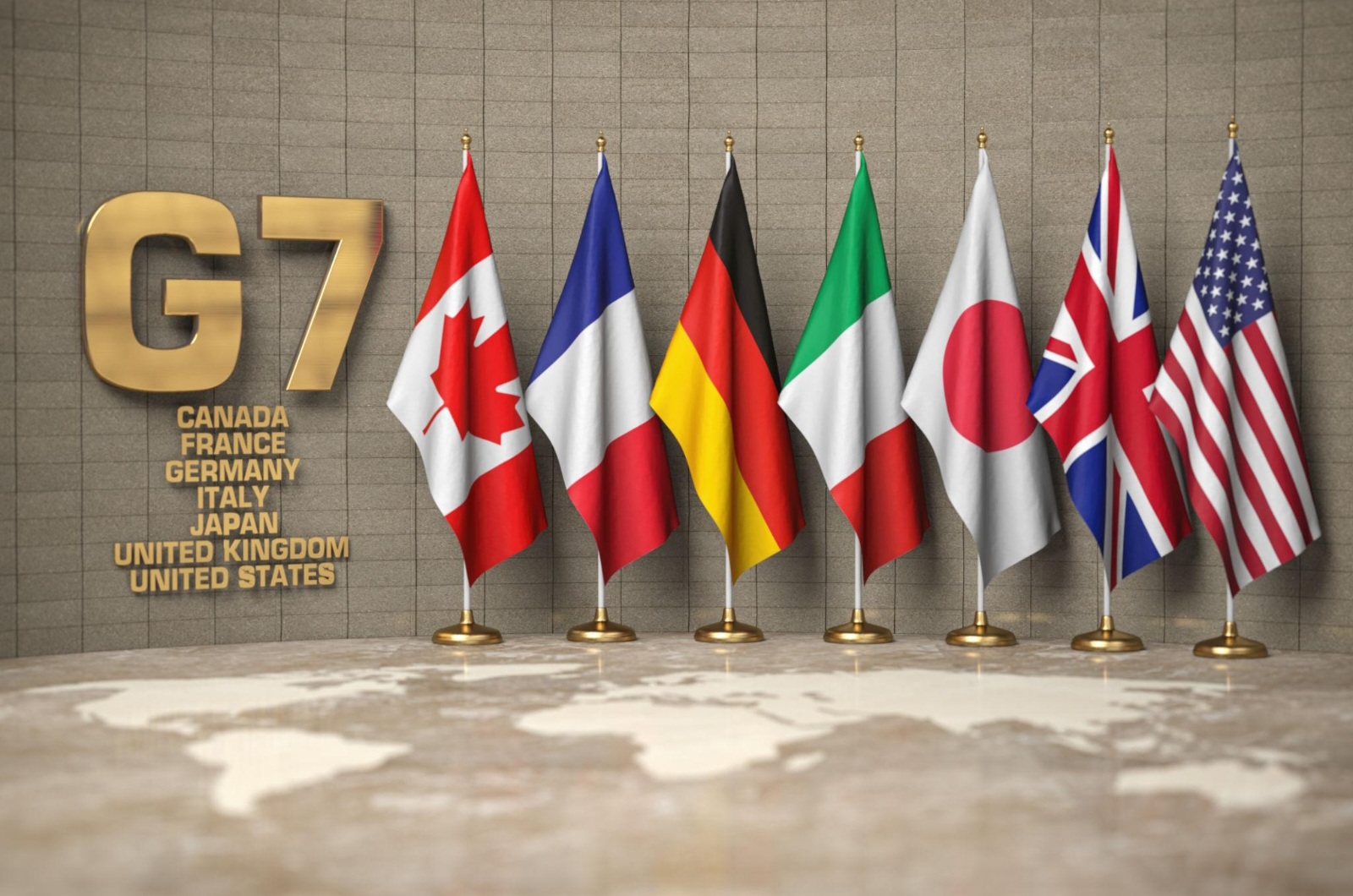
World leaders are preparing to gather in France for the 2026 G7 summit at a time when geopolitical and economic pressures are converging.
While the Group of Seven was originally created to promote economic cooperation, its agenda has steadily expanded. This year's meeting reflects how interconnected issues such as security, technology, energy, and trade have become.
The G7 Is Facing Multiple Crises at Once
Leaders from Canada, the United States, the United Kingdom, France, Germany, Italy, and Japan are expected to discuss a range of challenges.
Those include:
- The war in Ukraine.
- Renewed tensions in the Middle East.
- Trade disputes and economic fragmentation.
- Energy security.
- Artificial intelligence and emerging technologies.
- Critical minerals and supply chain resilience.
Rather than dealing with a single crisis, governments are confronting several at the same time.
Economic Security Is Becoming a Bigger Priority
In recent years, G7 countries have placed increasing emphasis on reducing vulnerabilities in supply chains and strengthening economic resilience.
Critical minerals, semiconductors, and advanced technologies have become strategic priorities as governments seek to reduce dependence on concentrated sources of supply and address concerns over economic coercion.
Trade and investment policies are increasingly being viewed through a national security lens.
Artificial Intelligence Is No Longer Just a Technology Issue
AI is expected to remain a major topic.
Governments are seeking ways to encourage innovation while addressing concerns related to safety, regulation, energy consumption, and international competition.
Questions surrounding AI governance have become closely tied to broader discussions about economic competitiveness and technological leadership.
Energy Security Has Returned to the Forefront
Conflicts involving Ukraine and the Middle East have highlighted the importance of stable energy supplies.
Leaders are expected to discuss resilience, diversification, and the long-term challenges associated with balancing energy security with climate goals.
Recent volatility in oil markets has reinforced the strategic importance of energy policy.
Why the Summit Matters
The G7 represents a smaller share of the global economy than it once did.
Yet periods of instability have repeatedly demonstrated the importance of coordination among major democracies.
Increasingly, the summit is serving not simply as a forum for economic growth, but as a platform for managing geopolitical risks and responding to shocks that affect markets, technology, trade, and security.
In that sense, the 2026 meeting reflects a broader shift.
Economic policy and national security are becoming harder to separate.