
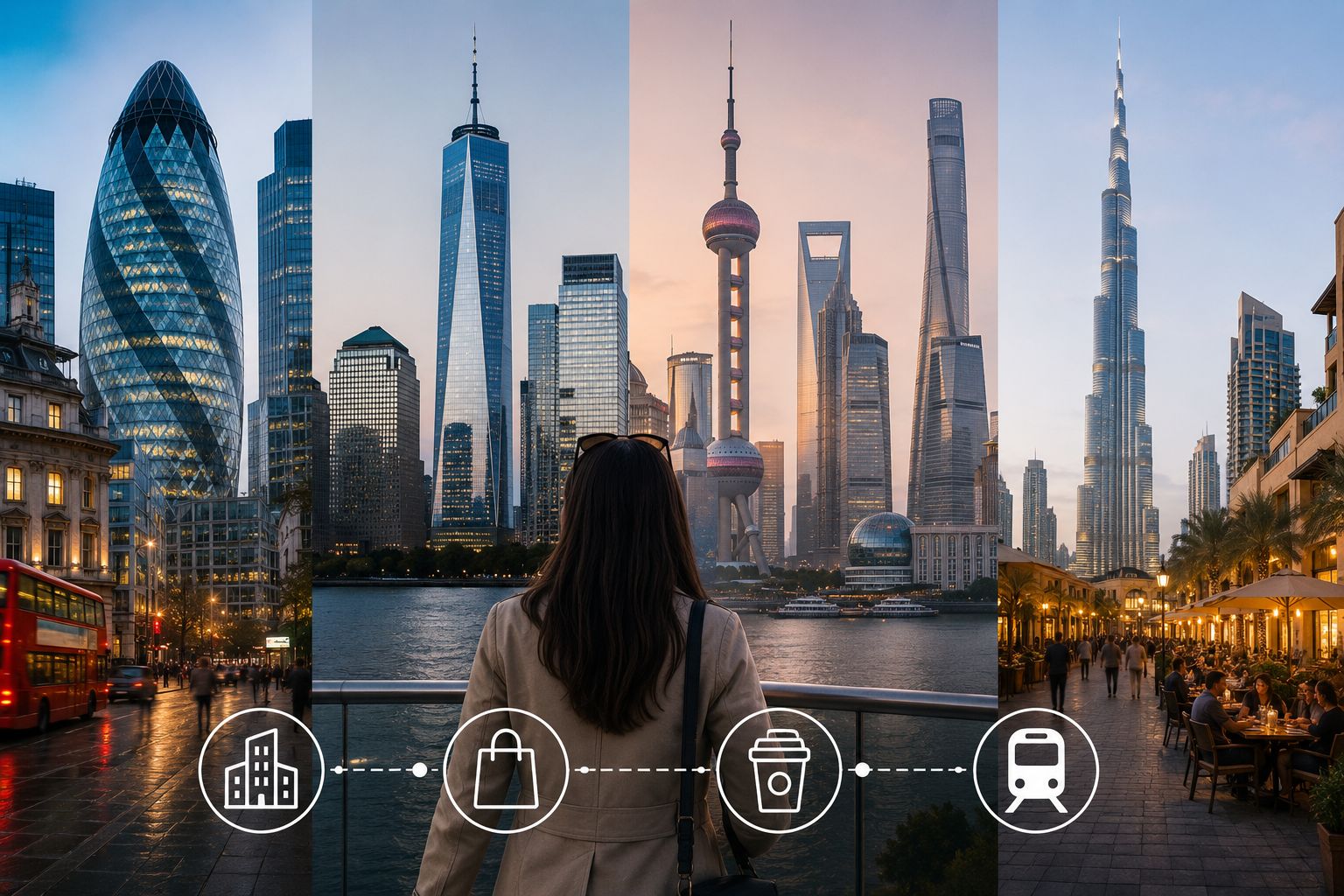
Global cities are becoming increasingly similar as globalization, corporate expansion, and digital culture reshape urban landscapes into familiar environments. While this creates convenience for businesses and travelers, it also blurs the distinctive identities that once defined cities around the world.
Why Modern Cities Are Beginning to Look the Same
From financial districts to neighborhood cafés, many urban centers now share remarkably similar features. Urban planners often describe this trend as the emergence of the "generic city," where standardized architecture and commercial development replace local character.
The most visible changes include:
- Glass-and-steel skyscrapers dominating business districts.
- International retail brands occupying prime shopping streets.
- Global hotel chains and fast-food franchises offering nearly identical experiences across countries.
These patterns make cities more recognizable but less distinctive.
Globalization and the Digital World Are Accelerating the Shift
Technology has amplified the pace of urban homogenization.
Several factors contribute to this transformation:
- Social platforms have popularized a minimalist café and interior design style seen across countless cities.
- Algorithms spread the same lifestyle, fashion, and architectural trends worldwide.
- English increasingly appears in business districts, advertising, and public signage, creating a common linguistic environment.
As digital culture spreads instantly, local design trends often give way to international ones.
Cities Are Competing Using the Same Development Playbook
Economic priorities also encourage similarity.
To attract global businesses, investors, and skilled professionals, many cities invest in comparable infrastructure and amenities, including:
- High-speed public transit.
- Luxury co-working spaces.
- Bike-sharing networks.
- Waterfront redevelopment projects.
- Walkable innovation districts.
Rather than developing unique models, city governments frequently adopt strategies that have proven successful elsewhere.
The Challenge of Preserving Local Identity
Standardized development offers economic benefits and familiar experiences for visitors and businesses. However, it also raises concerns about preserving cultural heritage, architectural diversity, and the unique character that makes each city memorable.
The central challenge is balancing international competitiveness with authentic local identity.
What Comes Next for Global Cities?
Globalization will likely continue shaping urban development, but future planning may increasingly focus on protecting local culture while embracing modern infrastructure.
The cities that successfully combine innovation with heritage may stand apart in an increasingly uniform world.
FAQ: Global City Homogenization
Why are cities becoming more alike?
Globalization, multinational businesses, digital platforms, and shared urban development strategies encourage cities to adopt similar designs, services, and infrastructure.
Does globalization erase local culture?
Not entirely. It creates pressure toward standardization, but thoughtful planning can help preserve local architecture, traditions, and cultural identity.