
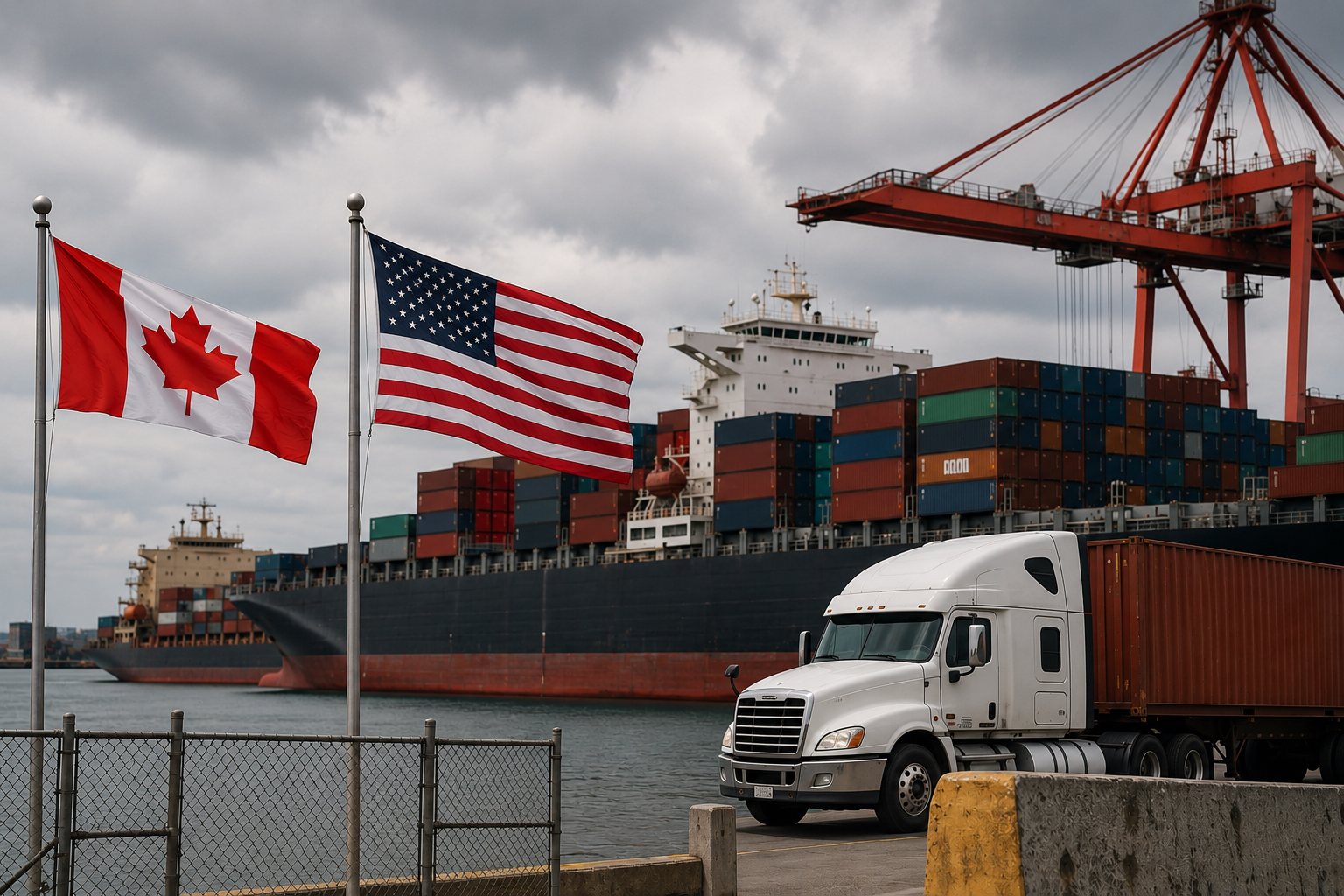
Canada is among 60 economies facing proposed new U.S. tariffs after the Trump administration said that several trading partners have not effectively enforced measures designed to prevent goods linked to forced labour from entering supply chains. The proposal would place Canada in a 10% tariff tier if approved following a public consultation process.
What Happened in the U.S. Forced Labour Tariff Proposal
The Office of the United States Trade Representative (USTR) proposed additional tariffs on imports from 60 economies following a Section 301 investigation into forced labour enforcement.
Canada, the European Union, the United Kingdom, Mexico and several other economies would face proposed additional duties of 10%. A higher 12.5% tariff would apply to 45 other economies, including China, India, Japan, South Korea, Vietnam, Australia and New Zealand.
U.S. Trade Representative Jamieson Greer said the proposal addresses what Washington views as failures by trading partners to effectively stop the importation of goods made with forced labour.
Key Highlights of the U.S. Forced Labour Tariff Proposal
- Canada is among the economies facing a proposed 10% tariff
- The USTR investigation covers 60 economies
- China, India, Japan and Australia would face proposed 12.5% tariffs
- Public comments will be accepted through July 6
- A public hearing is scheduled for July 7
- The tariffs remain proposals and are not yet in effect
- Energy, pharmaceuticals, aircraft parts and several other products would be exempt
Background of the U.S. Forced Labour Tariff Proposal
The proposal follows a U.S. Supreme Court decision in February that struck down parts of President Donald Trump's emergency tariff programme.
The Trump administration is using Section 301 trade law as a new legal basis for a revised tariff framework. According to the USTR, the investigation examined whether trading partners effectively prevent goods made with forced labour from entering their markets and supply chains.
Why This U.S. Forced Labour Tariff Proposal Matters
The proposal could affect trade flows across multiple regions and create additional uncertainty for businesses operating in global supply chains.
Several governments have rejected the U.S. findings. European officials described the conclusions as unjustified, while business groups warned that the proposal could increase compliance costs and create confusion for importers.
The USTR has also proposed a broad list of exemptions covering products such as energy, rare earth materials, pharmaceuticals, coffee, beef and aircraft parts.
What This Means for Canada
Canada's inclusion in the proposed 10% tariff category adds another potential point of friction in Canada-U.S. trade relations.
The tariffs are not yet in effect, and the final outcome remains uncertain. However, Canadian exporters and businesses will be watching closely as the consultation process moves forward.
The proposed exemptions may reduce the impact on some sectors, although the final scope of any tariffs has not yet been determined.
What Happens Next After the U.S. Forced Labour Tariff Proposal
The USTR will accept public comments through July 6 and hold a public hearing on July 7.
After reviewing submissions, U.S. officials will decide whether to implement the tariffs, revise the proposal or pursue alternative measures.
Trading partners, including Canada, are expected to continue discussions with Washington during the consultation period.
Common Questions About the U.S. Forced Labour Tariff Proposal
Are the proposed U.S. tariffs on Canada already in effect?
No. The tariffs are currently proposals and remain subject to public consultation and review.
How Does This Affect Canada?
Canada is among the economies facing a proposed 10% tariff. While no new duties have been implemented, the proposal could influence future Canada-U.S. trade discussions.
What happens next?
The USTR will collect public comments through July 6 and hold a hearing on July 7 before making a final decision.
Related Topics
- Canada-U.S. Trade Relations
- Section 301 Investigations
- Global Supply Chains