
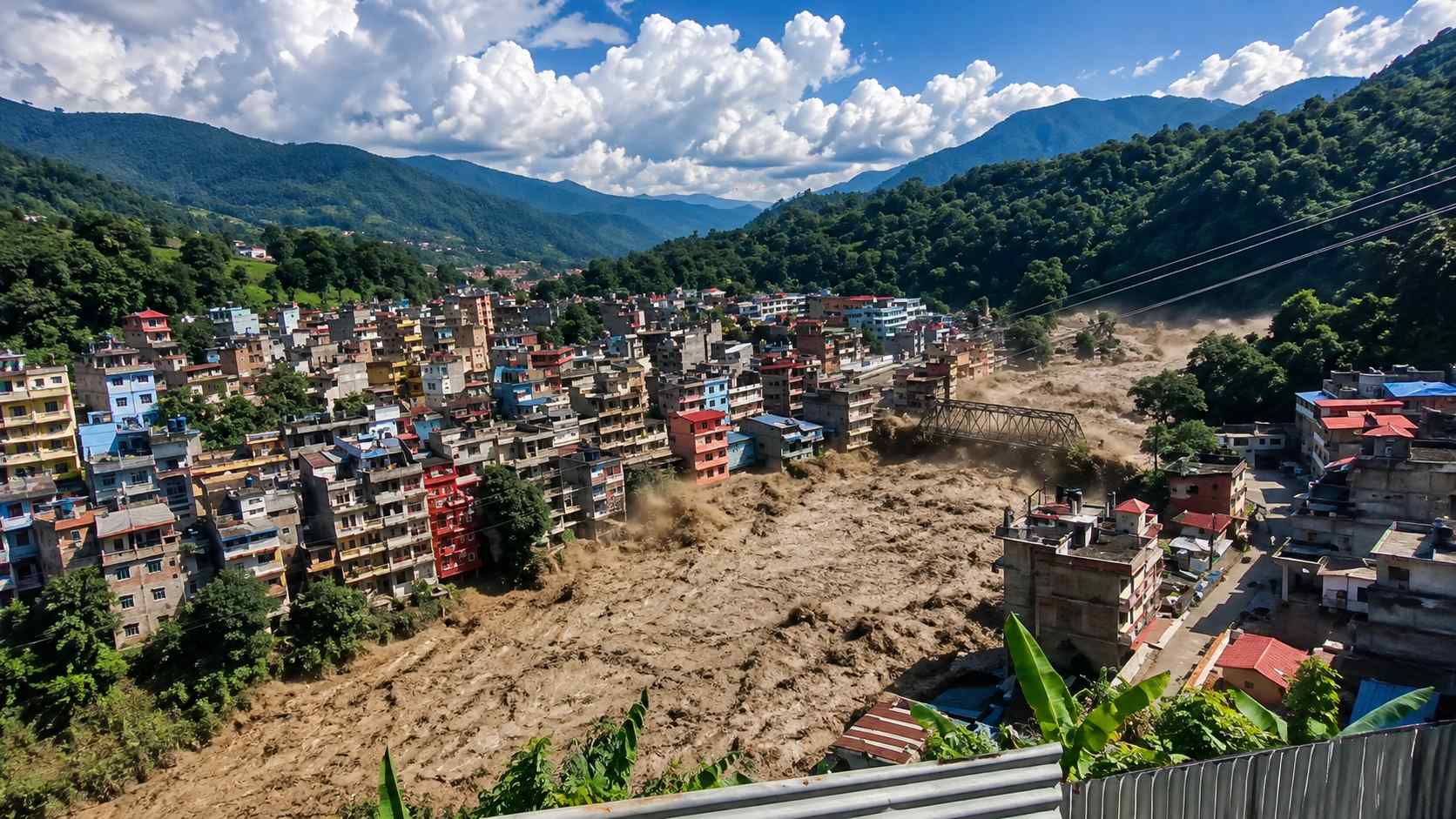
Key Takeaways
- Nepal Police reported 788 bodies recovered as of 3 p.m. Sunday, while officials stressed casualty figures remain fluid.
- NDRRMA said 2,502 people were missing, including 933 workers connected with hydropower projects.
- Authorities reported 8,730 rescues as security forces and international tunnel-rescue experts continued operations.
Nepal Police Reports 788 Bodies Recovered
The latest Nepal Police figures show how quickly the scale of the disaster is changing.
As of 3 p.m. Sunday, police reported the following recoveries:
- Chitwan: 264
- Nawalparasi East: 194
- Nawalparasi West: 120
- Gorkha: 58
- Nuwakot: 52
- Dhading: 50
- Tanahun: 37
- Rasuwa: 13
Together, those figures bring the number of bodies recovered to 788.
Earlier government updates on Sunday had reported a lower toll, but the number increased as search teams continued working downstream and authorities received new information from affected districts.
That distinction matters: Nepal is still in an active search-and-rescue operation, meaning the numbers should be treated as a snapshot rather than a final casualty count.
2,502 People Are Still Missing
The National Disaster Risk Reduction and Management Authority, or NDRRMA, reported that 2,502 people remained missing.
The missing-person list reveals just how complicated the rescue operation has become.
Among those reported missing are personnel from Nepal's security agencies and government offices, local residents, hydropower workers and people connected with foreign visitor groups.
Authorities reported that the missing included 25 Nepal Police personnel, 45 Nepali Army personnel and 13 Armed Police Force personnel.
The list also included customs and immigration employees.
But one category stands out.
NDRRMA reported 933 workers connected with hydropower projects among the missing.
That has made Nepal's damaged hydropower infrastructure one of the most important areas of the ongoing rescue operation.
More Than 8,700 People Have Been Rescued
There is another number that deserves attention alongside the enormous death and missing-person totals:
8,730 people have been rescued.
Nepal has mobilized a massive security response across the disaster zone.
Nepal Police said 7,894 police personnel had been deployed for rescue, search, relief distribution, management of recovered bodies, damage assessment and coordination with other security agencies.
The wider government response has involved roughly 19,000 security personnel, along with helicopters operating in affected areas.
The rescue effort brings together the Nepali Army, Nepal Police and Armed Police Force, with teams working both from the ground and from the air.
Earlier official government figures showed thousands of rescues carried out separately by all three forces.
Nepali Army Conducts Major Air and Ground Rescue Operation
The Nepali Army has also mounted a large-scale operation.
By 7 a.m. Sunday, the Army said it had rescued 2,697 people from flood-hit Rasuwa, including people evacuated by helicopter and ground teams.
Of those, 2,497 people were evacuated by air, including 216 foreign nationals.
More than 8,300 Nepali Army personnel had been deployed across affected districts as operations continued.
But some of the most difficult work is happening underground.
Rescuers Reach Upper Section of Hydropower Tunnel
On Sunday afternoon, the Nepali Army reached the uppermost section — known as the crown — of a tunnel at the Upper Trishuli 3A Hydropower Project.
Dozens of people are feared trapped inside.
Rescue teams have been using drilling machines, excavators and hydraulic cutting equipment to reach the tunnel.
The operation illustrates why the number of missing people remains so high days after the initial disaster.
This isn't simply a search through flooded homes and damaged roads.
Teams are also trying to reach people potentially trapped inside infrastructure buried beneath enormous amounts of mud and debris.
International Tunnel-Rescue Experts Join the Operation
Nepal has also requested specialized international assistance.
According to Nepal's Ministry of Foreign Affairs, tunnel-rescue experts from India, China and the Republic of Korea have been mobilized in coordination with the Nepali Army.
Their expertise is particularly important for attempts to reach people trapped in damaged hydropower tunnels.
The government has also received international relief and emergency assistance as the scale of the disaster becomes clearer.
Why Sunday's Numbers Changed So Quickly
Nepal's official casualty figures have changed several times during August 30.
Earlier Sunday, the government reported 734 recovered bodies and approximately 2,498 people unaccounted for.
NDRRMA later reported 2,502 people missing and 8,730 rescued.
Then Nepal Police's 3 p.m. update placed the number of recovered bodies at 788.
That doesn't necessarily mean earlier information was incorrect.
During a disaster spanning multiple districts, official figures can change rapidly as bodies are recovered, victims are identified, missing-person reports are verified and information reaches national authorities from rescue teams in the field.
Nepal's government has specifically urged the public and international media to rely on verified information from official agencies because casualty and missing-person figures remain fluid.
A Disaster That Is Still Unfolding
For Nepal, August 30 isn't simply another day of counting damage from the flood.
Thousands of people remain unaccounted for.
Rescuers are still working through mud and debris.
Teams are attempting to penetrate damaged tunnels.
Helicopters continue transporting survivors and supplies.
And thousands of security personnel remain deployed across affected districts.
The number 788 describes the confirmed human loss authorities had documented by Sunday afternoon.
The number 2,502 describes the uncertainty that remains.
Until more of those missing people are located, Nepal's search operation — and the story of this disaster — is far from over.
TwikUp Insight
The changing numbers tell an important part of this story.
Nepal moved from 734 reported recoveries earlier Sunday to 788 in Nepal Police's 3 p.m. update as search operations continued.
But the larger concern remains the thousands still missing, particularly the 933 hydropower workers listed among them.
With specialized tunnel-rescue teams now involved and thousands of Nepali security personnel deployed, the next phase will depend heavily on whether rescuers can reach areas and infrastructure that remain buried, flooded or inaccessible.
This is a developing story. All casualty, missing-person and rescue figures are based on official updates available on August 30, 2026 and may change as authorities verify new information.