
Key Takeaways
- Nepal has recovered 626 bodies, while about 2,400 people remain unaccounted for, according to the Foreign Ministry's August 29 briefing.
- Search and rescue operations are continuing as Nepal mobilises security forces, local authorities and emergency responders.
- Nepal has not yet fully determined the cause, while Chinese geological experts have preliminarily linked the disaster to a high-altitude ice collapse in Nepal that generated a fast-moving debris flow.
Search and Rescue Operations Continue
Nepal has mobilised available resources for search, rescue, relief and recovery operations.
Security personnel, local authorities, medical teams and emergency responders are continuing efforts to locate missing people and assist survivors in affected areas.
The disaster has affected both Nepali citizens and foreign nationals, adding another layer of complexity to the ongoing rescue and identification efforts.
India and China Provide Technical Assistance
Nepal has sought specialised technical assistance from neighbouring India and China as rescue operations continue.
The assistance is focused on areas including specialised rescue operations, locating missing people, forensic and DNA identification, communications and other technical requirements.
The international support is intended to strengthen Nepal's ability to search difficult and dangerous areas affected by the disaster.
Risk of Further Flooding Remains
Authorities are also continuing to monitor river conditions and possible secondary hazards.
Nepal's Department of Hydrology and Meteorology maintains real-time hydrological monitoring of the Bhote Koshi river system and other locations.
The department's monitoring system provides information on river levels and flood conditions as authorities continue assessing risks in affected areas.
What Caused the Disaster?
Nepal's Foreign Ministry has said that the cause of the Bhote Koshi disaster has not yet been fully determined.
A separate preliminary assessment by China's Ministry of Natural Resources offers a possible explanation.
Chinese geological experts say the disaster was triggered by a high-altitude ice collapse in Nepal. According to the assessment, material from the collapse moved rapidly downhill, picked up loose glacial and moraine material and developed into a high-speed debris flow before becoming a mudslide.
Chinese experts estimate that the debris flow travelled at an average speed of more than 50 metres per second.
This assessment should be described as a preliminary Chinese geological finding, rather than as Nepal's final official determination of the cause.
A Chain of Natural Hazards
Chinese geological experts describe the event as a chain of hazards rather than a simple river flood.
The preliminary sequence was a high-altitude ice collapse, followed by a fast-moving debris flow that gathered additional material along the mountain channels and eventually developed into a destructive mudslide.
The analysis also indicates that the source area was located upstream in Nepal rather than at the border area itself.
Rescue Efforts Face Difficult Conditions
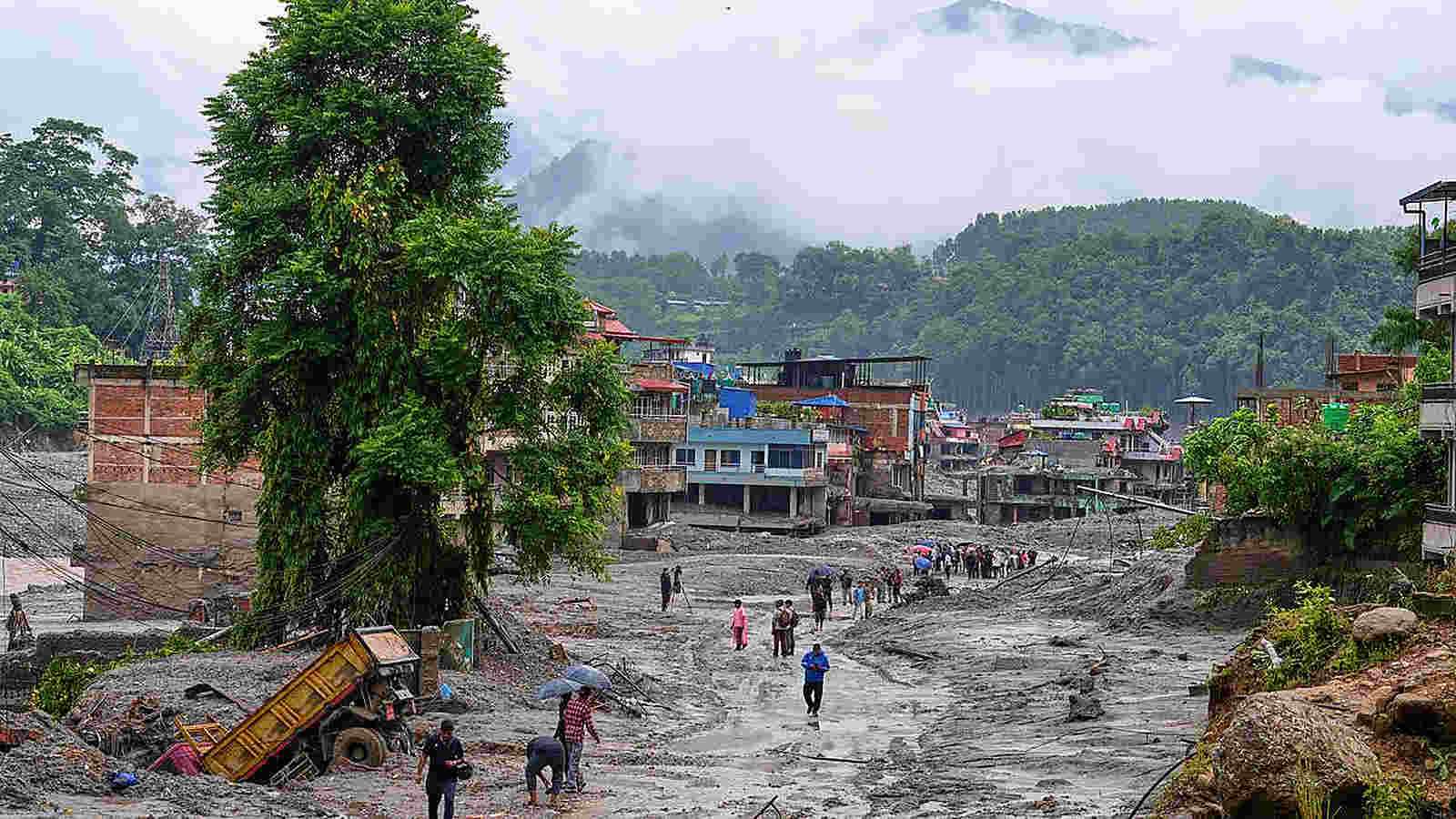
Search operations are taking place in areas affected by large amounts of mud, debris and damaged infrastructure.
Potential secondary hazards, including unstable slopes and blocked water systems, can make access more difficult for rescue teams.
Authorities are therefore continuing to monitor the affected river system and surrounding areas while rescue operations proceed.
What Happens Next?
Nepal's immediate focus remains on locating missing people, recovering victims and providing emergency assistance to survivors.
Technical teams from Nepal and neighbouring countries are expected to support specialised rescue, identification and disaster-assessment work.
Further investigation will also be needed to establish the full sequence and cause of the disaster.
TwikUp Insight
Nepal's latest official figures show 626 bodies recovered and about 2,400 people still unaccounted for after the August 26 Bhote Koshi flash floods.
Rescue and relief operations remain underway, with Nepal receiving specialised assistance from India and China.
While Nepal says the cause has not yet been fully determined, Chinese geological experts have preliminarily linked the disaster to a high-altitude ice collapse in Nepal that generated a rapidly moving debris flow.