
Key Takeaways
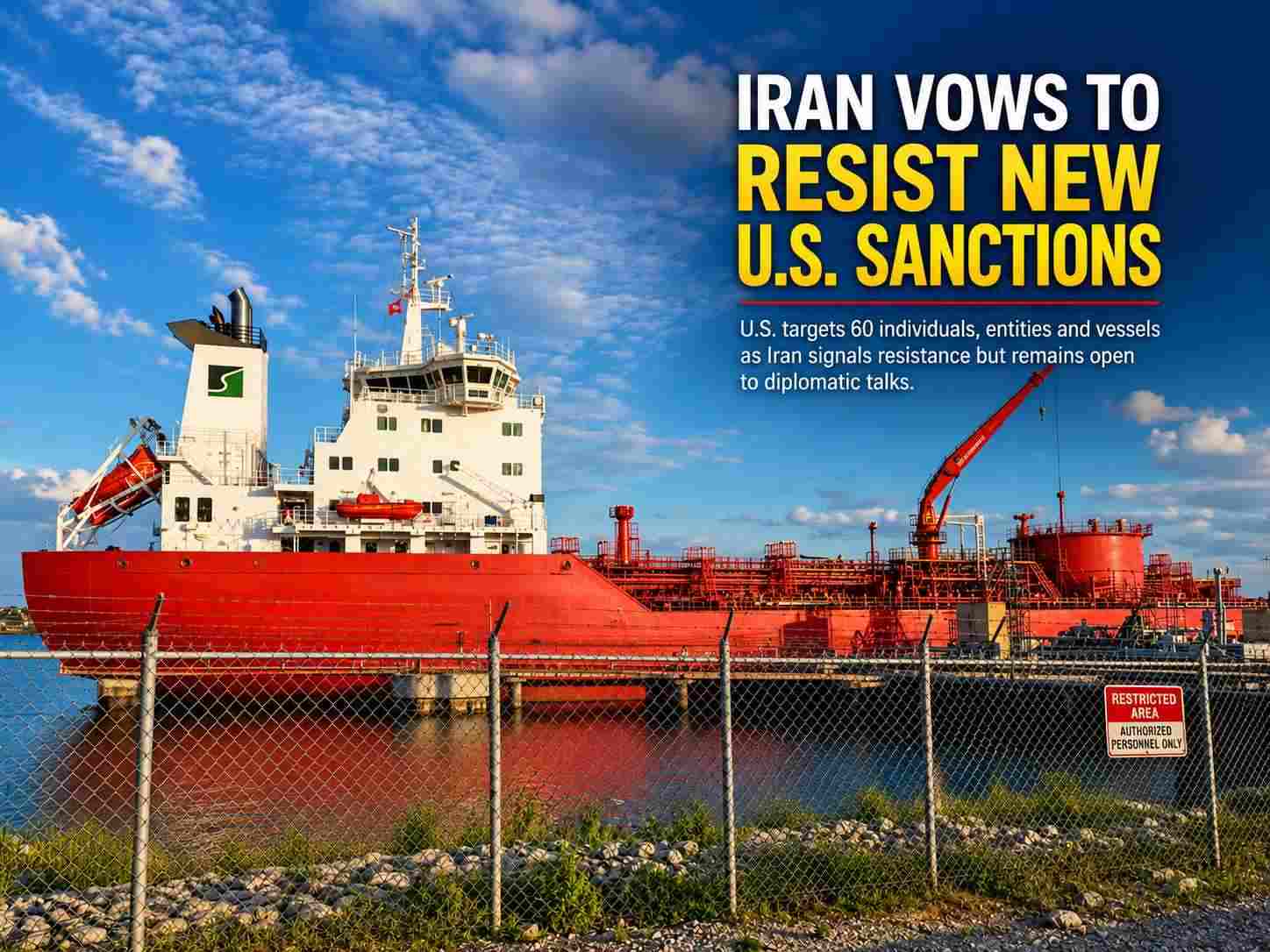
- The U.S. expanded sanctions targeting 60 individuals, entities and vessels linked to Iran.
- Iran has rejected the sanctions and warned that it could retaliate against U.S. interests if its infrastructure is threatened.
- Tehran has also indicated a willingness to resume talks, with Pakistan involved in diplomatic efforts.
Iran Vows to Resist New U.S. Sanctions
Iran has vowed to resist newly expanded U.S. sanctions aimed at putting additional pressure on its economy, while also signaling that it remains open to diplomatic talks.
The latest U.S. measures target 60 individuals, entities and vessels connected to Iran. Washington says the sanctions are designed to restrict Iran's financial and commercial connections.
The developments come as the conflict between the United States and Iran approaches its sixth month.
What Are the New U.S. Sanctions?
The United States has expanded its sanctions campaign against Iran by targeting individuals, companies, and vessels linked to the country's economic and financial networks.
U.S. Treasury Secretary Scott Bessent announced the latest measures as Washington seeks to increase economic pressure on Tehran.
The measures are intended to make it more difficult for Iran to maintain international financial and commercial connections.
How Has Iran Responded?
Iran has rejected the expanded sanctions and said it will resist the U.S. pressure campaign.
Iranian officials have also warned that Washington could face retaliation if Iranian infrastructure is threatened.
At the same time, Tehran has indicated that it is interested in restarting negotiations.
Is Iran Open to Talks?
Despite its opposition to the sanctions, Iran has signaled a willingness to resume peace talks.
Pakistan has been involved in diplomatic efforts between the two sides. According to Iranian officials cited by Reuters, Pakistan's army chief delivered a message from the United States to Iran.
The development suggests that diplomatic channels remain open despite the latest escalation.
What Countries Could Be Affected?
The United States has warned countries that continue doing business with Iran that they could face consequences under the expanded sanctions campaign.
However, the latest sanctions notably did not target Chinese financial institutions, reflecting the importance of China's economic relationship with Iran.
China remains a major buyer of Iranian oil.
Why Is China Important?
China is one of Iran's most important trading partners and a major destination for Iranian oil.
The decision not to target Chinese financial institutions in the latest measures could leave room for continued economic engagement between China and Iran.
Washington has previously warned countries and companies involved in Iranian trade that they could face restrictions on access to the U.S. financial system.
What Is Happening to Iran's Economy?
Iran's economy has already been under significant pressure from years of international sanctions.
The current conflict and restrictions on oil exports have added to those economic difficulties.
Shipping through the Strait of Hormuz has also fallen sharply from pre-conflict levels, creating additional pressure on Iran's energy trade.
Could the Sanctions Affect Oil Markets?
The latest sanctions have raised questions about their potential effect on global oil supplies.
However, oil prices fell more than 3% on August 25 as investors judged that the new sanctions posed less immediate risk to oil supplies than a further military escalation.
The situation could change if tensions increase or shipping through important regional routes is disrupted further.
What Happens Next?
The United States is expected to continue using economic pressure as part of its strategy toward Iran.
Iran, meanwhile, says it will resist the sanctions while keeping the possibility of negotiations open.
The involvement of Pakistan could provide another channel for diplomatic communication between Washington and Tehran.
Why Does This Matter Globally?
The dispute extends beyond Iran and the United States because Iran has major trading relationships with countries including China.
The sanctions could also affect international energy markets, shipping, and companies involved in trade with Iran.
Any further escalation around the Strait of Hormuz could have broader consequences for global oil supplies and prices.
TwikUp Insight
The latest U.S. sanctions mark another escalation in Washington's economic pressure campaign against Iran.
However, Tehran's response combines resistance with an apparent willingness to consider renewed talks.
The situation remains closely linked to global energy markets, China's trade relationship with Iran, and shipping through the Strait of Hormuz.
The next major development will depend on whether diplomatic efforts gain momentum or the sanctions lead to another escalation.