
Key Takeaways
- A new independent method re-checked the Event Horizon Telescope's data from 2017, 2018 and 2021 and recovered the same ring, about 40 microarcseconds across, every time.
- The method uses calibration-proof measurements, answering a 2022 reanalysis that produced a blob instead of a ring.
- M87* weighs 3 to 7 billion times the mass of the Sun and sits 16.8 megaparsecs from Earth.
What If the First Black Hole Image Was Wrong?
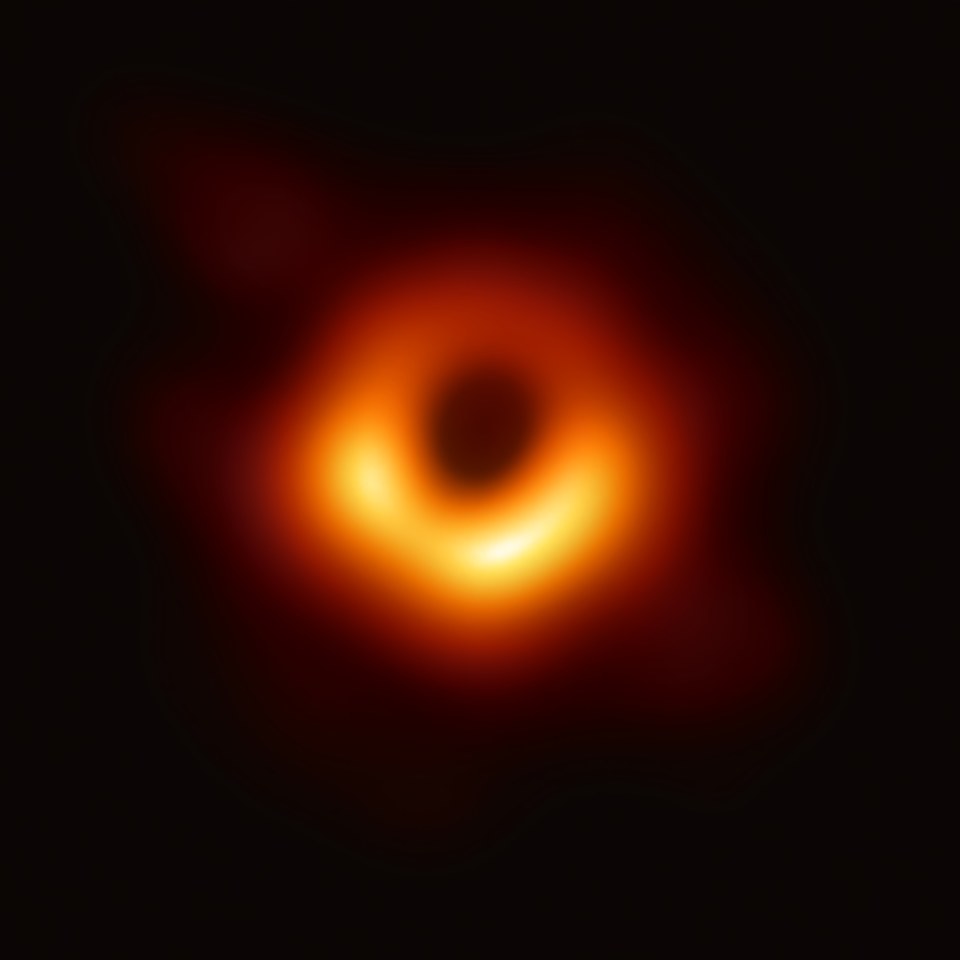
In April 2019, the world saw something extraordinary: the first image of a black hole. A glowing orange ring surrounded a dark centre, revealing the shadow of M87*, a supermassive black hole roughly 55 million light-years from Earth.
But then came an uncomfortable question.
What if the ring wasn't really there?
A 2022 reanalysis of the telescope data produced something different: a blob instead of a ring. That raised concerns about whether the famous shape reflected the observations or the methods used to reconstruct the image.
Now, researchers have put the original data through a different kind of test. And the ring is still there.
Eight Nights of Data, One Familiar Shape
In a study reported as published November 11 in Nature, researchers led by Samuel Lai revisited observations from the Event Horizon Telescope, the global network of radio telescopes behind the original image.
They examined data collected over eight observation nights in April 2017, 2018 and 2021, using a reconstruction method called GenDIReCT.
The method recovered a compact ring measuring approximately 40 microarcseconds across, with its brightest region toward the south or southwest.
That's extraordinarily small from Earth's perspective. A microarcsecond is one-billionth of a degree divided by 3.6, making the ring far too tiny for ordinary telescopes to resolve.
Yet the reconstructed shape remained consistent across the observations.
Why Scientists Needed Another Method
The Event Horizon Telescope doesn't work like a regular camera.
Its telescopes collect radio signals at a wavelength of 1.3 millimetres. Scientists then combine those measurements and use mathematical techniques to reconstruct an image.
That process is powerful, but it also introduces a difficult question: could the reconstruction method influence the shape researchers recover?
Critics of the original image raised concerns about assumptions used during reconstruction, including the possibility that an expected ring shape could influence the outcome.
The new approach tackles that concern differently.
GenDIReCT uses measurements called closure invariants, which are designed to remain stable despite certain calibration errors affecting individual telescopes.
In simpler terms, the method helps researchers recover information about the black hole's appearance without relying on some of the calibration choices used in other reconstruction approaches.
Researchers also tested three different fields of view.
The result was consistent: a compact ring resembling the structure revealed in 2019.
What the Ring Actually Shows
M87* sits at the centre of the giant galaxy Messier 87, approximately 16.8 megaparsecs, or 55 million light-years, away.
The study considers a black hole mass range of 3 billion to 7 billion times the mass of the Sun.
But the glowing ring isn't the black hole itself.
The black hole is dark. The surrounding emission comes from extremely hot material near it, while gravity bends the light into the structure scientists observe.
The new reconstruction strengthens the evidence that the ring is a genuine feature of the observations rather than simply a product of one imaging technique.
It does not mean every question about black hole imaging has been answered. It means the central feature of astronomy's most famous black hole image has survived another independent examination.
The Twikup Take
The first black hole image changed how humanity saw the universe. Then scientists questioned whether its most famous feature was real.
Years later, a different reconstruction method has recovered the same basic shape from observations spanning three years.
The biggest result isn't a new picture. It's that the original ring still holds up.
Image: The first direct visual evidence of the supermassive black hole in the centre of Messier 87 and its shadow, taken on 11 April 2017. Photo by the Event Horizon Telescope Collaboration, CC BY 4.0.