
Key Takeaways
- Hamilton Health Sciences researchers are studying an enzyme-based approach to treating sepsis.
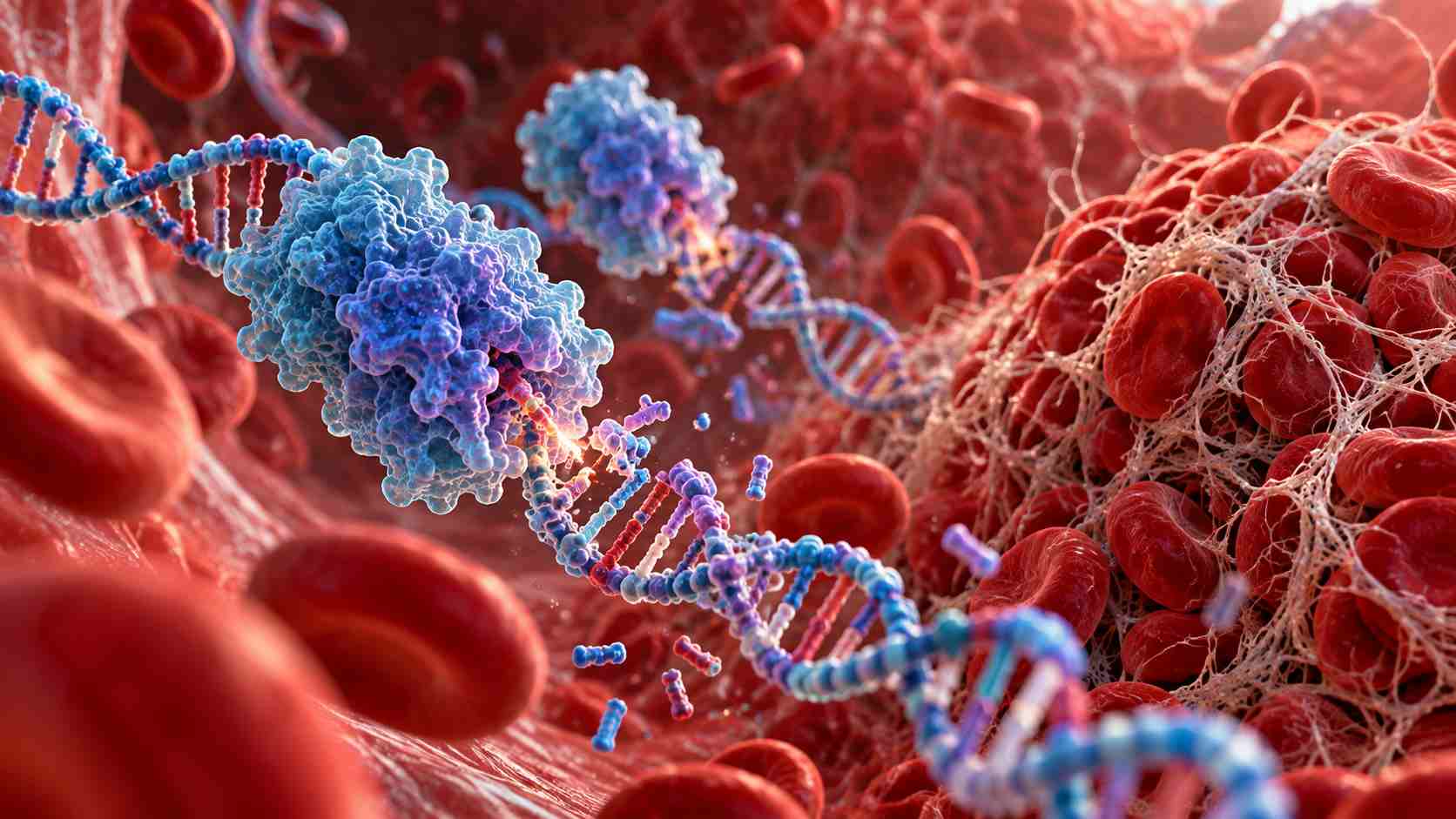
- The research focuses on DNase-I, which can break down DNA circulating in the blood.
- The early-stage clinical research is designed to investigate safety, feasibility and treatment parameters.
Researchers Explore a New Approach to Sepsis
Sepsis is a life-threatening condition caused when the body has an improper and aggressive response to an infection.
Liaw's research has focused on immunothrombosis, the process by which immune cells contribute to blood clotting in the presence of a severe infection.
Earlier research from Liaw and her team found that some patients with severe sepsis had very high levels of circulating DNA. A multi-centre study involving 400 intensive-care patients with sepsis found that patients with higher levels of circulating DNA had poorer outcomes.
The findings prompted researchers to investigate whether preventing this DNA from creating blood clots could provide another approach to treatment.
What Is the Drug Designed to Do?
The drug being studied digests DNA.
Researchers were investigating whether it could reduce excess DNA circulating in the blood of patients with sepsis.
The research is based on the observation that neutrophils responding to severe infection can release DNA into the bloodstream. The DNA can form sticky, web-like structures that may trap microorganisms but can also attach to blood cells and form blood clots.
By breaking down this DNA, researchers were examining whether the treatment could affect the clotting process associated with severe sepsis.
From Laboratory Research to Clinical Testing
Hamilton Health Sciences reported that Liaw's team was preparing a Phase I clinical trial involving a drug that breaks the connection between sticky DNA structures and blood cells.
The first stage of the trial was intended as a safety and feasibility study. It was to recruit a small number of sepsis patients at HHS and Maisonneuve-Rosemont Hospital in Montreal.
Researchers also planned to determine the appropriate dose and duration of treatment, and whether the process of administering the drug was realistic for clinical staff.
The HHS research team includes clinical collaborators working to translate laboratory findings into potential treatments for patients.
Why Blood Clots Matter in Sepsis
Severe infection can trigger complex changes in the body's immune and clotting systems.
According to Hamilton Health Sciences, Liaw's team found high circulating DNA levels in some patients with severe sepsis and linked those levels with poorer outcomes.
The researchers were therefore investigating whether targeting DNA could provide another therapeutic approach for patients in advanced stages of sepsis, when blood thinners may not be working.
A Study Still in the Research Stage
The drug remained an experimental research approach.
The purpose of the early clinical study was to gather evidence about the treatment before researchers could determine whether it was effective for patients.
A successful early-stage study would not by itself establish the treatment as a standard therapy. Further research would be needed to evaluate effectiveness, safety and the appropriate patient population.
TwikUp's Perspective
The significance of this research lies in its attempt to approach sepsis through the biological role of circulating DNA.
The researchers were examining whether sticky DNA structures associated with severe infection could be targeted as part of a treatment approach to sepsis.
That makes the study scientifically important, but the treatment remained experimental. Clinical testing would be needed to determine whether the approach could provide meaningful benefits for patients with sepsis.
What Happens Next?
The researchers planned to evaluate the drug through the Phase I study.
The evidence generated during the study would help determine whether the approach was safe and feasible enough to justify further investigation.
If the Phase I study had a successful outcome, the team planned to move to a larger-scale study to determine whether the drug was effective in patients with sepsis.