
Key Takeaways
- TenK10K analysed 5,438,679 immune cells from 1,925 people across 28 immune cell types.
- The studies mapped common, rare and tandem-repeat genetic effects, plus DNA organisation, on gene activity.
- Researchers linked signals for 16 diseases to 1,469 candidate genes, which still require experimental confirmation.
Scientists Just Mapped 5.4 Million Immune Cells. The Goal? Find the Genes Behind Disease.
Your DNA may carry clues to disease risk. But there's a frustrating problem: scientists can spot genetic variants linked to disease, but often don't know which gene they regulate or in which cell.
It's like finding thousands of switches in a building without knowing which lights they control.
Now, researchers have started connecting those switches.
Three papers published in Nature on October 28, 2026, mark the first major output of the TenK10K project, led by the Garvan Institute of Medical Research with Murdoch Children's Research Institute, UNSW, and partners.
The mission: build a detailed map of the human immune system to help researchers trace genetic risk back to the genes and immune cells involved.
And the scale is enormous.
Inside the atlas: 5.4 million immune cells
Phase 1 combined whole-genome sequencing with single-cell RNA sequencing from 5,438,679 immune cells collected from 1,925 people.
Researchers sorted those cells into 28 immune cell types, giving them a much closer look at how genetic differences relate to gene activity in each cell type.
Why does that matter?
Because a genetic variant linked to a disease doesn't automatically reveal what it does. Researchers need to identify which gene it switches on or off and in which cell.
The first paper mapped more than 150,000 common-variant and 30,000 rare-variant effects on gene activity.
It also identified signals involving nearly 5,000 genes that had not been seen in a large blood study before.
That's a significant expansion of the genetic map researchers can investigate.
Two more papers uncovered hidden layers of DNA
The other papers looked beyond ordinary genetic variants.
One examined tandem repeats — repetitive stretches of DNA that can influence how genes behave — across more than 1.7 million locations.
The third investigated how DNA is physically organised inside cells, mapping whether it is open or packed.
That analysis used 3.5 million cells from 1,042 donors.
Together, the three studies examine different layers of the same puzzle: how genetic variation and DNA organisation influence gene activity.
Nearly 1,500 genes connected to 16 diseases
Here's where the atlas becomes especially interesting.
Researchers compared the genetic signals they identified with known risk loci for 16 diseases.
The conditions included asthma, autoimmune, cancer, infectious, and neuroinflammatory conditions.
The analysis converged on 1,469 unique genes, alongside results for 44 blood traits.
In other words, researchers now have a much more detailed shortlist of genes potentially involved in the biological pathways behind those diseases.
That doesn't mean all 1,469 genes are confirmed disease drivers.
But it gives scientists specific places to investigate rather than leaving them with genetic risk signals and no clear next step.
Why this could matter for future treatments
Finding a genetic variant associated with a disease is only one part of the journey.
Researchers still need to work out which gene it affects, which immune cell is involved, and how that biological change contributes to disease.
That's the gap TenK10K is designed to help close.
By connecting genetic signals with specific genes and immune cell types, the atlas could help researchers identify promising new treatment targets.
The project aims to study 10,000 people.
This first phase, drawn from people of European ancestry, is an important beginning — but it is not the complete picture.
The Twikup Take
Scientists have spent years finding genetic clues to disease. The harder question has been figuring out what those clues actually mean.
TenK10K is an attempt to connect the dots — from DNA variants to genes, from genes to immune cells, and potentially from there to new treatments.
It isn't a cure, and it doesn't prove that a new treatment will work. But turning millions of individual cell measurements into a usable reference map is exactly the kind of foundation drug researchers need.
Science note: These are statistical, genomic associations — candidate genes and mechanisms that still need experimental confirmation. They do not show that any variant directly causes a disease, or that any treatment works.
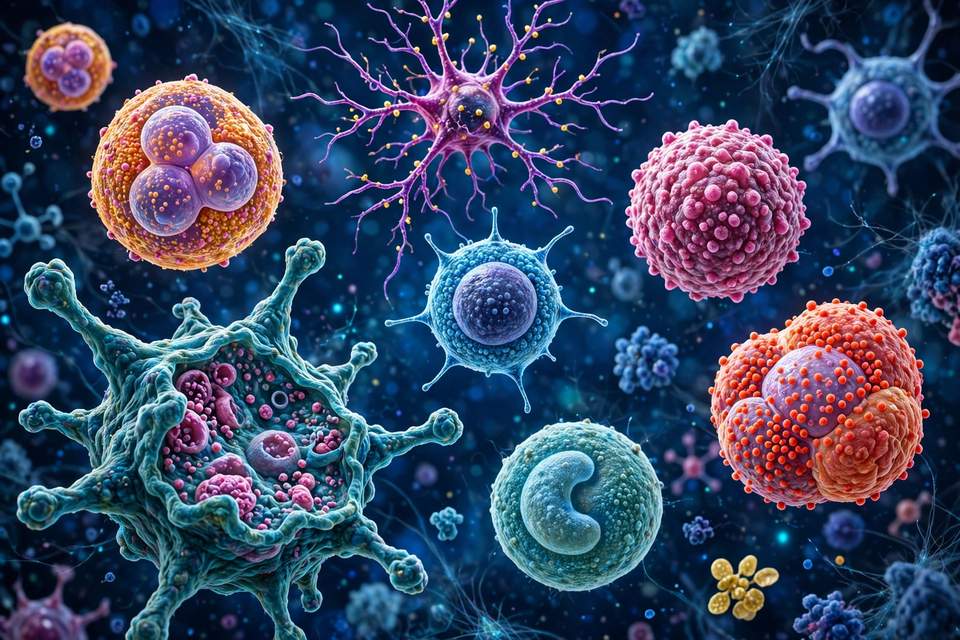
Image: AI-generated illustration.