
Key Takeaways
- Researchers identified motile vesicles, or MoVes, which migrating cancer cells shed with their entire genome and working organelles.
- MoVe production is linked to epithelial–mesenchymal transition and is higher in aggressive triple-negative breast cancer cells.
- There is no MoVe blood test or treatment yet, but researchers are testing their potential as cancer biomarkers or therapeutic targets.
Cancer cells may be leaving more behind than scientists realized
Imagine a burglar moving through a house and leaving behind tiny packages containing detailed information about themselves.
Now imagine something similar happening inside the human body — except the burglar is a cancer cell, and the packages contain its genetic information.
Scientists in Montreal have discovered that migrating cancer cells release microscopic bubbles packed with DNA, including mutations associated with cancer. Some even carry functioning cellular machinery.
The surprising part? Researchers weren't looking for these bubbles in the first place.
The team at the Research Institute of the McGill University Health Centre made the discovery while investigating how cancer cells release DNA. Their findings, published on October 28, 2026, in Nature Cell Biology, reveal a previously unknown way that moving cancer cells leave biological material behind.
And it raises an intriguing question: Could these tiny packages eventually help scientists understand, track or interfere with cancer's spread?
Meet MoVes: The tiny bubbles cancer cells leave behind
Researchers have named the structures motile vesicles, or MoVes.
The name sounds like something from a science-fiction movie, but the biology is real.
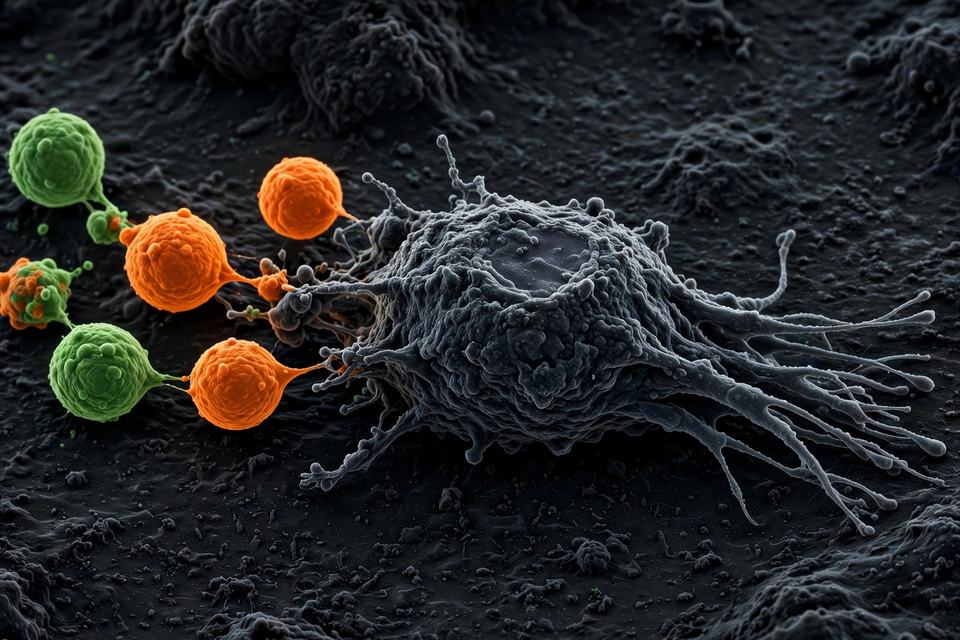
MoVes are microscopic, bubble-like packages that form at the back of certain moving cells. As a cancer cell crawls across its surroundings, its trailing edge retracts and can leave one of these packages behind.
Each MoVe measures approximately 2–5 micrometres across, making it much smaller than the width of a human hair.
But size is not the remarkable part.
When scientists examined the DNA inside these structures, they found genetic material spanning the parent cancer cell's entire genome, including cancer-related mutations.
Think of a cell's genome as its enormous biological instruction manual.
Researchers discovered that MoVes can carry information representing that manual — including genetic changes that help identify the cancer cells they came from.
And the packages weren't carrying DNA alone.
They also contained organelles, the tiny structures that perform essential jobs inside cells.
In other words, these bubbles are more complicated than simple cellular garbage bags.
The strangest part? They appear when cells start moving
Here's where the discovery becomes particularly interesting.
The researchers found that MoVes were closely associated with cell movement.
Most healthy epithelial cells — the cells that line organs and body surfaces — normally remain attached to their neighbours.
Some cancer cells, however, undergo changes that allow them to break away, move through surrounding tissue and become more invasive.
Scientists call one such process epithelial–mesenchymal transition (EMT).
The terminology is complicated. The basic idea isn't.
Imagine a person leaving a tightly packed crowd and gaining the freedom to move independently. EMT can give certain cells similar mobility.
When the Montreal researchers triggered this transition in noncancerous cells, the production of MoVes increased dramatically.
That observation was important because it connected the mysterious bubbles to the biological machinery of cell movement, rather than cancer alone.
The team also found that aggressive triple-negative breast cancer cells released substantially more MoVes than noncancerous breast cells.
This doesn't mean every moving cancer cell produces MoVes or that every MoVe causes cancer to spread.
But it does suggest scientists have uncovered a previously overlooked activity associated with invasive cancer cells.
These bubbles may do more than carry DNA
Finding cancer DNA inside a microscopic package would already be scientifically interesting.
But researchers uncovered another important detail.
Some MoVes contain mitochondrial material.
Mitochondria are often described as a cell's power plants because they help produce usable energy.
In laboratory experiments, mitochondrial cargo associated with MoVes enhanced an energy-producing process called oxidative phosphorylation in recipient cells.
Put simply, material carried by these tiny packages could influence how another cell generates energy.
That makes MoVes more than passive containers of genetic information.
They may participate in communication between cells, although researchers are still investigating exactly what they do and whether those effects contribute to cancer progression.
For decades, scientists have known that cells release tiny packages called extracellular vesicles. Some can transfer biological material between cells, and certain types have been implicated in cancer-related processes.
MoVes add a newly identified category to that increasingly complicated picture.
Could this help explain how cancer spreads?
Cancer becomes particularly dangerous when cells spread from an original tumour to other parts of the body, a process known as metastasis.
For example, breast cancer cells can sometimes travel and establish tumours in distant organs such as the lungs, liver or bones.
Researchers already know that cancer cells can communicate with surrounding tissues through molecules and extracellular vesicles.
Some vesicles can help create conditions that favour tumour growth elsewhere.
So discovering another vesicle associated with migrating cancer cells matters.
However, there is an essential distinction.
The new study does not prove that MoVes cause metastasis.
What researchers have established is that these structures are associated with cell migration, carry extensive genetic information and can transport biologically active material.
Whether they directly help cancer cells invade new tissues, survive or establish secondary tumours remains an open question.
That is precisely what makes the next phase of research important.
Could a future blood test detect these DNA-filled bubbles?
Potentially — but this is still an early-stage possibility.
One of the most promising questions is whether scientists could eventually use MoVes as cancer biomarkers.
A biomarker is a measurable biological clue that helps doctors understand what is happening inside the body.
Because MoVes contain DNA reflecting mutations in their parent cancer cells, researchers may eventually be able to investigate whether they provide useful information about a tumour.
Imagine a future in which doctors could analyze cancer-related biological material to help monitor how a disease is changing.
That is the broader promise behind research into liquid biopsies and circulating tumour DNA.
MoVes could someday become another source of information.
But there is a major hurdle: the researchers must first establish whether MoVes can be reliably detected in patients and whether they provide clinically useful information.
The experimental MoVes described in the study were observed being deposited near migrating cells, rather than freely floating away.
That means scientists cannot simply assume these structures will turn up in a blood sample.
There is currently no approved MoVe-based blood test, screening method or treatment.
The research team is investigating whether these vesicles can be detected in animal models and patients, and what role they might play in cancer biology.
Who made the discovery in Montreal?
The research was led by Julia Burnier, a scientist in the Cancer Research Program at the Research Institute of the McGill University Health Centre and an associate professor at McGill University.
Thupten Tsering, a PhD student in Burnier's laboratory, was the study's first author.
The researchers collaborated with scientists including David Lyden at Weill Cornell Medicine in New York to study and isolate the newly identified vesicles.
Using advanced microscopy, genetic sequencing and laboratory experiments, the team studied how MoVes form, what they contain and how they differ from other extracellular vesicles.
Their findings were published in the peer-reviewed journal Nature Cell Biology on October 28, 2026.
The full study is available here: Motile vesicles (MoVes) are a cancer cell migration-associated extracellular vesicle population.
What happens next?
Discovering something new in cancer biology is one thing.
Turning that discovery into better cancer care is another.
The next steps include understanding how MoVes are produced, identifying the signals that control their release and testing how they affect nearby cells.
Researchers also need to establish whether these structures appear in measurable quantities in actual tumours or patient samples.
If future studies show that MoVes contribute to cancer progression, scientists may investigate ways to disrupt their formation or activity.
If they prove to carry useful information about tumours, they could become candidates for new diagnostic or monitoring approaches.
Neither outcome is guaranteed.
The discovery is a starting point, not a finished medical breakthrough.
The TwikUp Take: Cancer cells may be leaving clues behind
For years, one of the great challenges in cancer research has been understanding what happens when malignant cells become mobile.
The Montreal team has added an unexpected piece to that puzzle.
Cancer cells aren't necessarily just moving from one location to another. Some are also leaving behind microscopic packages containing DNA and functioning biological components.
The remarkable part is how much information those packages can contain.
And the discovery happened because scientists investigating one question stumbled into another.
No new cancer cure has emerged from this research. No diagnostic test is ready for patients.
But scientists now have an entirely new biological structure to investigate.
Sometimes a major discovery begins not with finding what researchers were searching for, but with noticing what they never expected to see.
And in Montreal, those unexpected clues turned out to be microscopic bubbles left behind by moving cancer cells.
Image: AI-generated illustration.