
Key Takeaways
- An executive purchasing shares with personal money can provide a stronger confidence signal than receiving company stock as compensation.
- Several insiders buying independently may deserve more attention than one isolated transaction, particularly when their purchases represent meaningful personal investments.
- Executive sales need context because scheduled plans, taxes, option exercises and personal diversification can explain transactions without indicating deteriorating business prospects.
What Does Insider Buying and Selling Mean?
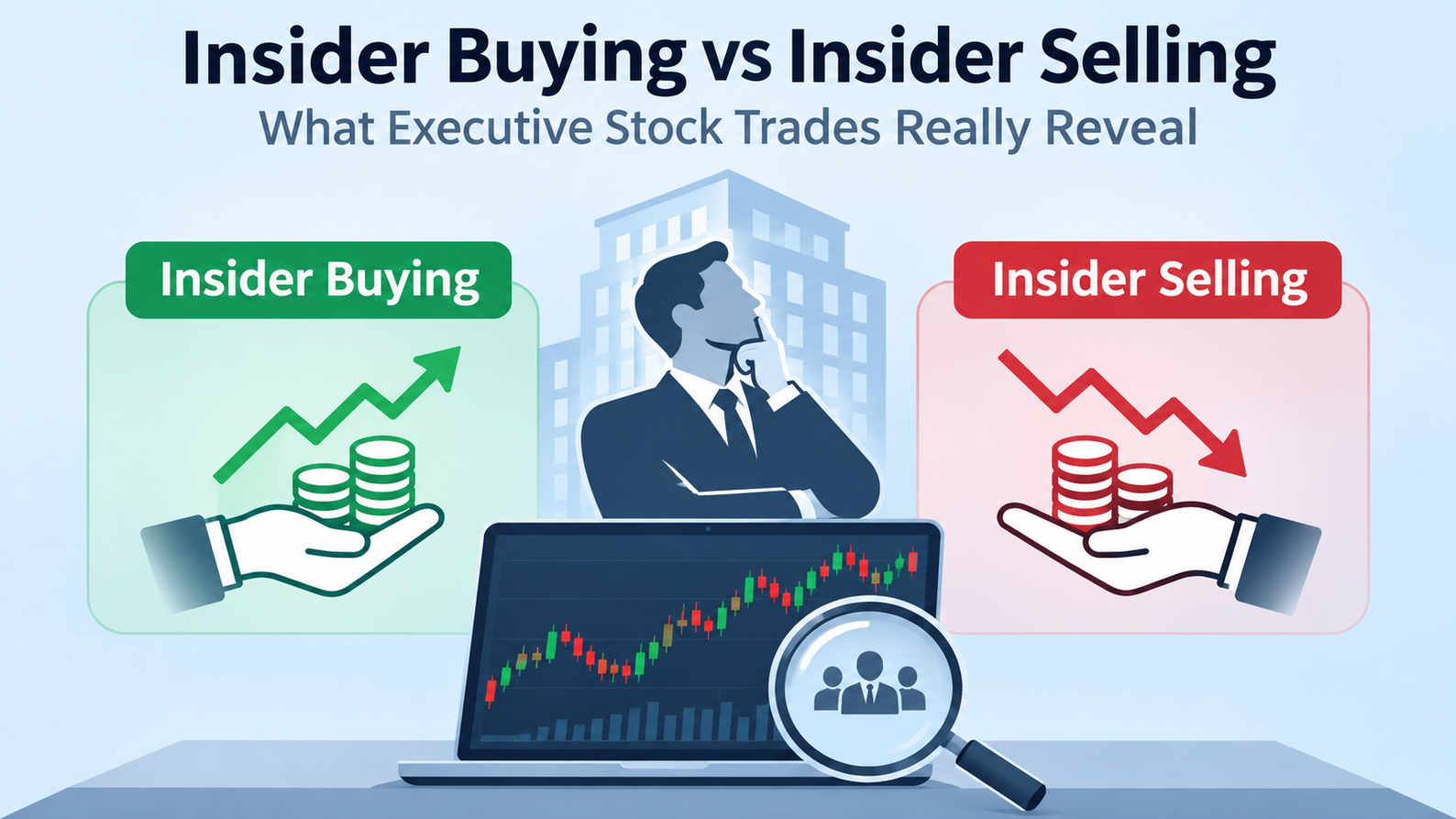
Insider buying and selling refers to transactions involving a company's shares by people with an important relationship to the business, such as directors, senior executives and certain significant shareholders.
These individuals may understand the company's operations, financial position and strategic challenges better than ordinary investors. Their transactions can therefore provide useful information about management's confidence.
However, an insider transaction is not automatically a recommendation to buy or sell a stock. A CEO purchasing shares with personal money is different from receiving shares through an employee compensation programme. Likewise, an executive selling shares does not necessarily mean the business is heading towards trouble.
The important question is not simply whether an insider traded. It is why the transaction happened, how significant it was and whether other evidence supports the same interpretation.
Why Can Insider Buying Be an Important Signal?
When an executive uses personal money to purchase company shares in the open market, the decision creates direct financial exposure. If the share price falls, that person experiences a financial loss just like other shareholders.
This makes certain purchases worth investigating. A chief financial officer buying shares after a temporary market decline, for example, may suggest confidence in the company's financial position.
The size of the transaction matters too. A purchase worth $15,000 may be meaningful for one executive but relatively insignificant for another with substantial existing holdings.
Investors should compare the purchase with the insider's previous ownership, compensation and financial exposure. A meaningful increase in personal investment generally deserves more attention than a small symbolic purchase.
Several executives purchasing shares around the same period can also strengthen the signal. Independent purchases by a CEO, CFO and director may indicate broader management confidence rather than one individual's personal decision.
Still, even coordinated buying cannot guarantee better future returns. Executives can misjudge market conditions, underestimate competition or overestimate their company's prospects.
Why Do Executives Sell Their Own Company Shares?
Selling activity is usually harder to interpret because executives have many reasons to reduce their holdings.
An employee receiving stock-based compensation might sell some shares to cover taxes when restricted stock units vest. Another executive may exercise stock options and sell shares to realise part of the resulting value.
Personal financial planning also matters. Executives often have a significant portion of their wealth tied to one company. Selling shares can reduce that concentration and help diversify their investments.
Some executives also arrange transactions in advance through trading plans. In the United States, Rule 10b5-1 provides a framework for qualifying written trading arrangements subject to specific conditions.
A planned sale is therefore not necessarily a fresh judgement about the company's prospects. Investors should examine the filing details before interpreting the transaction as a warning.
Concern becomes more reasonable when several senior executives independently reduce substantial holdings, especially when the activity coincides with weakening business performance or deteriorating financial conditions.
How Can Investors Read Insider Transaction Filings?
The first step is identifying what actually happened.
In the United States, investors can review SEC Form 4 filings through the EDGAR database. Transaction code P generally identifies an open-market or private purchase, while S identifies a sale.
Other codes require additional attention. Code A can indicate a grant or award, M can represent an option exercise, and F can reflect shares withheld or delivered to meet an exercise price or tax liability.
Canada uses the System for Electronic Disclosure by Insiders, commonly called SEDI. Investors can search public insider reports to examine changes in reported ownership.
When reviewing either system, focus on five details:
- The insider's position, such as CEO, CFO or director.
- The transaction date and reported filing date.
- The number of shares purchased or sold.
- The transaction price and total value.
- The insider's remaining ownership after the transaction.
These details help distinguish a genuine increase in personal investment from routine compensation activity.
What Makes an Insider Transaction More Meaningful?
Not every transaction deserves the same attention. A large open-market purchase by a senior executive can be more informative than a small sale associated with an employee stock programme.
Look for patterns rather than isolated headlines. Multiple executives purchasing shares independently, particularly after a difficult period for the company, may justify closer research. Timing also matters. A purchase made after a sharp share-price decline could indicate management confidence, but investors should investigate what caused the decline in the first place.
Compare insider activity with revenue growth, operating cash flow, debt levels and profitability. A management team buying shares while the business generates healthy cash flow presents a different picture from one buying into a company facing serious financial pressure.
Canada vs United States: Where Can Investors Check Insider Trades?
The reporting systems differ, so investors should use the correct source for each market. In the United States, SEC EDGAR provides access to Forms 3, 4 and 5. Most reportable transactions under Section 16 must be disclosed on Form 4 within two business days of the transaction.
In Canada, SEDI provides access to insider reports filed under applicable securities rules. Reporting insiders generally have five calendar days to report changes in their holdings, subject to exemptions and special arrangements.
These deadlines matter because a public filing does not necessarily appear at the exact moment a transaction takes place. Investors reviewing the information should check both the transaction date and the filing date.
TwikUp's Perspective: Follow the Evidence, Not the Executive
Insider transactions become most useful when they support a broader investment argument. Imagine a company whose shares have fallen 25% following a disappointing quarter. Its CEO and CFO subsequently purchase shares in the open market. That activity may suggest management believes the market has become too pessimistic.
But investors still need to examine the company's financial statements, competitive position and future cash generation. If revenue continues weakening and debt is becoming harder to manage, executive purchases alone cannot repair the investment case.
The opposite situation deserves equal care. Several executives selling shares might attract attention, but their transactions could reflect diversification or previously established trading arrangements rather than declining confidence.
A useful research process is to treat insider activity as a supporting signal, not the foundation of an investment decision. Compare ownership changes with operating performance, valuation and management's explanation of business developments.
For a deeper understanding of how company financial performance supports investment decisions, read TwikUp's guide on how to read a cash flow statement before buying a stock.
Disclaimer
This article is for educational and informational purposes only. Insider transactions do not guarantee future share-price movements and should not be treated as standalone investment recommendations. Investors should review company disclosures, financial statements, valuation and personal risk tolerance before making investment decisions.