
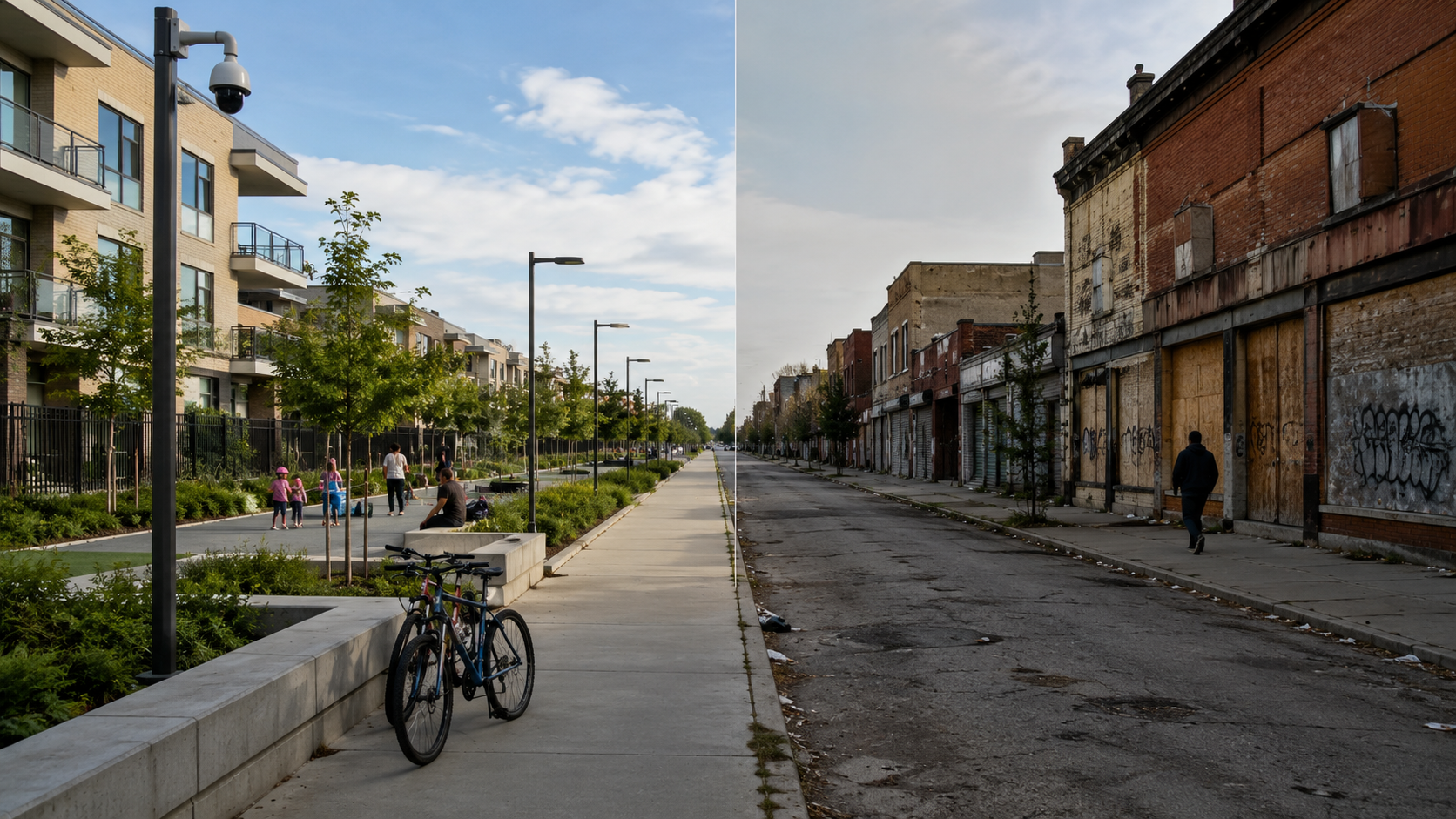
Crime rates are not moving in a single direction across North America. While long-term trends in the United States show broad declines in many categories of crime, Canada has experienced increases in certain non-violent offenses alongside ongoing shifts in violent crime patterns.
The result is a complex picture where economic conditions, technology, demographics, and community investments all influence how safe communities become over time.
Why Crime Trends Are Telling Different Stories Across North America
Crime statistics often appear contradictory because different offenses respond to different pressures.
Long-term U.S. data has generally pointed toward declining overall crime rates. In Canada, recent years have seen increases in some non-violent crimes even as broader trends continue to fluctuate.
Regional differences matter significantly. Local employment conditions, housing stability, social services, and community engagement can produce dramatically different outcomes between neighborhoods, cities, and provinces.
The Forces Behind Crime Rate Changes
There is no single explanation for why crime rises or falls.
Several factors consistently influence crime trends:
- Economic stability often reduces property and opportunistic crimes.
- Financial hardship can increase pressure that contributes to certain offenses.
- Home security systems and surveillance technology make burglary and robbery more difficult.
- Digital payment methods reduce the amount of cash available for theft.
- Education, mental health support, and substance abuse treatment can lower risk factors associated with crime.
- Demographic shifts influence youth-related offenses and community behavior patterns.
Changes in how younger generations socialize may also play a role. More digital interaction and less unsupervised physical gathering can alter traditional patterns of youth-involved crime.
Technology Has Quietly Changed the Crime Landscape
One of the most overlooked drivers of modern crime trends is technology.
Security cameras, smart doorbells, improved lighting systems, and digital monitoring tools have increased the likelihood that crimes are detected or prevented before they occur.
At the same time, reduced reliance on cash has made certain traditional crimes less attractive. Opportunities that once existed for street robberies or cash theft have become less common in many areas.
These changes do not eliminate crime, but they can shift criminal activity toward different targets and methods.
Building Safer Communities Requires More Than Enforcement
Law enforcement remains an important component of public safety, but research and community experience increasingly point toward broader strategies.
Effective approaches often combine enforcement with prevention efforts.
Key safety measures include:
- Community Violence Intervention programs that help mediate conflicts before they escalate.
- After-school programs that provide structured opportunities for young people.
- Youth employment initiatives that create economic pathways.
- Accessible mental health and addiction services.
- Strong partnerships between residents and local police.
Community policing models can improve trust, increase crime reporting, and help authorities identify emerging concerns before they become larger problems.
What Future Community Safety Strategies May Focus On
Future public safety efforts are likely to rely on a combination of targeted enforcement, social investment, and environmental design.
Urban planners increasingly use Crime Prevention Through Environmental Design (CPTED) principles, which focus on creating public spaces that naturally discourage criminal activity.
Common CPTED measures include:
- Better street lighting.
- Improved visibility in public spaces.
- Clear sightlines and natural surveillance.
- Well-maintained community environments.
As cities continue to grow and technology evolves, policymakers will face ongoing questions about how to balance enforcement, prevention, and community support to achieve lasting reductions in crime.
FAQ: Brief Insights on Crime Rates and Community Safety
Why do crime rates change over time?
Crime rates respond to multiple factors, including economic conditions, demographics, technology, social services, and community engagement.
Does stronger policing alone reduce crime?
Policing can help improve safety, but long-term reductions often involve a combination of enforcement, prevention programs, and social support initiatives.