
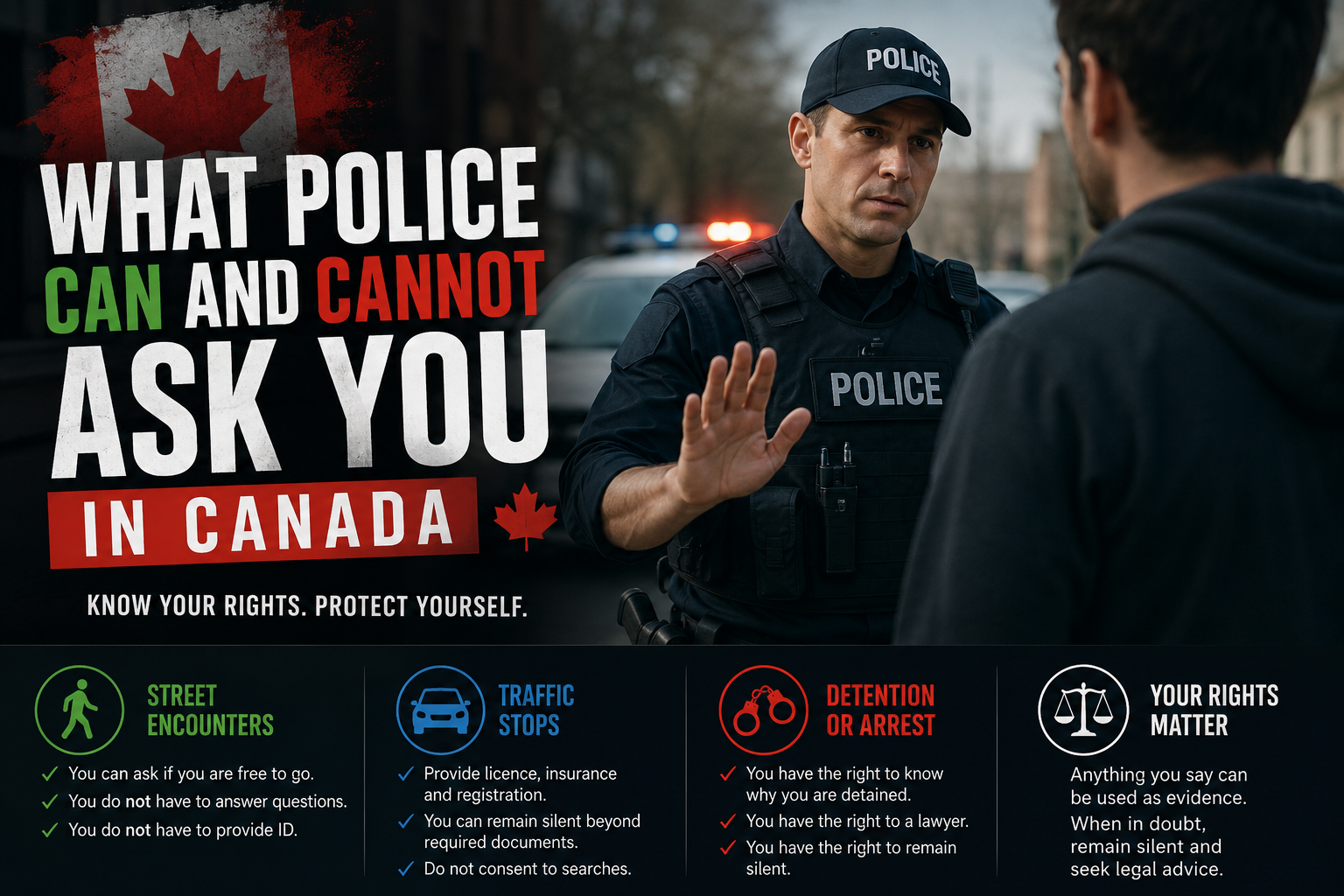
Many Canadians assume they must answer every question a police officer asks. In reality, the law draws a clear line between voluntary conversations, traffic stops, and formal detention. Understanding that distinction can determine when you must cooperate and when you can legally remain silent.
Knowing your rights does not mean resisting police. It means understanding what information you are legally required to provide and when legal protections begin.
When a Police Conversation Is Completely Voluntary
Not every interaction with police is an investigation.
If an officer approaches you on the street and begins asking questions, the encounter is often voluntary unless you are being detained. In these situations, you have the right to clarify your status immediately.
A simple question can establish your position:
- "Am I being detained?"
- "Am I free to go?"
If the officer confirms that you are free to leave, you generally do not have to remain and answer questions.
You also have the right to remain silent during a casual encounter. While officers may ask where you are going, where you have been, or who you are, you are typically not required to answer.
In most street-check situations, you are not legally required to provide identification. If an officer asks for your name or age, they should inform you if providing that information is voluntary.
Why Traffic Stops Follow Different Rules
The rules change significantly once you are operating a vehicle.
Police can stop drivers for lawful purposes such as checking licenses, vehicle registration, insurance coverage, and sobriety. During these interactions, certain documents must be provided upon request.
Drivers are generally required to provide:
- Driver's licence
- Vehicle ownership documents
- Proof of insurance
Beyond these legal requirements, you still maintain the right to remain silent. Questions about where you are coming from, where you are going, or what you were doing are generally separate from your obligation to provide identification and vehicle documentation.
Drivers should also understand that consenting to a vehicle search can affect their legal rights. If officers request permission to search a vehicle, many legal experts recommend speaking with a lawyer before agreeing whenever circumstances permit.
The Moment Detention Changes Everything
A police encounter enters a different legal category when you are detained or arrested.
At that point, police must promptly explain why your freedom is being restricted. They cannot simply hold someone indefinitely without providing the reason for the detention or arrest.
Once detained, several important protections immediately apply:
- The right to know why you are being detained
- The right to contact a lawyer without delay
- The right to receive information about Duty Counsel services
- The right to remain silent
One of the most important protections is access to legal counsel. Police must inform you of this right and provide an opportunity to contact a lawyer.
Until you have spoken with legal counsel, you can decline to answer questions.
Why Remaining Silent Is Often the Most Powerful Right
Many people believe explaining their side of the story immediately will help resolve a situation faster.
Canadian legal protections take a different approach. The right to remain silent exists because statements made during police questioning can later become evidence.
This protection applies regardless of whether a person believes they have done anything wrong.
The legal system places significant importance on ensuring individuals understand their rights before making statements that could affect future investigations or court proceedings.
What Canadians Should Remember During Police Encounters
The most important factor is determining the nature of the interaction.
A voluntary conversation gives you more freedom to leave and decline questions. A traffic stop creates specific obligations tied to driving laws. A detention or arrest triggers constitutional protections, including access to legal counsel.
Understanding which situation applies allows Canadians to make informed decisions while respecting lawful police authority.
FAQ: Brief Insights on Police Rights in Canada
Can police ask me questions on the street?
Yes. However, if the interaction is voluntary and you are not detained, you generally do not have to answer.
Do I always have to show identification?
No. Identification is generally required when driving, when lawfully detained, or when police have legal grounds connected to an investigation.
What should I ask if I am unsure whether I can leave?
Ask, "Am I being detained or am I free to go?" The answer helps determine your legal position.
Can I stay silent after being arrested?
Yes. You have the right to remain silent and the right to speak with a lawyer before answering questions.