
Key Takeaways
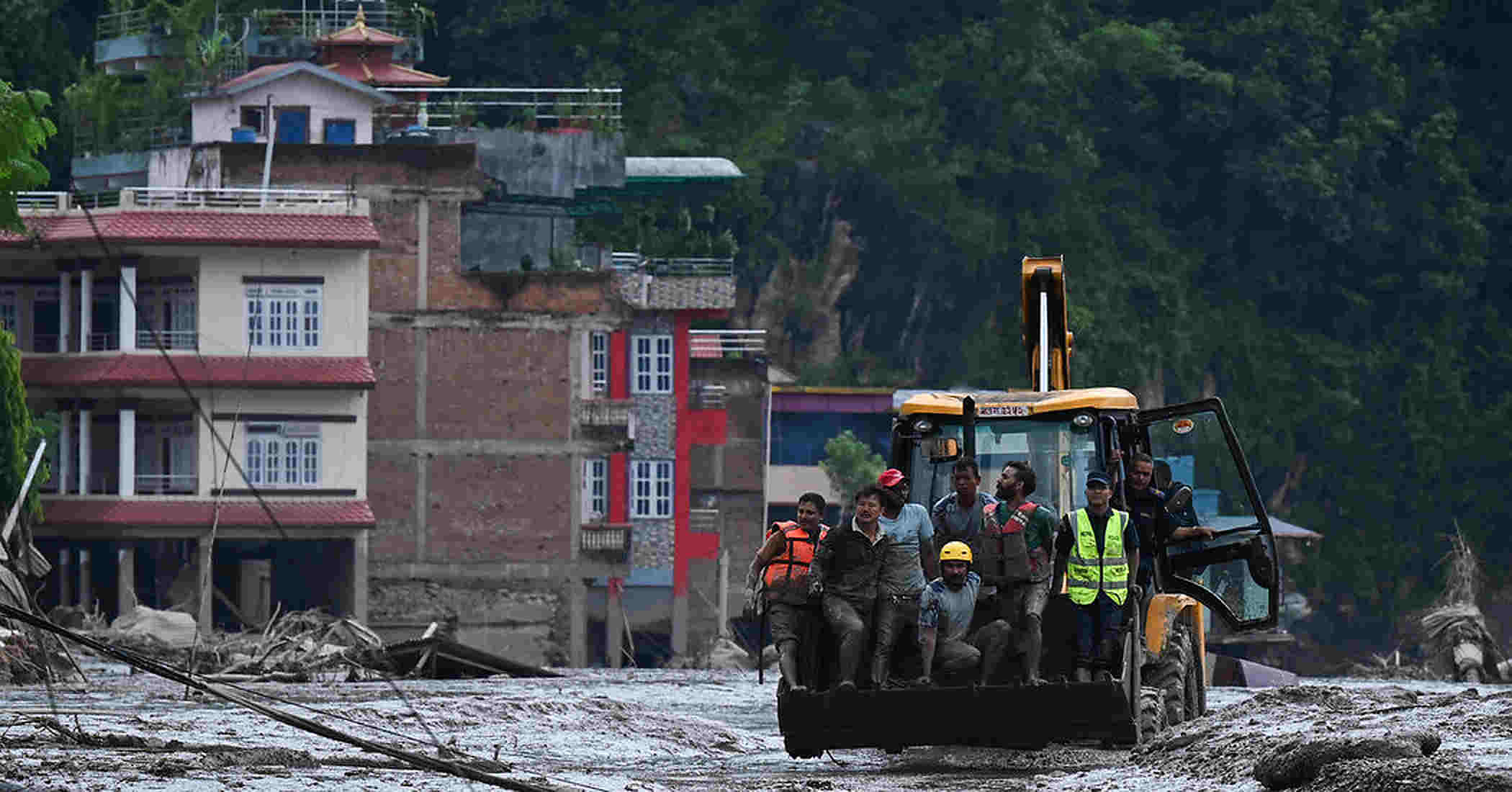
- Nepal has mobilized its state machinery for search, rescue, evacuation and emergency relief following the Rasuwa floods.
- Rescue flights are operating from the morning, with additional helicopters being kept ready to reach people stranded in difficult-to-access areas.
- Emergency teams are sending medical supplies, generators, tents, portable mobile towers and other essential equipment to affected areas.
Nepal Steps Up Rescue and Relief Operations
The Office of the Prime Minister and Council of Ministers said rescue, search and relief operations were intensified immediately after the flood.
The government is also collecting information about the human and physical damage caused by the disaster.
Authorities are working to move affected people to safer locations while continuing rescue operations in areas where access has been disrupted.
The Nepal Consulate General in Dubai said the country's security and disaster-management agencies, local authorities and health services have been fully mobilized for search and rescue, evacuation, emergency medical assistance and relief operations.
Rescue Flights Continue in Rasuwa
Prime Minister Balendra Shah said rescue flights began at around 6:30 a.m. on August 27.
More than 15 rescue flights had been conducted by the time of his update, while additional helicopters were kept on standby for further operations.
The Nepal Army has also been conducting rescue missions in the hardest-hit areas.
People who are critically ill, elderly, women, and children are being given priority for helicopter evacuation.
The government has asked people in affected areas to remain patient and cooperate with rescue and relief teams while operations continue.
Emergency Supplies Are Being Sent to Flood-Hit Areas
Rescue operations are being supported by the rapid movement of essential supplies.
The government is sending generators, medical equipment, tents, and machinery needed to cut through iron and stone to affected locations.
Portable mobile towers are also being deployed because communication systems have been disrupted in some disaster-hit areas.
Temporary arrangements for mobile connectivity and phone charging are being prepared to help affected residents maintain communication with relatives and emergency services.
Temporary Relief Camp Set Up in Nuwakot
A temporary relief camp has been established in Nuwakot.
The camp is providing food and drinking water to people affected by the disaster.
Authorities are also using drone surveys to collect information from affected locations.
The survey work is intended to help emergency teams understand the extent of the damage and plan rescue and relief operations more effectively.
Damage Extends Beyond Rasuwa
The Bhotekoshi flooding has caused extensive damage to critical infrastructure.
The Nepal government says affected areas include Rasuwa, Nuwakot, Dhading and Gorkha.
The Nepal Consulate General in Dubai said homes, roads, bridges, hydropower facilities and other critical infrastructure have suffered extensive damage.
The destruction of roads and bridges is making access to some areas more difficult, increasing the importance of helicopter-based rescue operations.
Why the Rescue Operation Is Difficult
Rasuwa is a mountainous region, and the flood has damaged transportation and communication infrastructure.
This makes it difficult for rescue teams to reach isolated communities by road.
Weather conditions can also affect helicopter operations.
The combination of damaged roads, disrupted communications, and difficult terrain means authorities must rely on multiple methods, including helicopters, ground teams, and drones.
Government Appeals for Support
The Office of the Prime Minister and Council of Ministers has appealed for financial assistance through the Prime Minister's Natural Disaster Relief Fund and Prime Minister's Relief Fund.
The government said immediate priorities include safely relocating affected people and providing relief, while longer-term rehabilitation and reconstruction will also be necessary.
The appeal comes as authorities continue assessing the full scale of the disaster.
What Happens Next?
Search and rescue operations remain the immediate priority.
Authorities will continue looking for missing people, evacuating stranded residents and delivering emergency supplies to areas that have been cut off.
The government is also expected to continue assessing damage to roads, bridges, hydropower projects and other infrastructure.
As more areas become accessible, officials will be able to develop a clearer picture of the disaster's overall human and economic impact.
TwikUp Insight
The Rasuwa flood has quickly developed into a major national emergency for Nepal.
The immediate focus is on saving lives, reaching isolated communities, and restoring basic communication and access.
The deployment of helicopters, drones, emergency medical supplies, and temporary communication equipment shows that authorities are treating the situation as a large-scale disaster rather than a localized flooding event.
However, the final human and infrastructure toll is still being assessed.
Because rescue teams are continuing to reach previously inaccessible areas, casualty and missing-person figures may change as more information becomes available.
For now, the priority remains clear: rescue those stranded, provide emergency assistance, and begin restoring essential infrastructure in the affected communities.