
Key Takeaways
- Roman is already in space, heading to L2.
- Its 18 detectors now double as its guide system.
- Alignment good to a fraction of a hair.
Already in Space, Already in Sync
The Nancy Grace Roman Space Telescope is on its three-month cruise to Sun-Earth Lagrange Point 2 (L2), a million miles from Earth — and its handlers are not waiting for arrival to get to work. NASA reports the observatory's optics and instruments have now been precisely aligned in space, during commissioning.
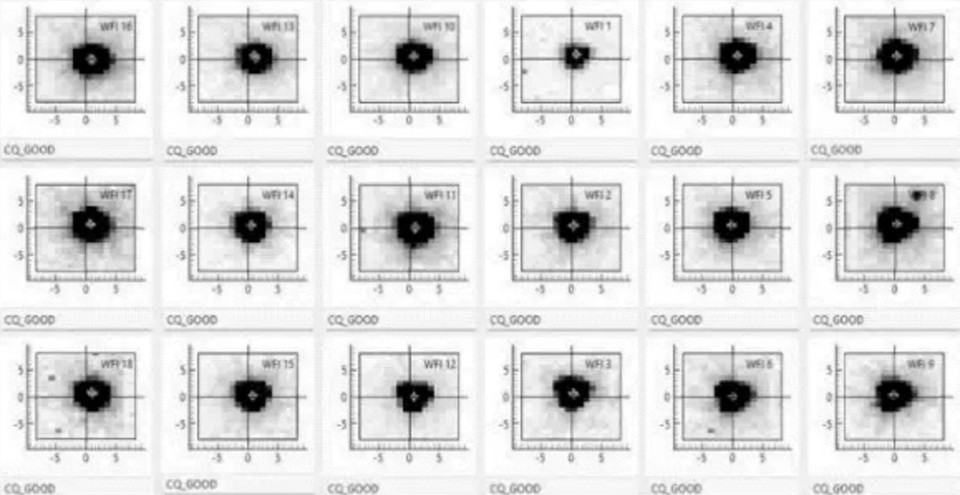
Roman's Wide Field Instrument carries 18 detectors, which double as the observatory's guider: scientists observed stars, compared where they actually appeared against where they were expected, and updated Roman's internal map of guide-star positions across the detectors. The result, per astronomer Tony Sohn of the Space Telescope Science Institute, is a telescope "internally aligned to within a tiny fraction of a hair's breadth of perfection."
The bar is extreme: Roman "must be at least ten times more stable than Hubble or Webb" to do its science, program scientist Dominic Benford noted.
A coronagraph with 3,000 moving parts
Engineers also adjusted the secondary mirror feeding the Coronagraph Instrument, Roman's planet-hunting camera, along with its masks and optics. Next comes the delicate part: exercising the more than 3,000 small moving parts in the coronagraph's deformable mirrors, which bend to block starlight while letting the faint light of planets through — active starlight control being demonstrated in space for the first time.
While the coronagraph stares at nearby stars, the Wide Field Instrument will simultaneously track stars in a neighbouring patch of sky, yielding "bonus deep fields" in largely unsurveyed regions.
NASA has not published a date for first science images; commissioning continues through the cruise to L2 and beyond.
The Twikup Take
Telescopes used to be aligned on the ground and hoped over. Roman is being tuned in flight, a million miles out, to tolerances measured in fractions of a hair — because the planets it hunts are a billion times fainter than the stars hiding them.
Image: Star images from Roman's 18 Wide Field Instrument detectors during in-space alignment. Image: NASA, via science.nasa.gov.