
Key Takeaways
- A 12-year study of 443 wild female Asian elephants found their social networks fracture into smaller, more isolated groups as deaths and departures accumulate.
- The relationships among surviving elephants changed too — the first evidence of a persistent social state change in a long-lived land mammal from gradual turnover alone.
- The finding suggests conservation headcounts can miss the loss of the social structure that carries knowledge between generations.
An Elephant Herd Can Fall Apart Even While Its Elephants Are Still Alive, 12-Year Study Finds
An elephant can survive the loss of a family member. But what happens when those losses keep coming, year after year?
Eventually, the entire society can change.
A 12-year study of 443 wild female Asian elephants, published in Science, reveals something conservation headcounts cannot capture: when older elephants die or leave, the herd's social network does not simply get smaller.
It breaks into smaller, more isolated groups.
And even the elephants that remain alive begin forming different relationships.
Researchers spent more than a decade tracking which elephants spent time together. They discovered that gradual losses, one elephant at a time, eventually pushed the social network into a different, more fragmented state.
And it stayed that way.
This is the first empirical evidence of such a lasting social change in a long-lived land mammal caused by gradual turnover alone.
No sudden catastrophe is needed. No massacre. No habitat wall.
Just one loss. Then another. Until the society is no longer the same.
Why It Matters Beyond the Numbers
Imagine counting every elephant in a herd but missing the one thing holding them together.
Their relationships.
Conservation efforts often focus on how many animals remain alive. But this study highlights something those numbers can miss: the connections between elephants.
Those relationships can help pass knowledge between generations — including where to find water during droughts and which routes are safe.
When older females disappear, the herd may lose more than individual animals. It may also lose connections that help younger elephants learn and survive.
A population can appear stable on paper while its social network is quietly falling apart.
There are important limits to the findings.
This was an observational field study, not an experiment. Researchers followed female elephants only; males have looser social relationships. The study also did not test whether any conservation intervention could prevent the changes.
What it did document was a lasting shift in social structure over 12 years in the wild.
And that raises a conservation question: Is keeping elephants alive enough if the relationships connecting them are disappearing?
The Twikup Take
Poaching and trophy selection can target older elephants, particularly those with larger tusks.
But those animals may carry something far more valuable than ivory: decades of experience and relationships that connect the herd.
The study does not establish that poaching caused the changes it observed. It does, however, show why losing older animals can have consequences that headcounts alone may miss.
Saving elephants means protecting more than their lives. It means protecting the connections that make them a society.
Wildlife and conservation note: This observational study identifies changes in elephant social networks; it does not establish that those changes directly caused reduced survival or prove which conservation interventions would prevent them.
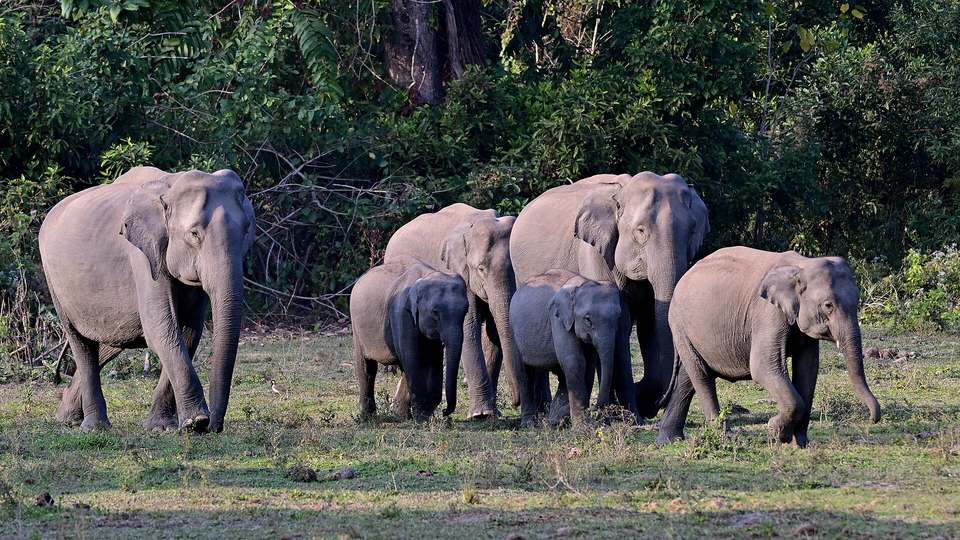
Image: A family of Asian elephants. Photo by Drashokk, via Wikimedia Commons, CC BY-SA 4.0.