
Key Takeaways
- On Wednesday, Nov. 18, 2026, at 5:16:07 a.m. EST, Voyager 1 will reach one light-day from Earth — a first for any human-made object.
- One light-day is about 16.1 billion miles, the distance light travels in 24 hours.
- A radio signal from Voyager 1 will then take a full day to reach Earth.
A milestone nearly 50 years in the making
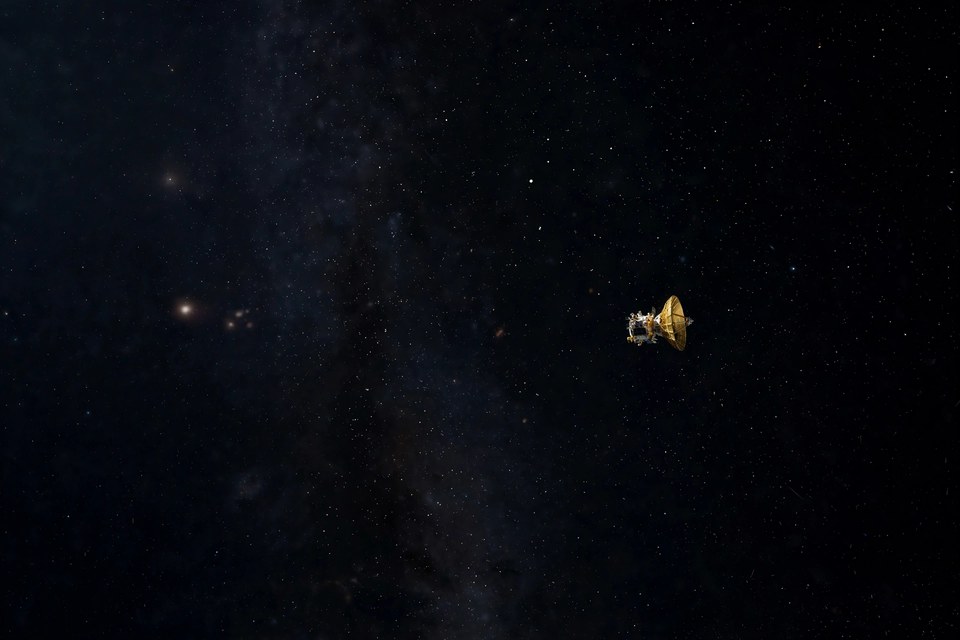
Next Wednesday, Voyager 1 will cross a line no human-made object has ever crossed. According to NASA, at 5:16:07 a.m. EST on November 18, 2026, the spacecraft will be one light-day from Earth — so far away that light, travelling at approximately 186,000 miles per second, takes a full 24 hours to cover the distance.
How far is a light-day?
One light-day is approximately 16.09 billion miles, or 25.9 billion kilometres. Voyager 1 launched on September 5, 1977, and will reach the milestone more than 49 years later, travelling through space at nearly 38,000 miles per hour relative to the Sun. The scale is easier to grasp by comparison. Light travels from the Moon to Earth in approximately 1.3 seconds and from the Sun in about 8 minutes and 20 seconds. Depending on the planets' positions, Mars is roughly 3 to 22 light-minutes from Earth. Neptune is several light-hours away. Voyager 1 is about to reach a full light-day.
What happens next
NASA is marking the milestone with a worldwide celebration called "Shine Bright for Voyager's Light-Day." After sunset on Tuesday, November 17, people are invited to flash Voyager's call sign, VGR, in Morse code using phones, flashlights or other lights. Voyager 1 is travelling in the direction of Gliese 445, a star currently more than 17 light-years from Earth. In approximately 40,000 years, the spacecraft is expected to pass within about 1.7 light-years of that star. Its twin, Voyager 2, followed a different trajectory, visiting Uranus and Neptune. It is expected to reach the one-light-day distance around 2035, although the exact date will depend on its trajectory and Earth's position.
The Twikup Take
A spacecraft launched when disco ruled the radio is about to be a full day of light-travel from home — and it is still communicating with Earth. At that distance, a message and its reply take approximately 48 hours just to travel through space. The milestone captures both the extraordinary endurance of 1970s engineering and the patience required to explore the universe. Image: Illustrative image.