
Key Takeaways
- Mangroves gained nearly 2,000 km² since 2010.
- Two-thirds spread into new areas.
- They store up to 4× the carbon of rainforests.
A Reversal 40 Years in the Making
For decades, the mangrove story was one of loss: chainsaws, shrimp farms and coastal development cut the world's mangrove forests by nearly 3,000 square kilometres between 1984 and 2010. A new global analysis of Landsat satellite imagery from 1984 to 2023 — published in Science and featured by NASA Earth Observatory — shows the trend has flipped: since 2010, mangroves have gained nearly 2,000 square kilometres, and many surviving forests have grown denser, healthier canopies.
"Other research groups have mapped and analyzed long-term changes in select regions, but these are the first global mangrove maps that cover such a long period," said lead researcher Zhen Zhang of Tulane University.
How a forest comes back
About two-thirds of the expansion came from mangroves colonizing new ground — riding sediment that builds fresh mudflats at the Amazon's mouth, in northern Australia and in Myanmar — while one-third came from restoration and regrowth in degraded areas. Awareness and planting surged after the 2004 Indian Ocean tsunami showed how mangroves shield coasts; stronger legal protections helped; and warming temperatures with fewer freezes are letting mangroves creep poleward at their range edges.
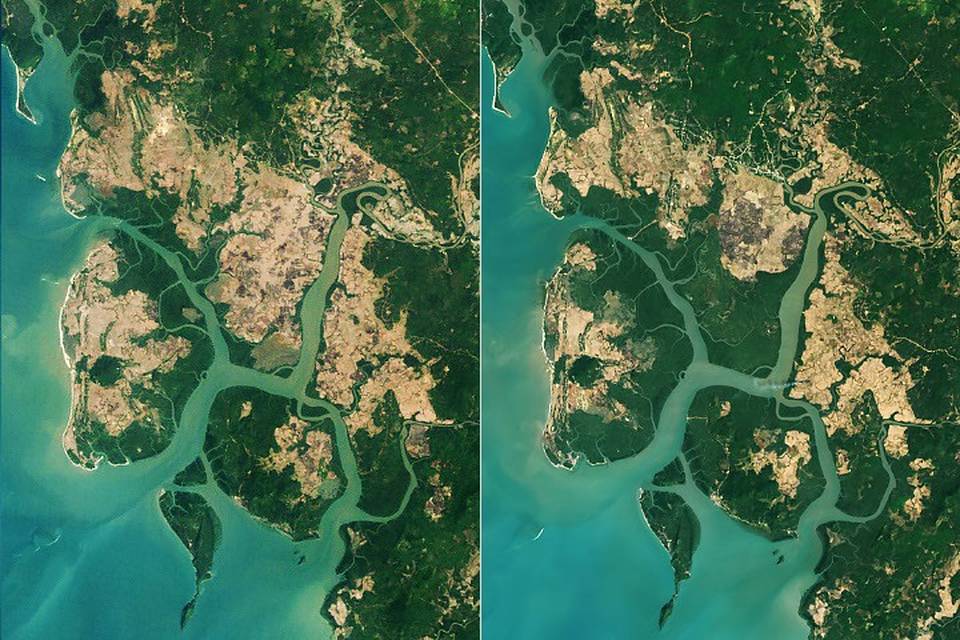
Myanmar tells the whole story in one country: it lost 28.6% of its mangroves by 2010, and has regrown about 10% since — visible in satellite pairs of abandoned rice fields turning green again.
The rebound is not universal: the Niger Delta is still losing mangroves, dragging West and Central Africa negative, and cyclones are degrading forests in North America and southern Africa.
Why it matters
Mangroves average only about 13 metres tall, yet they store up to four times as much carbon as taller inland tropical forests, buffer coasts against storm surge, and shelter the young of countless fish, shrimp and crab species in their stilt roots.
"The global successes we've seen with mangroves during the past decade should not be seen as grounds for complacency," Zhang cautions.
The Twikup Take
Environmental news rarely runs in this direction: a measured, satellite-verified comeback for one of the planet's hardest-working ecosystems. The lesson inside it is plain — protect what's left, and nature does a surprising share of the rebuilding itself.
Image: Landsat satellite images of mangrove regrowth near Palaw Township, Myanmar (2010 vs 2026). Image: NASA Earth Observatory, via science.nasa.gov.