
Key Takeaways
- Algal DNA survived 155 generations in hamster cells.
- Nearly the whole algal genome transferred.
- The cells did not gain photosynthesis.
Meet the "Planimal" Cells
What happens when you put the DNA of an alga inside a hamster cell?
Apparently, the animal cell keeps it — for generation after generation.
A research team led by Professor Sachihiro Matsunaga at the University of Tokyo has achieved something remarkable: transferring the genome of a single-celled red alga into mammalian cells and watching it survive across generations.
The study, published in Nature Communications, used the hot-spring alga Cyanidioschyzon merolae, chosen because its nuclear genome is exceptionally compact, containing just 20 chromosomes.
Researchers fused the alga with cultured cells, including Chinese hamster ovary cells, mainly through chemical cell fusion.
Matsunaga coined the term "planimal" for these plant–animal cell hybrids back in 2018.
What survived
Here's where things get remarkable.
One hamster-derived cell line retained approximately 16.3 million base pairs of algal nuclear DNA — nearly the alga's entire nuclear genome.
The imported sequences came from all 20 algal chromosomes and were physically linked to mammalian chromosomes.
Even more surprisingly, one planimal cell line continued growing in culture through its 155th cell generation while retaining much of the imported genome.
Substantial portions of the foreign DNA also survived for 95 generations without any selection pressure keeping them there.
In other words, this wasn't just a temporary genetic visitor. The mammalian cells kept passing the foreign DNA along as they divided.
The honesty beat
So, did the hamster cells become photosynthetic?
No.
And this is arguably the most interesting part of the experiment.
Roughly 96% of the transferred algal protein-coding genes were not detectably expressed.
The mammalian cells had wrapped the foreign DNA in repressive chemical marks, effectively switching most of its genetic instructions off. The researchers call this defence "epigenetic gatekeeping."
There's another problem: algal DNA alone cannot produce photosynthesis. Working chloroplasts and the right gene regulation would also be needed.
And to be clear, these were cultured laboratory cell lines. No living animal was created. The foreign DNA was inherited through cell division in a dish, not through reproduction.
Why it matters anyway
This is the first demonstration that a mammalian cell can stably inherit a chromosome-scale foreign genome across the plant–animal divide.
That makes planimal cells a new model for studying how cells tolerate large amounts of foreign DNA.
Far in the future, the technique could also offer a route to cells that borrow selected algal abilities for applications such as biomanufacturing or carbon capture.
The Twikup Take
The headline sounds like scientists created a plant-animal hybrid. But the real breakthrough is even more fascinating: they transferred almost an entire algal genome into mammalian cells, and those cells kept passing it along for generations.
There's just one catch. The hamster cells accepted the DNA but largely refused to read it.
Getting foreign genes inside a cell is impressive. Getting that cell to actually use them is the next challenge.
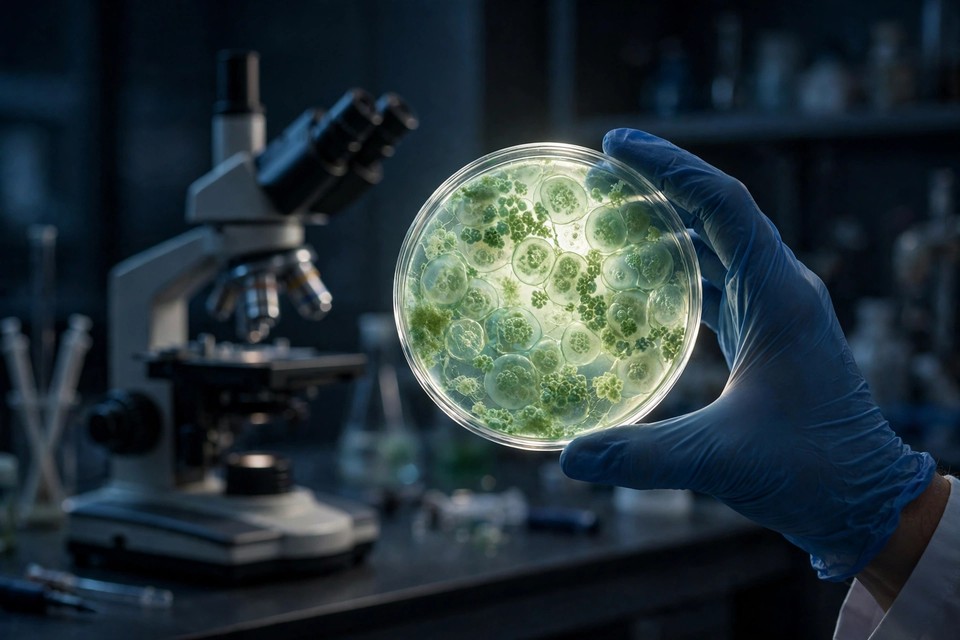
Image: Illustrative image.