
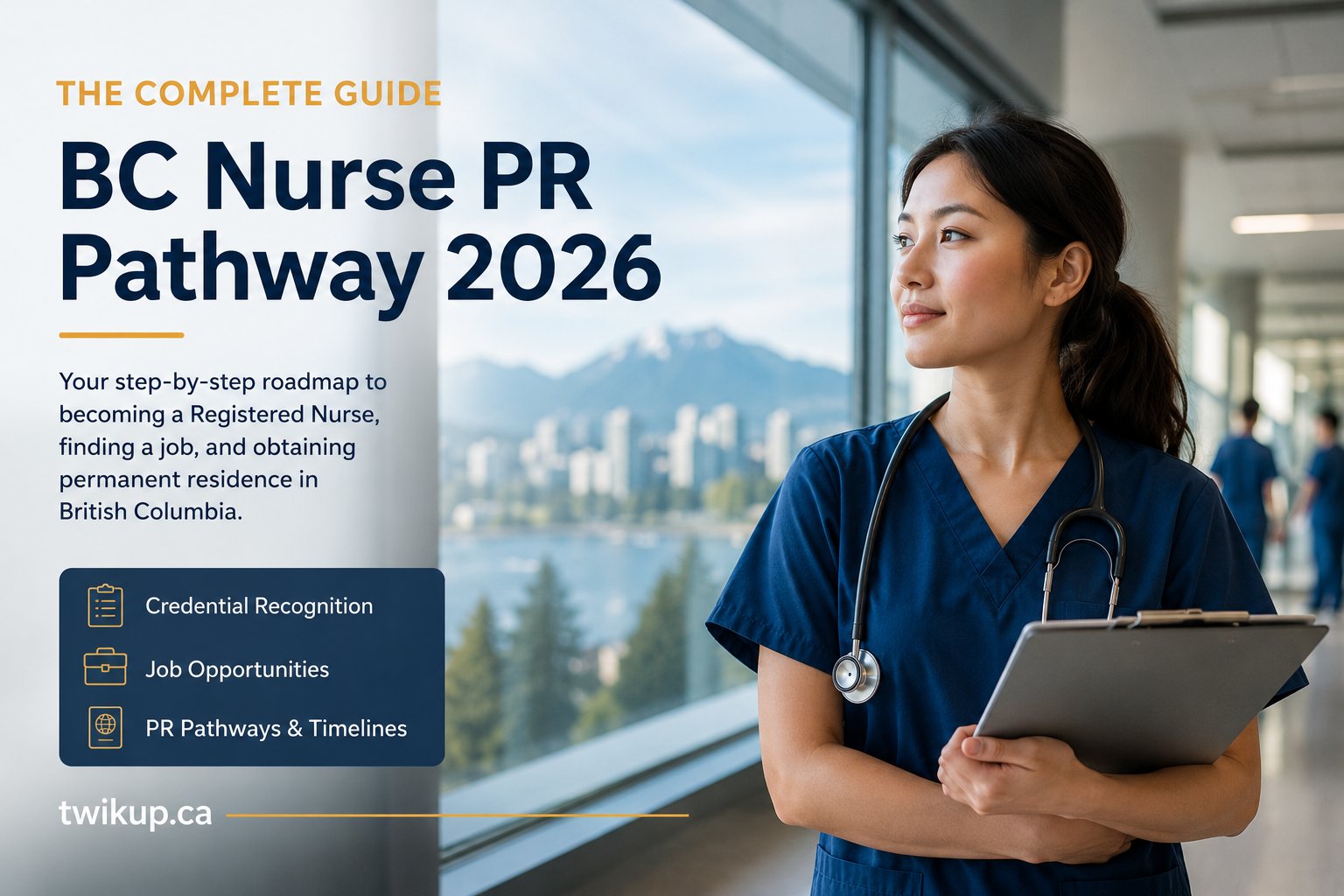
British Columbia is experiencing one of the most severe nursing shortages in its history. With a deficit of over 7,000 registered nurses and demand growing alongside an aging population and expanding healthcare infrastructure, BC has made internationally educated nurses (IENs) a top immigration priority. The pathway from foreign nursing credentials to BC permanent residence has been streamlined significantly in recent years, creating one of the most accessible and well-supported PR routes in the province.
This guide covers everything internationally educated nurses need to know about obtaining permanent residence in BC in 2026: credential recognition, registration with the BC College of Nurses and Midwives, immigration streams, processing timelines, and practical settlement information.
Why BC Needs Nurses: The Shortage Context
The nursing shortage in BC is structural, driven by multiple simultaneous pressures:
- Aging workforce: Over 30% of BC's registered nurses are over 50. Retirements are accelerating faster than domestic training programs can replace them
- Population growth: BC's population has grown significantly due to immigration and inter-provincial migration, increasing healthcare demand
- Expanded scope of practice: Nurse practitioners and RNs are taking on expanded roles previously held by physicians, increasing per-capita demand
- Mental health and addictions crisis: The overdose epidemic and mental health service expansion require more nursing staff
- Long-term care expansion: An aging population is driving rapid growth in residential care, creating massive demand for LPNs and Care Aides
- Pandemic backlog: Healthcare system backlogs created by COVID-19 have not been fully cleared, maintaining elevated demand
This shortage context translates directly into immigration priority. BC's six health authorities are designated employers for the BC PNP Health Authority Stream, and nurses with job offers from these employers receive dedicated immigration pathway access.
Types of Nurses and Their BC Immigration Pathways
BC recognizes several nursing designations, each with its own registration body, educational requirements, and immigration pathway:
| Designation | Abbreviation | Registration Body | Typical Education | NOC Code |
|---|---|---|---|---|
| Registered Nurse | RN | BCCNM | 4-year BScN degree or equivalent | 31301 |
| Nurse Practitioner | NP | BCCNM | Master's degree + RN experience | 31302 |
| Licensed Practical Nurse | LPN | BCCNM | 2-year diploma | 32101 |
| Registered Psychiatric Nurse | RPN | CRPNBC | 4-year BPN degree (BC-specific) | 31301 |
| Health Care Aide / Care Aide | HCA | BC Care Aide Registry | Certificate program | 33102 |
The most accessible immigration pathways are for Registered Nurses and Licensed Practical Nurses due to the volume of positions available and the structured credential recognition process.
Part 1: Credential Recognition
Before you can work as a nurse in BC, your foreign nursing credentials must be assessed and recognized by the appropriate regulatory body. This process is separate from immigration and must be initiated early, as it can take 6 to 24 months depending on your country of training, credential type, and individual circumstances.
Registered Nurses: BCCNM Assessment Process
The BC College of Nurses and Midwives (BCCNM) is the regulatory body for RNs, NPs, and LPNs in BC. The credential recognition process for internationally educated RNs involves several sequential stages:
Stage 1: Initial Application to BCCNM
Submit your initial application and documents to BCCNM through their online portal. Required documents include:
- Proof of nursing education (official transcripts, course descriptions, program outline)
- Proof of nursing registration or licensure in your country of training
- Proof of nursing practice (employment verification letters from current and previous employers)
- English language proficiency test results
- Government-issued identification
- Completed application forms with applicable fees
BCCNM assesses whether your nursing education is substantially equivalent to a Canadian Bachelor of Science in Nursing (BScN) degree. This assessment considers:
- Total hours of theory and clinical practice
- Core subject areas covered
- Clinical placement settings
- Program duration and intensity
- Regulatory oversight in country of training
Assessment outcomes:
| Outcome | Meaning | Next Steps |
|---|---|---|
| Substantially equivalent | Your education meets BC standards | Proceed to NCLEX-RN |
| Partially equivalent | Your education has identified gaps | Complete bridging program |
| Not substantially equivalent | Significant additional education required | Return to school or appeal |
The majority of internationally educated nurses from countries with strong nursing regulatory frameworks (Philippines, India, UK, Ireland, Australia, New Zealand, United States, Caribbean nations) receive substantially equivalent or partially equivalent assessments.
Stage 2: English Language Proficiency
All internationally educated nurses must demonstrate English language proficiency regardless of whether their country of origin uses English as an official language. The minimum standards for Registered Nurses are among the highest of any profession in BC:
| Test | Minimum Required Scores |
|---|---|
| IELTS Academic | Listening 7.5, Reading 6.5, Writing 7.0, Speaking 7.0 |
| CELBAN | Listening 8, Reading 7, Writing 7, Speaking 8 |
| OET (Occupational English Test) | Grade B in all four skills |
CELBAN is strongly recommended for internationally educated nurses. It is specifically designed for healthcare workers and uses medical and clinical scenarios that are more familiar and relevant to nursing practice than general English examinations. Many internationally educated nurses find CELBAN scores easier to achieve than IELTS Academic because the content matches their professional knowledge.
CELBAN testing centers are available across Canada and internationally. Results are valid for two years.
Language exemption: BCCNM may exempt applicants from language testing if they completed their entire nursing education in English at an accredited institution in Canada, the United States, United Kingdom, Ireland, Australia, or New Zealand. This exemption is assessed case by case and is not automatic.
Stage 3: NCLEX-RN Examination
The National Council Licensure Examination for Registered Nurses (NCLEX-RN) is a standardized licensing examination used across Canada (except Quebec) and the United States. Passing the NCLEX-RN is required for registration as an RN in BC.
Key NCLEX-RN facts:
| Factor | Details |
|---|---|
| Format | Computerized adaptive testing (CAT) |
| Duration | Minimum 75 questions, maximum 145 questions |
| Testing time | Up to 5 hours |
| Pass/fail | Results typically available within 48 hours |
| Cost | Approximately $400 CAD (2026) |
| Testing locations | Pearson VUE centers across BC and internationally |
| Retake policy | Candidates may retake after 45-day waiting period |
NCLEX-RN preparation resources specifically designed for internationally educated nurses include:
- BCCNM-approved preparatory programs: Several BC institutions offer NCLEX prep courses
- UWorld NCLEX: The most widely used online question bank
- Kaplan NCLEX: Comprehensive review program
- Archer NCLEX Review: Popular with internationally educated nurses
- Mark Klimek Audio Lectures: Free resource widely used internationally
Pass rates: BC internationally educated nurses have an overall NCLEX-RN pass rate of approximately 65 to 70% on first attempt, compared to approximately 85% for Canadian-educated nurses. Adequate preparation time, typically 3 to 6 months of dedicated study, significantly improves outcomes.
Stage 4: Additional Requirements
After passing NCLEX-RN, BCCNM may require:
- Jurisprudence examination: An online examination testing knowledge of BC nursing legislation and professional standards. Free of charge. Most candidates pass on first attempt.
- Criminal record check: Required for all healthcare workers in BC. Processed through the Criminal Records Review Program.
- Practice hours verification: Confirmation that you have practiced nursing within the past five years (or completion of a re-entry program if you have been inactive)
- Liability insurance: Nurses must carry professional liability insurance, typically provided through membership in the Canadian Nurses Protective Society (CNPS)
Stage 5: Registration and Licence
Upon meeting all requirements, BCCNM issues your licence to practice as a Registered Nurse in BC. Your registration is valid for one year and must be renewed annually. Annual renewal requires:
- Completion of continuing competence requirements
- Payment of annual registration fee (approximately $700 to $800 CAD)
- Maintenance of liability insurance
- Declaration of practice hours and continuing education
Licensed Practical Nurses: BCCNM LPN Assessment
The credential recognition process for internationally educated Licensed Practical Nurses follows a similar structure to the RN pathway but with different educational benchmarks and the NCLEX-PN examination rather than NCLEX-RN.
LPN Credential Assessment
BCCNM assesses LPN credentials against the Canadian practical nursing education standard, typically a two-year diploma program. Required documents are similar to the RN process.
Countries with well-recognized LPN equivalents include:
- Philippines (Nurse aide or midwife credentials often partially equivalent)
- India (ANM - Auxiliary Nurse Midwife credentials assessed individually)
- Caribbean nations (Practical nursing programs)
- United Kingdom (Healthcare assistants with additional training)
- United States (Licensed Practical Nurses or Licensed Vocational Nurses)
Language Requirements for LPNs
| Test | Minimum Required Scores |
|---|---|
| IELTS Academic | Listening 6.0, Reading 6.0, Writing 6.0, Speaking 6.0 |
| CELBAN | Listening 7, Reading 6, Writing 6, Speaking 7 |
| OET | Grade B in all four skills |
LPN language requirements are slightly lower than RN requirements but remain significantly above general immigration language thresholds.
NCLEX-PN Examination
LPNs write the NCLEX-PN rather than NCLEX-RN. The format is similar (computerized adaptive testing) but reflects the scope of practice of practical nursing. Testing fees and retake policies are identical to the NCLEX-RN.
Bridging Programs for Internationally Educated Nurses
If BCCNM determines your credentials are partially equivalent, you may be required to complete a bridging program to address identified gaps before proceeding to NCLEX-RN or NCLEX-PN.
BC offers several IEN bridging programs:
| Program | Institution | Duration | Delivery |
|---|---|---|---|
| IEN Bridging Program | Langara College | 3 to 6 months | In-person and online |
| Internationally Educated Nurses Program | Douglas College | 4 to 8 months | In-person |
| IEN Integration Program | Vancouver Community College (VCC) | 3 to 6 months | Hybrid |
| Nursing Bridging Program | BCIT | 4 months | In-person |
| IEN Program | University of the Fraser Valley | 4 to 6 months | Hybrid |
Bridging programs typically cover:
- Canadian healthcare system orientation
- BC nursing legislation and professional standards
- Clinical skills updating and simulation
- Medication administration (Canadian practices)
- Cultural competency in Canadian healthcare
- NCLEX-RN or NCLEX-PN preparation
Funding for bridging programs: The BC Ministry of Health and several health authorities offer bursaries and funding support for IENs completing bridging programs. Contact the health authority where you have accepted or are seeking employment for available funding.
Part 2: Working in BC Before Full Registration
Many internationally educated nurses arrive in BC and need to work in nursing while completing their credential recognition process. Several pathways allow this:
Temporary Provisional Registration
BCCNM offers a Temporary Provisional Registration category that allows IENs who have passed their English language requirement and received a substantially or partially equivalent credential assessment to work in BC under supervision while completing remaining requirements (typically NCLEX-RN).
Temporary Provisional Registration is valid for up to 12 months and requires:
- Employment offer from a BC health authority or approved healthcare employer
- Supervision arrangement with a fully registered RN
- Agreement to complete remaining registration requirements within the provisional period
Health Care Aide Registration
IENs whose credentials are assessed as not substantially equivalent, or who are waiting for assessment, may work as Health Care Aides (HCAs) while completing bridging programs. HCA registration through the BC Care Aide Registry is faster and less complex than RN or LPN registration.
Working as an HCA provides:
- Canadian healthcare work experience
- Familiarity with BC healthcare practices
- Income during the credential recognition process
- Potential employer relationships that can lead to sponsored nursing positions
Part 3: Immigration Pathways for BC Nurses
With nursing credentials recognized or in progress, internationally educated nurses have access to several immigration pathways in BC. The optimal pathway depends on your current status, work experience, and timeline.
Pathway 1: BC PNP Health Authority Stream (Recommended)
The BC PNP Health Authority Stream is the primary and most advantageous immigration pathway for internationally educated nurses with job offers from BC health authorities.
What Is the Health Authority Stream?
This dedicated stream within BC PNP is specifically designed for workers with valid job offers from BC's six regional health authorities:
| Health Authority | Primary Service Area | Major Facilities |
|---|---|---|
| Fraser Health | Surrey, Langley, Abbotsford, Burnaby, New Westminster | Surrey Memorial, Royal Columbian, Abbotsford Regional |
| Vancouver Coastal Health | Vancouver, Richmond, North Shore, Sea-to-Sky | VGH, St. Paul's, Lions Gate, Richmond Hospital |
| Island Health (VIHA) | Vancouver Island, Gulf Islands | Victoria General, Royal Jubilee, Nanaimo Regional |
| Interior Health | Okanagan, Kootenays, Thompson | Kelowna General, Royal Inland, Penticton Regional |
| Northern Health | Prince George, Northwest BC, Northeast BC | UHNBC, Mills Memorial, Fort St. John Hospital |
| Providence Health Care | Vancouver (Catholic health facilities) | St. Paul's Hospital, Mount Saint Joseph, Holy Family |
Health Authority Stream Eligibility
| Requirement | Details |
|---|---|
| Job offer | Full-time, indeterminate position from a BC health authority |
| Occupation | NOC TEER 0, 1, 2, or 3 (RN = 31301 TEER 1, LPN = 32101 TEER 2) |
| Wage | At or above the wage rate established in the health authority collective agreement |
| Language | CLB 7 for TEER 1, CLB 4 for TEER 2 (though BCCNM language requirements are higher) |
| Registration | Valid BCCNM registration or eligible for provisional registration |
| Status | Valid immigration status in Canada |
Health Authority Stream SIRS Scoring
Health Authority Stream candidates are scored and ranked through the same SIRS system as other Skills Immigration candidates. However, health authority job offers typically generate high SIRS scores because:
- Health authority wages are set by collective agreement and are generally above BC median wages for nursing occupations
- RN positions (NOC 31301, TEER 1) are high-value occupations in the SIRS system
- Many health authority facilities are located outside Metro Vancouver (Interior Health, Northern Health, Island Health), earning regional priority bonus points
Recent Health Authority Stream draws have required minimum scores of 90 to 115 for nursing occupations.
How to Get a Health Authority Job Offer
Securing a job offer from a BC health authority is the essential first step for this stream. Health authorities hire internationally educated nurses through several mechanisms:
Direct Application: Each health authority maintains its own careers portal. Internationally educated nurses with BCCNM provisional or full registration can apply directly to posted positions:
- Fraser Health Careers: careers.fraserhealth.ca
- Vancouver Coastal Health Jobs: vch.ca/about-vch/careers
- Island Health Careers: islandhealth.ca/learn-about-us/careers
- Interior Health Careers: interiorhealth.ca/careers
- Northern Health Careers: northernhealth.ca/about-us/careers
- Providence Health Careers: providencehealthcare.org/careers
International Nurse Recruitment Programs: Several health authorities run dedicated international nurse recruitment programs that actively recruit IENs from specific countries. These programs often include:
- Credential assessment support
- Bridging program funding
- Relocation assistance
- Temporary accommodation support
- Mentorship and integration programs
Fraser Health and Vancouver Coastal Health have been particularly active in recruiting nurses from the Philippines, India, the United Kingdom, and the Caribbean through formal international recruitment partnerships.
Nursing Agencies: Healthcare staffing agencies that specialize in placing internationally educated nurses in BC health authorities can assist with job placement. Reputable agencies include:
- Hays Healthcare
- CareStaff
- Health Match BC (government-run)
- Nursing Agencies BC
Health Match BC: Health Match BC is a government-operated recruitment service that matches internationally educated healthcare professionals, including nurses, with BC employers. Registration is free. Health Match BC actively works with health authorities, rural hospitals, and community health centers to place IENs.
Website: healthmatchbc.org
Pathway 2: BC PNP Skilled Worker Stream
For internationally educated nurses who have a job offer from a private healthcare employer (private clinic, private long-term care facility, home care agency) rather than a health authority, the BC PNP Skilled Worker Stream is the appropriate pathway.
Skilled Worker Stream for Nurses
| Requirement | Details |
|---|---|
| Job offer | Full-time, indeterminate position from any BC employer |
| Experience | Minimum 2 years of nursing experience in past 10 years |
| Wage | At or above BC median wage for NOC 31301 or 32101 |
| Registration | Valid BCCNM registration |
| Language | CLB 7 for RN (TEER 1), CLB 4 for LPN (TEER 2) |
The Skilled Worker Stream competes in general Skills Immigration draws rather than dedicated health draws. For nurses with health authority job offers, the Health Authority Stream is preferable. For nurses in private healthcare employment, the Skilled Worker Stream is the primary option.
Pathway 3: Express Entry Federal Skilled Worker Program
Internationally educated nurses who are registered in BC (or who hold equivalent registration in another province) and have one year of skilled work experience may qualify for Canada's federal Express Entry system independently of BC PNP.
Federal Skilled Worker Program for Nurses
| Factor | Details |
|---|---|
| NOC 31301 (RN) | TEER 1 — qualifies for Federal Skilled Worker |
| NOC 32101 (LPN) | TEER 2 — qualifies for Federal Skilled Worker |
| Language | CLB 7 minimum (all four skills) |
| Experience | 1 year continuous full-time experience in past 10 years |
| Education | Post-secondary credential + ECA from designated organization |
| Points | Minimum 67 FSW points required |
A strong Express Entry profile also earns bonus SIRS points in BC PNP, creating a synergistic effect. Nurses with both a BC PNP registration and a high Express Entry CRS score are in a very strong immigration position.
Express Entry CRS Score Considerations for Nurses:
The typical CRS score for an internationally educated nurse applying through Express Entry alone (without a provincial nomination) ranges from approximately 430 to 480 points depending on age, language scores, education, and spouse factors. This score range is generally not competitive for general draws, which have recently required 480 to 510+ points.
However, a BC PNP nomination adds 600 CRS points, making the overall score approximately 1,030 to 1,080, which guarantees an ITA in the next Express Entry draw. This is why BC PNP nomination through the Health Authority Stream or Skilled Worker Stream is significantly more reliable than waiting for a federal Express Entry draw.
Pathway 4: Rural and Northern Immigration Pilot (RNIP)
Nurses willing to work in designated rural and northern BC communities may qualify for the Rural and Northern Immigration Pilot, which provides a community-specific PR pathway with lower requirements than BC PNP in some cases.
RNIP-designated communities in BC include:
- North Bay region communities
- Vernon
- West Kootenay (Trail area)
Each RNIP community sets its own occupational needs list. Nursing occupations are typically on the priority list for all RNIP communities due to universal healthcare shortages in rural settings.
Pathway 5: Atlantic Immigration Program and Other Provincial Pathways
While this guide focuses on BC, internationally educated nurses who are open to working anywhere in Canada should be aware that Nova Scotia, New Brunswick, Prince Edward Island, and Newfoundland also have nursing-specific immigration pathways with potentially lower competition and faster timelines.
For nurses whose primary goal is Canadian permanent residence and whose preference for BC is flexible, exploring Atlantic provinces may result in a faster overall pathway, after which internal migration to BC is possible once PR is obtained.
Part 4: Step-by-Step BC Nurse PR Application Process
The following timeline integrates both credential recognition and immigration steps:
Phase 1: Credential Recognition (Months 1 to 18)
Month 1 to 2: Initiate BCCNM Application
- Create BCCNM online account
- Submit initial application with all required documents
- Pay application fee (approximately $600 to $700 CAD)
- Begin English language test preparation if not already completed
Month 2 to 4: Language Testing
- Write CELBAN or IELTS Academic
- Ensure all four skills meet or exceed minimum requirements
- Retake if necessary (allow 3 to 4 weeks between attempts)
- Submit results to BCCNM
Month 3 to 6: BCCNM Assessment Decision
- Receive credential assessment outcome
- If substantially equivalent: Proceed to NCLEX-RN preparation
- If partially equivalent: Enroll in appropriate bridging program
- Begin seeking employment with BC health authorities simultaneously
Month 4 to 12: NCLEX-RN or Bridging Program Preparation
- 3 to 6 months of NCLEX-RN study using approved resources
- Complete bridging program if required (3 to 8 months)
- Apply for Pearson VUE testing authorization from BCCNM
- Write and pass NCLEX-RN
Month 6 to 18: Obtain BCCNM Registration
- Complete jurisprudence examination
- Submit criminal record check
- Obtain liability insurance through CNPS
- Receive BCCNM registration certificate
Phase 2: Secure Employment (Months 3 to 18, Parallel with Phase 1)
Months 3 to 6: Begin Job Search
- Register with Health Match BC
- Create profiles on health authority careers portals
- Contact international recruitment programs at Fraser Health, VCH, Island Health
- Apply to posted positions (can apply with provisional registration)
- Network through Filipino Nurses Association of BC, Indian Nurses Association of BC, or other IEN networks
Month 6 to 18: Secure Job Offer
- Interview with health authorities
- Negotiate job offer at or above collective agreement rates
- Confirm position is full-time and indeterminate
- Confirm position qualifies for BC PNP Health Authority Stream
- Obtain formal offer letter on health authority letterhead
Phase 3: BC PNP Application (Months 12 to 21)
Month 12 to 15: Register in SIRS
- Create BC PNP Online account
- Enter all personal information, credential details, job offer information
- Register in the Skills Immigration Registration System
- Register in Express Entry simultaneously (if eligible)
- Note your preliminary SIRS score
Month 15 to 17: Receive Invitation to Apply
- Wait for BC PNP draw (approximately every two weeks)
- Monitor draw results on BC PNP website
- Receive ITA when your score meets draw minimum
Month 17 to 18: Submit Full Application
- Gather all required documents within 30-day ITA window
- Submit complete application through BC PNP Online
- Pay application fee (approximately $1,475 CAD)
Month 18 to 21: BC PNP Assessment and Nomination
- BC PNP reviews application (2 to 3 month processing)
- Respond promptly to any additional document requests
- Receive provincial nomination
Phase 4: Federal Permanent Residence (Months 21 to 33)
Month 21 to 22: Apply for Federal PR
- Nomination adds 600 CRS points to Express Entry profile
- Receive ITA for PR in next federal draw
- Submit federal PR application through IRCC portal
Month 22 to 33: Federal Processing
- Complete federal medical examination through approved panel physician
- Submit police certificates from all countries lived in for 6+ months since age 18
- Biometrics enrollment (if not already completed)
- Respond to any IRCC requests for additional documents
Month 30 to 33: Permanent Residence Confirmation
- Receive Confirmation of Permanent Residence (COPR)
- Land as permanent resident at port of entry
- Receive PR card within 8 to 10 weeks of landing
- Family members (spouse, children) receive PR simultaneously
Part 5: Nursing Salaries and Collective Agreements in BC
BC nurses employed by health authorities are covered by collective agreements negotiated between health authorities and the BC Nurses' Union (BCNU) for RNs, and the Health Sciences Association (HSA) or CUPE for LPNs.
RN Salary Scale (BCNU Collective Agreement 2025-2026)
| Step | Annual Salary | Typical Eligibility |
|---|---|---|
| Step 1 | $75,400 | New graduates or first BC position |
| Step 2 | $77,900 | After 1 year |
| Step 3 | $80,500 | After 2 years |
| Step 4 | $83,200 | After 3 years |
| Step 5 | $86,000 | After 4 years |
| Step 6 | $89,100 | After 5 years |
| Step 7 | $92,300 | After 6 years |
| Step 8 | $95,500 | After 7 years |
| Step 9 | $99,100 | After 8 years |
| Step 10 | $103,200 | After 9+ years |
International experience is recognized for step placement. Nurses with 5+ years of international experience often enter at Step 4 or higher after providing employment verification.
Additional compensation:
- Evening shift differential: $2.25 per hour
- Night shift differential: $3.50 per hour
- Weekend differential: $2.00 per hour
- Overtime: 1.5x for first 4 hours, 2x thereafter
- On-call rates: Separate hourly rate
- Isolation pay: Additional allowance for remote postings
LPN Salary Scale
| Step | Annual Salary |
|---|---|
| Step 1 | $55,200 |
| Step 3 | $60,800 |
| Step 5 | $65,400 |
| Step 7 | $70,100 |
| Step 9 | $75,300 |
Nurse Practitioner Salary
Nurse Practitioners in BC earn significantly more than RNs, reflecting their advanced scope of practice:
| Setting | Salary Range |
|---|---|
| Health authority NP | $105,000 to $135,000 |
| Community health center NP | $100,000 to $125,000 |
| Private practice NP | $90,000 to $130,000 |
Benefits Package
All health authority nurses receive:
- Extended health and dental benefits
- BC Medical Services Plan (MSP) coverage
- BC Pension Plan (defined benefit)
- 4 to 6 weeks annual vacation (increasing with service)
- Paid sick leave
- Continuing education funding ($1,000 to $2,000 annually)
- Employee Assistance Program (EAP)
- Uniform allowance
Part 6: Settlement and Living in BC as an Internationally Educated Nurse
Regional Placement Considerations
Where you work in BC significantly affects your cost of living, quality of life, and immigration pathway competitiveness:
| Region | Average RN Salary | Average 1BR Rent | Net Monthly Take-Home | Regional SIRS Bonus |
|---|---|---|---|---|
| Metro Vancouver | $85,000 to $95,000 | $2,400 to $3,200 | $2,800 to $3,500 | None |
| Victoria / Capital Region | $82,000 to $92,000 | $1,900 to $2,600 | $2,900 to $3,600 | Yes (+10 points) |
| Kelowna / Okanagan | $80,000 to $90,000 | $1,700 to $2,300 | $3,000 to $3,800 | Yes (+10 points) |
| Kamloops / Thompson | $79,000 to $89,000 | $1,400 to $1,900 | $3,200 to $4,000 | Yes (+10 points) |
| Prince George / Northern | $82,000 to $95,000 | $1,100 to $1,600 | $3,600 to $4,500 | Yes (+10 points) |
| Nanaimo / Mid-Island | $80,000 to $90,000 | $1,600 to $2,200 | $3,000 to $3,700 | Yes (+10 points) |
Northern and rural postings often include additional isolation allowances and housing support, making the financial case for regional placement even stronger.
IEN Support Organizations in BC
Several organizations specifically support internationally educated nurses settling in BC:
Filipino Nurses Association of BC (FNABC) Provides peer support, mentorship, and professional development for the largest internationally educated nurse group in BC. Regular networking events and NCLEX study groups.
Indian Nurses Association of Canada — BC Chapter Professional network for nurses trained in India. Mentorship programs, credential recognition guidance, and community events.
Internationally Educated Nurses BC (IENBC) A broad coalition providing orientation programs, settlement support, and advocacy for nurses from all countries.
MOSAIC and DIVERSEcity Multicultural settlement agencies in Metro Vancouver offering general newcomer services that complement nursing-specific support.
BC Nurses' Union (BCNU) IEN Support The BCNU provides orientation and support specifically for internationally educated nurses joining the union, including guidance on collective agreement rights, workplace safety, and professional development.
Healthcare System Orientation
Internationally educated nurses frequently note that the most challenging aspect of working in BC is not clinical skills but system differences. Key orientation areas include:
- Scope of practice differences: BC RNs have a broader scope of practice than nurses in many source countries. Understanding what you can and cannot do independently is critical
- Documentation systems: BC health authorities use various electronic health record (EHR) systems including Meditech, Cerner, and Epic. Facility-specific training is provided
- Medication systems: Canadian drug names, concentrations, and administration protocols may differ from your country of training. Pharmacology refreshers are strongly recommended
- Cultural care competency: Providing culturally safe care in BC's diverse population is both a professional requirement and an ethical obligation
- Patient rights and consent: Canadian standards for informed consent, patient advocacy, and advance care planning are detailed in BC legislation
- Workplace safety: WorkSafeBC regulations govern workplace safety, including patient handling, needlestick prevention, and violence prevention protocols
Part 7: Frequently Asked Questions
How long does the entire process take from starting BCCNM to receiving PR? The realistic timeline from initiating BCCNM assessment to receiving Canadian permanent residence is 24 to 36 months for most internationally educated nurses. Nurses with complete, well-documented credentials from countries with strong nursing education systems (Philippines, India, UK, Ireland) tend to be at the faster end of this range. Nurses with credential gaps requiring bridging programs, or those who require multiple NCLEX attempts, may take longer.
Do I need a job offer before starting the BCCNM process? No. You can and should initiate the BCCNM credential recognition process before securing a job offer. In fact, having BCCNM registration or a clear assessment outcome makes you significantly more competitive when applying for health authority positions.
Can I immigrate to BC as a nurse without passing NCLEX-RN? You cannot work as a registered nurse in BC without passing NCLEX-RN and receiving BCCNM registration. However, you can enter Canada on a work permit in a different role (such as HCA or in another eligible occupation), complete your NCLEX-RN preparation in Canada, and then transition to nursing employment and BC PNP application. Completing this process from within Canada is often faster than doing it entirely from abroad.
Which country's nurses have the easiest time getting BC registration? Nurses from the Philippines, United States, United Kingdom, Ireland, Australia, and New Zealand typically have the most straightforward credential recognition processes. Philippine nurses are the single largest source country for internationally educated nurses in BC, and both BCCNM and BC health authorities have well-established processes for assessing and integrating Filipino nurses.
Does nursing experience in the Middle East or Gulf countries count? Yes. Work experience in Gulf Cooperation Council countries (Saudi Arabia, UAE, Qatar, Kuwait, Bahrain, Oman) is recognized by BCCNM for registration purposes and by BC PNP for SIRS scoring. However, nursing credentials (degrees and diplomas) obtained in these countries are assessed individually based on the curriculum, not the country of practice.
What if my BCCNM application is refused? BCCNM decisions can be reviewed through BCCNM's internal review process and appealed to the BC Health Professions Review Board (HPRB). Many initially unfavorable assessments are successfully appealed or resolved through submission of additional documentation. Consult a regulated Canadian immigration consultant or a lawyer with healthcare regulatory experience if you receive an unfavorable assessment.
Can my spouse work while I complete my credential recognition? If your spouse accompanies you to Canada on an open work permit (such as a spousal work permit linked to your work permit), they may work for any employer in any occupation without restriction. If your spouse has their own professional qualifications, they may be able to pursue their own immigration pathway simultaneously.
Is the nursing shortage in BC expected to continue? Yes. The BC Ministry of Health's long-term health human resources projections indicate that BC will face a nursing shortage through at least 2035. The combination of retiring Baby Boomer nurses, population growth, and expanded healthcare service delivery means that internationally educated nurses will continue to be a priority for both credential recognition and immigration throughout this decade.
Can I bring my parents to Canada through my PR? As a permanent resident, you can sponsor your spouse and dependent children in the same PR application. Once you become a Canadian citizen (generally after 3 years of physical presence as a PR), you can sponsor your parents and grandparents through federal family sponsorship programs.
What is the difference between a Registered Nurse and a Nurse Practitioner in BC? A Registered Nurse (RN) provides direct patient care under established care plans, assesses patients, administers medications, and implements physician-ordered treatments. A Nurse Practitioner (NP) has advanced clinical training (Master's level) and can independently diagnose conditions, order and interpret diagnostic tests, prescribe medications, and provide primary care. NPs can practice independently in BC and often serve communities without physician access. The immigration pathway for NPs is similar to RNs but requires BC's Advanced Practice nursing registration through BCCNM.
Part 8: Resources and Official Links
| Resource | Purpose | Website |
|---|---|---|
| BCCNM | Nursing registration and credential assessment | bccnm.ca |
| Health Match BC | Job matching for healthcare workers | healthmatchbc.org |
| BC PNP Online | Immigration application portal | bcpnponline.gov.bc.ca |
| WelcomeBC | BC immigration information | welcomebc.ca |
| IRCC | Federal immigration | canada.ca/immigration |
| CELBAN Centre | Canadian nursing language test | celbancentre.ca |
| CNPS | Nursing liability insurance | cnps.ca |
| BC Nurses' Union | Collective agreement and labour rights | bcnu.org |
| Filipino Nurses Association BC | IEN peer support | fnabc.com |
| WorkSafeBC | Workplace safety | worksafebc.com |
| PTIB BC | Private institution verification | ptib.gov.bc.ca |
| Service Canada | SIN number and employment registration | canada.ca/service-canada |
| Fraser Health Careers | Job applications | careers.fraserhealth.ca |
| VCH Careers | Job applications | vch.ca/careers |
| Island Health Careers | Job applications | islandhealth.ca/careers |
Related Articles
- Best Jobs in BC for PR in 2026
- BC International Graduate Stream: Complete Guide for 2026
- BC Tech Stream: Complete Guide to BC PNP Tech Immigration in 2026
- Provinces Offering the Most Immigration Opportunities in 2026
- Top 10 Fastest Immigration Pathways to Canada Right Now
- Is Canada's Immigration Boom Making Life Harder for Canadians?
- PGWP to PR in Ontario: Complete Pathways Explained for 2026
- No Job Offer Ontario PR: Pathways Explained for 2026
Sources
- BC College of Nurses and Midwives — https://www.bccnm.ca/IEN
- Health Match BC — https://www.healthmatchbc.org/
- BC PNP Health Authority Stream — https://www.welcomebc.ca/immigrate-to-b-c/bc-provincial-nominee-program/health-authority
- BC Nurses' Union Collective Agreement 2025 — https://www.bcnu.org/
- CELBAN Testing Centre — https://www.celbancentre.ca/
- NCLEX-RN Candidate Bulletin — https://www.ncsbn.org/
- WorkBC Healthcare Labour Market Outlook — https://www.workbc.ca/
- BC Ministry of Health: Health Human Resources Strategy — https://www2.gov.bc.ca/gov/content/health
- IRCC: Express Entry for Healthcare Workers — https://www.canada.ca/en/immigration-refugees-citizenship/services/immigrate-canada/express-entry.html
- Fraser Health International Nurse Recruitment — https://www.fraserhealth.ca/
- Vancouver Coastal Health Careers — https://www.vch.ca/
- Statistics Canada: Nursing Workforce Data — https://www.statcan.gc.ca/
- Canadian Nurses Protective Society — https://www.cnps.ca/
- BC Care Aide Registry — https://www.cachwr.bc.ca/
- College of Registered Psychiatric Nurses of BC — https://www.crpnbc.ca/