
Key Takeaways
- In the ZEUS trial, the monthly anti-inflammatory injection ziltivekimab did not reduce heart attacks, strokes or cardiovascular deaths: 17.6% of patients on the drug had an event,
- The drug worked biologically — inflammatory markers fell sharply — but events did not, and serious infections were more common on the drug.
- The trial enrolled very high-risk patients with heart disease, kidney disease and inflammation; the result does not rule out benefit in earlier disease.
The Drug Crushed Inflammation. Heart Attacks and Strokes Didn't Budge.
The drug did exactly what scientists wanted it to do. It dramatically reduced inflammation. But when researchers checked whether patients were having fewer heart attacks, strokes or cardiovascular deaths, the answer was almost identical.
That's the surprising result of the ZEUS trial.
The study included 6,376 patients across 38 countries, all with established atherosclerotic heart disease, chronic kidney disease and elevated inflammation. Participants received monthly injections of ziltivekimab, an antibody that neutralizes interleukin-6, or a placebo.
After a median of 33 months, a major cardiovascular event had occurred in 17.6% of patients receiving the drug and 17.7% receiving placebo. The hazard ratio was 0.99 — essentially no difference.
The Inflammation Fell. The Risk Didn't.
Here's where the results get particularly interesting.
Ziltivekimab clearly hit its biological target. Compared with placebo, free IL-6 fell by 76 percentage points and hs-CRP, another marker of inflammation, fell by 64 percentage points.
But those dramatic changes didn't translate into fewer cardiovascular events.
There was also a safety trade-off. Serious infections were more frequent among patients receiving the drug (20.4% vs. 17.9%), although overall serious adverse events and total deaths were nearly identical.
The researchers point to another possible explanation: these patients were already exceptionally sick. Annual mortality was above 6%, suggesting that their cardiovascular disease may have been too advanced for this particular anti-inflammatory approach to change outcomes.
The study was funded by Novo Nordisk, the drug's maker, and led academically by Dr. Paul Ridker of Mass General Brigham.
Health note: This article summarizes a clinical trial and is not medical advice. Whether any anti-inflammatory therapy fits your situation is a decision for you and your doctor.
The Twikup Take
ZEUS delivers an important lesson for cardiovascular research: lowering a disease marker doesn't automatically mean preventing the disease's worst consequences.
Inflammation remains an important cardiovascular risk signal. But blocking one inflammatory pathway in patients with advanced disease is not the same as preventing heart attacks and strokes.
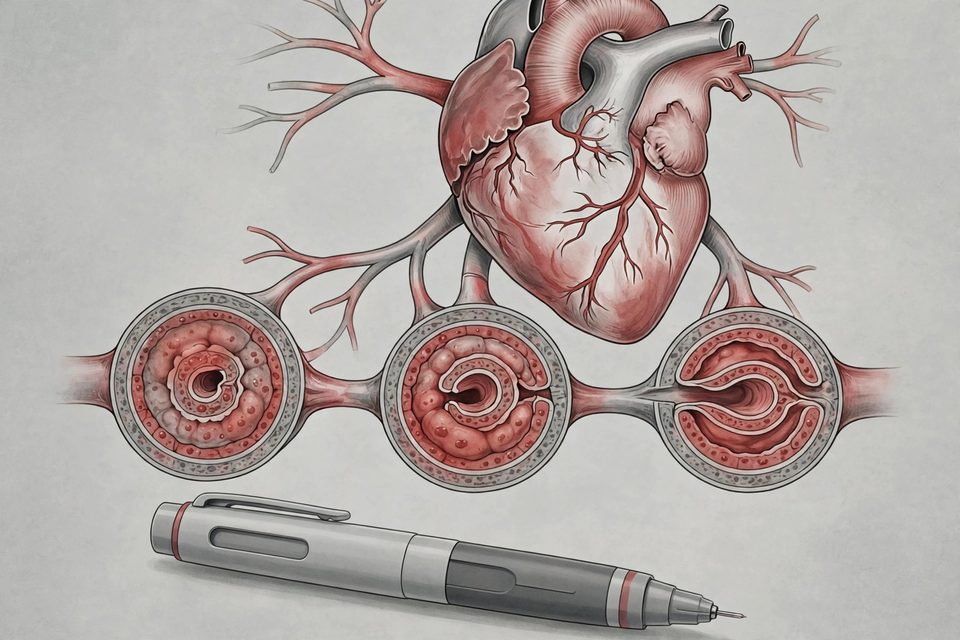
Image: AI-generated illustration.