
Key Takeaways
- In a 26-week randomized trial of 283 adults with type 2 diabetes who don't use insulin, a continuous glucose monitor cut average A1c from 8.8% to 7.2%.
- Fingerstick monitoring also helped (8.7% to 8.0%), but the monitor group's improvement was 0.9 points larger, with about five extra hours a day in the target glucose range.
- The trial was short and funded by Dexcom, the device maker, so long-term benefits are still unproven.
Your Blood Sugar Changed After Every Meal. Now Patients Can Actually See It.
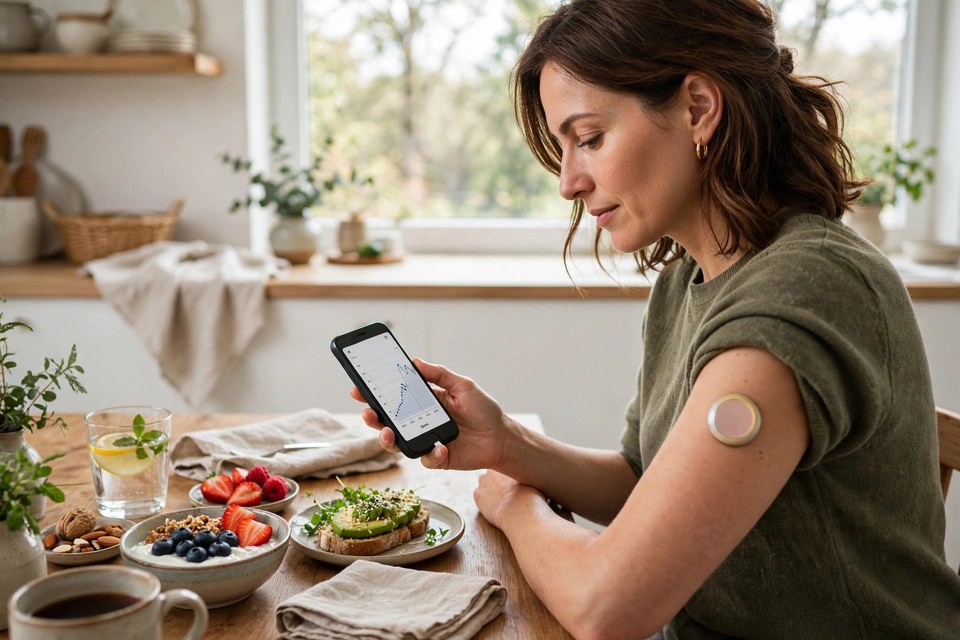
Imagine eating lunch and watching your blood sugar climb. Then taking a walk and seeing it fall.
That's the kind of real-time feedback continuous glucose monitors can provide. And a randomized trial published in the New England Journal of Medicine suggests it could make a meaningful difference for people with type 2 diabetes who aren't using insulin.
The trial enrolled 283 adults across 22 US primary care practices. None were using insulin. Half wore a continuous glucose monitor for 26 weeks, while the other half relied on standard fingerstick checks.
The difference was striking.
The monitor group's average A1c — a measure of blood sugar over roughly three months — dropped from 8.8% to 7.2%. The fingerstick group's average also improved, falling from 8.7% to 8.0%.
But the monitor group achieved an additional 0.9-percentage-point reduction.
They also spent about five more hours per day in the target glucose range and were nearly twice as likely to reach an A1c below 7%.
The Power of Seeing What Happens Inside Your Body
A glucose monitor doesn't just give patients another number to check.
It shows how their glucose responds to everyday decisions — what they eat, how much they move and whether they take their medication.
That immediate feedback may help patients understand connections that occasional fingerstick measurements can miss.
The 2026 American Diabetes Association guidelines recommend continuous glucose monitoring for adults with diabetes when their treatment and individual circumstances make it useful, including people on non-insulin treatments where monitoring helps manage their condition.
The new trial adds important evidence for people with type 2 diabetes who aren't taking insulin. It could also provide useful evidence in discussions about insurance coverage.
One Important Catch
The results are encouraging, but there are limits.
The trial lasted only 26 weeks and included 283 people. It cannot establish whether the improvement will prevent long-term complications such as eye, kidney or nerve damage.
There is another detail worth knowing: Dexcom, the company that makes the monitors used in the trial, funded the study.
Health note: This article summarizes a research study and is not medical advice. If you have type 2 diabetes, whether a glucose monitor fits your care plan is a conversation for your doctor.
The Twikup Take
A device didn't change what patients ate or how much they exercised directly. It gave them something they didn't have before: a window into how their everyday decisions affected their blood sugar.
Sometimes, seeing what your body is doing can be the first step toward changing what you do next.
Image: AI-generated illustration.