
Key Takeaways
- Stents showed no survival edge in stable disease.
- Two studies followed patients up to 25 years.
- Symptoms are a separate question.
The Question That Won't Go Away
For patients with stable coronary disease — narrowed heart arteries that are not causing a heart attack — medicine has argued for decades over whether physically opening the arteries (stents or bypass surgery) beats starting with medication alone. Two long-term follow-ups published in JAMA this month are the longest look yet.
ISCHEMIA-EXTEND: nine years on
The ISCHEMIA-EXTEND study followed 5,179 patients with chronic coronary disease and moderate or severe ischemia, at 320 sites in 37 countries, for a median of 9 years. Half began with an invasive strategy (angiography and revascularization plus medication); half began with medication alone.
At 11 years, all-cause mortality was 25.8% in the invasive group versus 26.9% in the conservative group — a difference of one percentage point that was not statistically significant (adjusted hazard ratio 0.97). The estimated survival-time difference over 11 years was 14 days, also not significant. The authors' conclusion: long-term mortality "was not significantly different" between the strategies.
COURAGE: out to 25 years
The extended follow-up of the COURAGE trial tracked 959 veterans for a median of 15 years, up to 25. The combined rate of death or heart attack was 93.3% with stents plus medication versus 91.0% with medication alone — no difference (hazard ratio 1.01). The authors conclude the findings "do not support a routine strategy of elective upfront PCI to reduce long-term risk of death or MI in patients with stable CAD."
The honesty beat
These studies answer one question — survival — in one population: stable disease. They explicitly exclude heart attacks in progress, left-main disease and unacceptable angina, where opening arteries is not in dispute. They also do not measure symptom relief, which is a separate reason doctors and patients choose procedures. COURAGE's extension is a follow-up of a mostly male veteran cohort using older stent technology, and ISCHEMIA-EXTEND tracked deaths, not quality of life. The takeaway is narrow and important: for stable patients, starting with medication does not appear to cost lives.
Health note: This article summarizes published research for information only and is not medical advice. Chest pain or pressure is an emergency — call 911. Decisions about stents and surgery belong with your cardiology team.
The Twikup Take
It is genuinely counterintuitive: a visibly blocked artery, left unopened, and patients do just as well on medication. Two studies, thousands of patients, up to 25 years — the arteries look worse than the outcomes. That doesn't make stents useless; it makes the conversation before one worth having carefully.
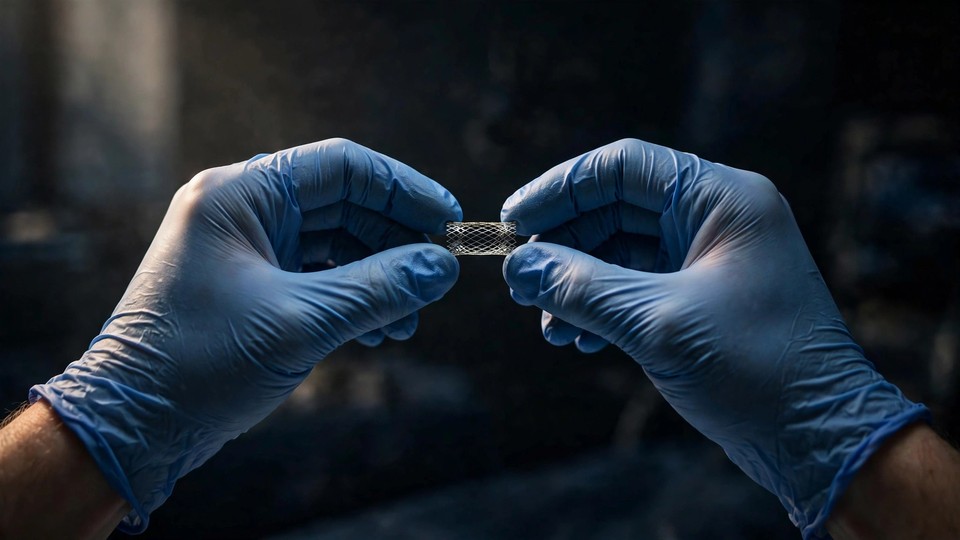
Image: Illustrative image.