
Key Takeaways
- Vaccine mRNA stays in the cell's cytoplasm — it never enters the nucleus or touches your DNA
- Your cells build one viral protein, display it, and the immune system trains on it
- The mRNA, its fatty carrier and the protein are all broken down within days to weeks
How does a shot in your arm teach your body to fight a virus it has never met?
It delivers a recipe — nothing more. The vaccine contains messenger RNA carrying the instructions for a single viral protein (for COVID-19 vaccines, the spike protein), wrapped in a tiny bubble of fat called a lipid nanoparticle. That fatty bubble matters: naked mRNA is fragile and cannot get into cells on its own. Solving delivery took decades.
Here is the journey, step by step.
Step 1: The recipe enters the workshop — not the vault
After injection into the arm muscle, the lipid bubble merges with one of your cells and releases the mRNA into the cytoplasm — the cell's workshop floor. Your DNA lives somewhere else entirely: locked inside the nucleus, the vault. Health Canada is categorical on this point: vaccine mRNA does not enter the nucleus and does not interact with or alter your DNA. It also carries no machinery that could reverse the normal one-way flow of genetic information (DNA makes RNA; RNA does not write back into DNA).
Step 2: Your own ribosomes build one viral protein
Floating in the cytoplasm are ribosomes — the cell's protein factories — which read mRNA recipes all day long, including your own. They read the vaccine's recipe exactly the same way and build the spike protein, which is then displayed on the cell's surface, like a flag planted outside.
Step 3: The immune system trains on the flag
Your immune system spots the displayed protein, recognizes it as foreign, and builds a response — antibodies plus cellular defences — and, crucially, memory. If the real virus ever shows up wearing that same spike, the response starts immediately instead of from zero. As Health Canada puts it, the mRNA is essentially a recipe telling your cells how to make the spike protein, and your immune system learns from what appears.
Step 4: Everything is thrown away
The recipe does not stay. After the protein is made, the cell breaks the mRNA down — mRNA is unstable by design. Canada's National Advisory Committee on Immunization states that the mRNA, the lipid nanoparticle and the spike protein are degraded or excreted within days to weeks. There is no live virus in the vaccine, and it cannot give you COVID-19.
The 30-year backstory — and the 2005 breakthrough
The technology was not invented in 2020. Methods to manufacture mRNA in a lab date to the 1980s, and Katalin Karikó spent the 1990s pursuing mRNA therapy through repeated funding rejections. The blocker: lab-made mRNA provoked a fierce inflammatory reaction. In 2005, Karikó and Drew Weissman found the fix — the bases in our own cells' mRNA are chemically modified, and copying that modification into lab-made mRNA almost abolished the inflammatory response. Later work showed the modified mRNA also produced far more protein.
That discovery won them the 2023 Nobel Prize in Physiology or Medicine — and it is why, when COVID-19 arrived, two mRNA vaccines could be developed at record speed and approved as early as December 2020, reporting protective effects of around 95% against the original virus. More than 13 billion COVID-19 vaccine doses of all types have since been given worldwide.
The honest limits
The ~95% figure describes the original vaccines against the original virus at approval — protection against newer variants and against infection (as opposed to severe disease) is lower and fades over months, which is why updated boosters exist. And the platform's long track record belongs to the science; these specific products' first wide use began in December 2020.
Health note: This article explains how mRNA vaccines work. For advice about your own vaccinations, talk to your doctor or pharmacist, who knows your health history.
The Twikup Take
An mRNA vaccine is a self-destructing instruction sheet: it enters the workshop, never the vault; your cells build one harmless protein piece; your immune system keeps the memory; the instructions are shredded within days. The pandemic made it famous in a year. The science underneath it took thirty.
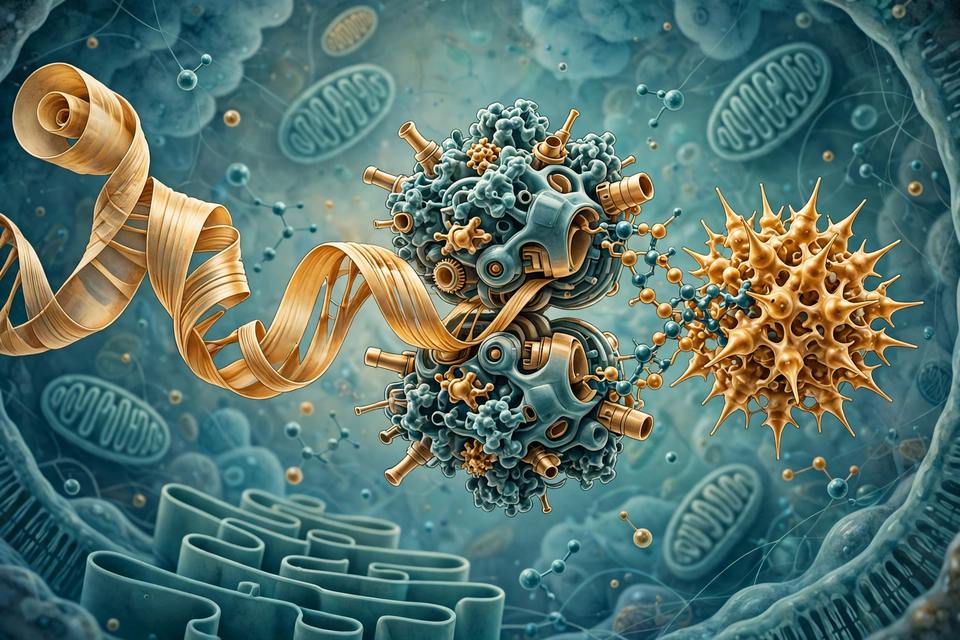
Image: Illustrative image.