
Key Takeaways
- Intra-arterial tenecteplase restored blood flow in 61.0% of medium-vessel stroke patients versus 28.2% with standard care
- The Phase 2 trial randomized 80 patients at six hospitals in China who could not be treated with mechanical clot retrieval
- Recovery at 90 days was not significantly better, and the researchers say larger trials are needed
Stroke Drug Reopens Blocked Brain Vessels in 61% of Patients in New Trial
A Clot-Busting Drug, Delivered Into the Artery, Doubles Reperfusion in Hard-to-Treat Strokes
For strokes caused by blockages in the brain's medium-sized vessels, doctors have had few good options.
The clots sit in arteries too small or too distant for the mechanical retrieval devices that transformed large-vessel stroke care.
A randomized trial published November 6 in Nature Communications suggests a drug delivered straight to the clot could help fill that gap.
What the RESCUE-TNK Trial Found
The RESCUE-TNK trial randomized 80 patients at six hospitals in China with medium vessel occlusion who were ineligible for mechanical clot retrieval.
Half received intra-arterial tenecteplase — a clot-dissolving drug infused through a microcatheter over 20 to 30 minutes — and half received standard care.
The primary result was clear: successful reperfusion was achieved in 61.0% of the tenecteplase group versus 28.2% of the control group (adjusted odds ratio 3.81, P = 0.015).
Safety was reassuring: symptomatic brain bleeding within 24 hours occurred in 2.4% of the drug group versus 5.1% of controls, a difference that was not statistically significant.
The Honesty Beat: Better Blood Flow Has Not Yet Proven Better Recovery
The honesty beat matters here.
Better blood flow did not yet translate into proven better recovery: excellent 90-day outcomes (34.1% vs 20.5%) and favourable outcomes (51.2% vs 46.2%) favoured the drug numerically but were not statistically significant.
The trial — Phase 2, China-only, not powered for clinical outcomes — was designed to detect the reperfusion signal, not to prove patients recover better.
The authors describe the functional improvement as "hypothesis-generating" and say the results lay the foundation for larger trials.
The Twikup Take
This is how stroke medicine actually advances.
Not with a miracle, but with a rigorous small trial showing a treatment can reopen the vessel safely, in exactly the patients current tools cannot reach.
The 61% number is genuinely exciting. Whether it becomes better recoveries is the question the next, bigger trial now has to answer.
This article summarizes a single Phase 2 clinical trial and is not medical advice. Stroke treatment decisions are made by specialist teams based on each patient's situation.
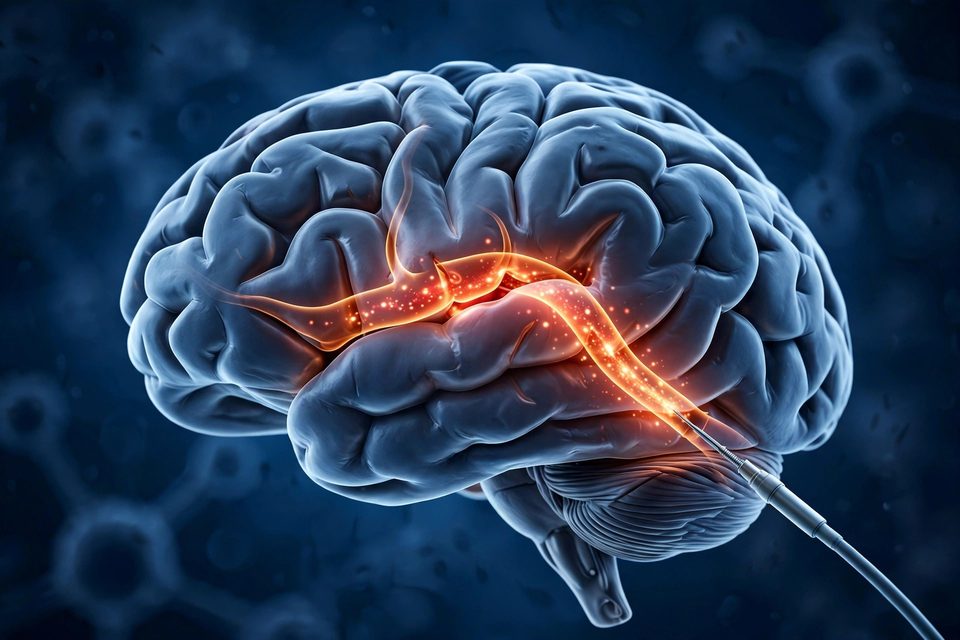
Image: AI-generated illustration.