
Key Takeaways
- A vaccine shows your immune system a harmless version or piece of a germ so it can build antibodies and memory cells before the real infection arrives.
- Canada uses several vaccine technologies — live weakened germs, killed germs, purified pieces, toxoids, viral vectors and mRNA — but all work by the same memory mechanism.
- Infants can respond to about 10,000 antigens at once, according to PHAC; the antigens in vaccines are far fewer than what a child meets in daily life.
A training session, not a battle
The Public Health Agency of Canada puts it in one sentence: "Vaccines stimulate and strengthen the immune system. They train the immune system to defend rapidly against vaccine preventable infections before illness can occur."
Every vaccine, whatever its technology, delivers an antigen — a substance the body recognizes as foreign. First the innate immune system reacts, the body's general-purpose first responders. Then the adaptive system takes over: B cells learn to produce antibodies, proteins shaped to that specific antigen, which block it, coat the invader so scavenger cells can clear it, and trigger further defences. Most importantly, the system keeps a record — antibody-producing plasma cells and memory B and T cells that persist for years.
That memory is the whole point. When the real germ arrives, a vaccinated immune system does not start from zero: it responds faster and more precisely, usually stopping the infection before illness takes hold, or blunting it if it does. Most vaccines reach protective antibody levels within about two weeks. And because memory strengthens with each encounter, some vaccines use a series of doses and later boosters to build and refresh it.
The many ways to show the immune system a germ
Canada's immunization guide lists the families of vaccines, all feeding the same mechanism:
- Live attenuated — the actual germ, weakened so it can barely replicate. Closest to a natural infection, so immunity is strong and long-lasting, often with one dose. Examples: measles-mumps-rubella, chickenpox, rotavirus, the nasal-spray flu vaccine.
- Inactivated — the whole germ, killed with heat or chemicals; it cannot replicate at all. Examples: polio (the injected form), hepatitis A, most flu shots, rabies.
- Subunit — just a purified piece of the germ: a protein (RSV, meningococcal), a sugar from its coat (pneumococcal), or a virus-like shell with no genetic material inside (HPV, hepatitis B).
- Conjugate — a bacterial sugar coat chemically linked to a carrier protein, a trick that makes even infants' immune systems respond strongly. Examples: Hib, meningococcal and pneumococcal conjugate vaccines.
- Toxoid — some diseases are caused not by the germ itself but by its poison; these vaccines use inactivated toxin. Examples: diphtheria and tetanus.
- Viral vector — a harmless virus used as a delivery truck for the antigen's genetic code. Example: the Ebola vaccine.
- mRNA — chemically produced genetic instructions for one antigen piece, which your own cells briefly manufacture so the immune system can learn it. Example: COVID-19 vaccines.
One rule follows from the biology: a vaccine made from killed germs, pieces or instructions cannot give you the disease it prevents — there is no complete, living pathogen in it to cause one. Because these non-live vaccines provoke a gentler response than live ones, they are the ones that typically need a primary series and boosters.
How a vaccine earns approval in Canada
Before any human receives a candidate vaccine, it passes laboratory and animal testing. Then come human trials in widening circles: Phase I with a handful of volunteers (1–10 people), Phase II with hundreds (100–1,000), and Phase III with thousands (1,000–30,000) to prove it works and to surface less common side effects. The manufacturer then files everything with Health Canada, which authorizes a vaccine only when it is safe, effective and of high quality, with benefits outweighing risks — issuing a Notice of Compliance and a Drug Identification Number.
Approval is not the end of scrutiny. Every single production lot passes Health Canada's Lot Release Program before it can be sold. Manufacturers must report serious reactions, and the Public Health Agency runs a standing national surveillance system (CAEFISS) that collects adverse-event reports from across the country, supplemented by active monitoring in children's hospitals. A separate expert body, the National Advisory Committee on Immunization, reviews the evidence and recommends who should receive each vaccine; provinces then set their schedules.
"Too many, too soon"? The antigen arithmetic
The most common parental worry is that infant schedules overload a small immune system. PHAC's answer is a number: "The human immune system is continually challenged and has an enormous capacity to respond to antigens; infants can respond to about 10,000 different antigens at one time. The numbers of antigens contained in vaccines are much lower in comparison." Children meet vastly more antigens eating, crawling and breathing in a single day than a full round of shots contains — immunization, in PHAC's words, "does not significantly add to the vaccine recipient's daily exposure to antigens."
That is also why the schedule starts at two months. Antibodies passed from mother to baby protect the first weeks of life but fade quickly, while diseases like whooping cough are most dangerous precisely in the youngest infants. The 2-, 4- and 6-month series begins at the earliest point an infant's own immune system will respond reliably — not a day of unnecessary delay built in.
Protection that extends past your own child
When enough of a population is immune, a germ runs out of people to infect and chains of transmission break — herd immunity. PHAC quantifies it for the most contagious vaccine-preventable disease: measles spreads so efficiently that at least 94% of the population needs to be immune to prevent transmission. That threshold is what protects the people who cannot be vaccinated at all — newborns, chemotherapy patients, the immunocompromised — who depend entirely on the immunity of everyone around them.
The Twikup Take
Vaccines are unusual among medical interventions: the product is not the protection — the memory your own body builds is. Every technology in Canada's guide, from a weakened germ to a strand of mRNA, is just a different way of delivering the same lesson to the immune system, in advance, at a fraction of the cost of learning it from the disease itself.
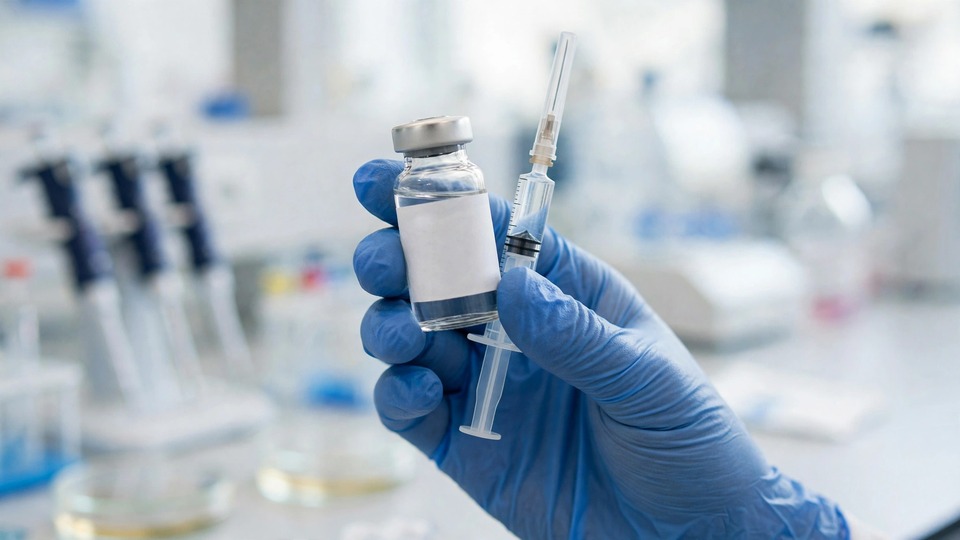
Image: Illustrative image.