
Key Takeaways
- In a 283-infant trial, using two blood biomarkers to decide which very preterm babies received antibiotics did not prove as safe as simply treating every baby.
- Survival without major complications was 53% with biomarker guidance versus 55% with universal treatment, but the trial's confidence range was too wide to rule out harm.
- Strikingly, no baby in the trial developed the early-onset sepsis the strategy was designed to detect.
The hope: fewer antibiotics for the most fragile babies
Doctors Tested a Way to Spare Preterm Babies Antibiotics. Then Something Unexpected Happened.
In the first days of life, babies born very preterm usually receive antibiotics. One reason is straightforward: an infection in a newborn can become life-threatening quickly.
At the same time, many of these babies have no infection at all. Antibiotics given during the neonatal period carry their own risks.
A trial published in JAMA Network Open asked whether two blood biomarkers — procalcitonin and presepsin — could help doctors identify which babies might safely avoid antibiotics. The results did not provide that reassurance.
Why the hopeful idea failed its first big test
The trial enrolled 283 newborns born between 25 and 31 weeks, across 17 Italian neonatal intensive care units.
The results were close: 53% of babies in the biomarker-guided group survived without major complications, compared with 55% of babies who received antibiotics in the usual way. Just two percentage points separated the groups.
Yet the difference was not the deciding factor. The trial needed to exclude a gap larger than five percentage points to demonstrate that a biomarker-guided approach was no worse than treating everyone.
Because the results could not do that, the authors concluded that the findings "do not support the routine use of a biomarker-guided approach" in this high-risk population.
The one number the trial could not provide
Perhaps the most important part of the study was not the comparison itself, but the event that did not occur in either group.
Not one baby in either group developed early-onset sepsis. Zero.
For that reason, the trial was mainly measuring the usual complications of premature birth — rather than evaluating decisions about a sepsis it never encountered.
What this does not mean
A health note: Nothing here changes any baby's care today. Treatment decisions in a NICU are made by the neonatal team under existing protocols. Parents should never interpret this trial as a reason to question antibiotics prescribed by their baby's doctors.
Failing to prove that a strategy is non-inferior is not the same as proving it is worse. The trial was small, and its uncertainty was wide. None of the individual outcomes, including deaths, differed significantly between groups.
The Twikup Take
Negative findings matter when they stop promising medical ideas from spreading too early.
The trial asked a proper question: randomize, prespecify, report.
The biomarker strategy is not dismissed. It needs evidence at a far larger scale than this study could provide; an infection the design was meant to catch was, in this study, absent.
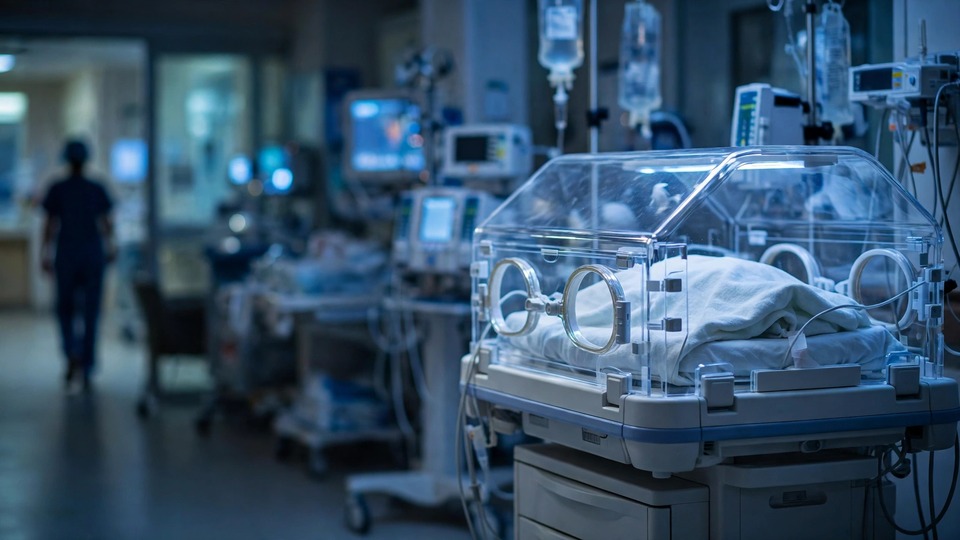
Image: Illustrative image.