
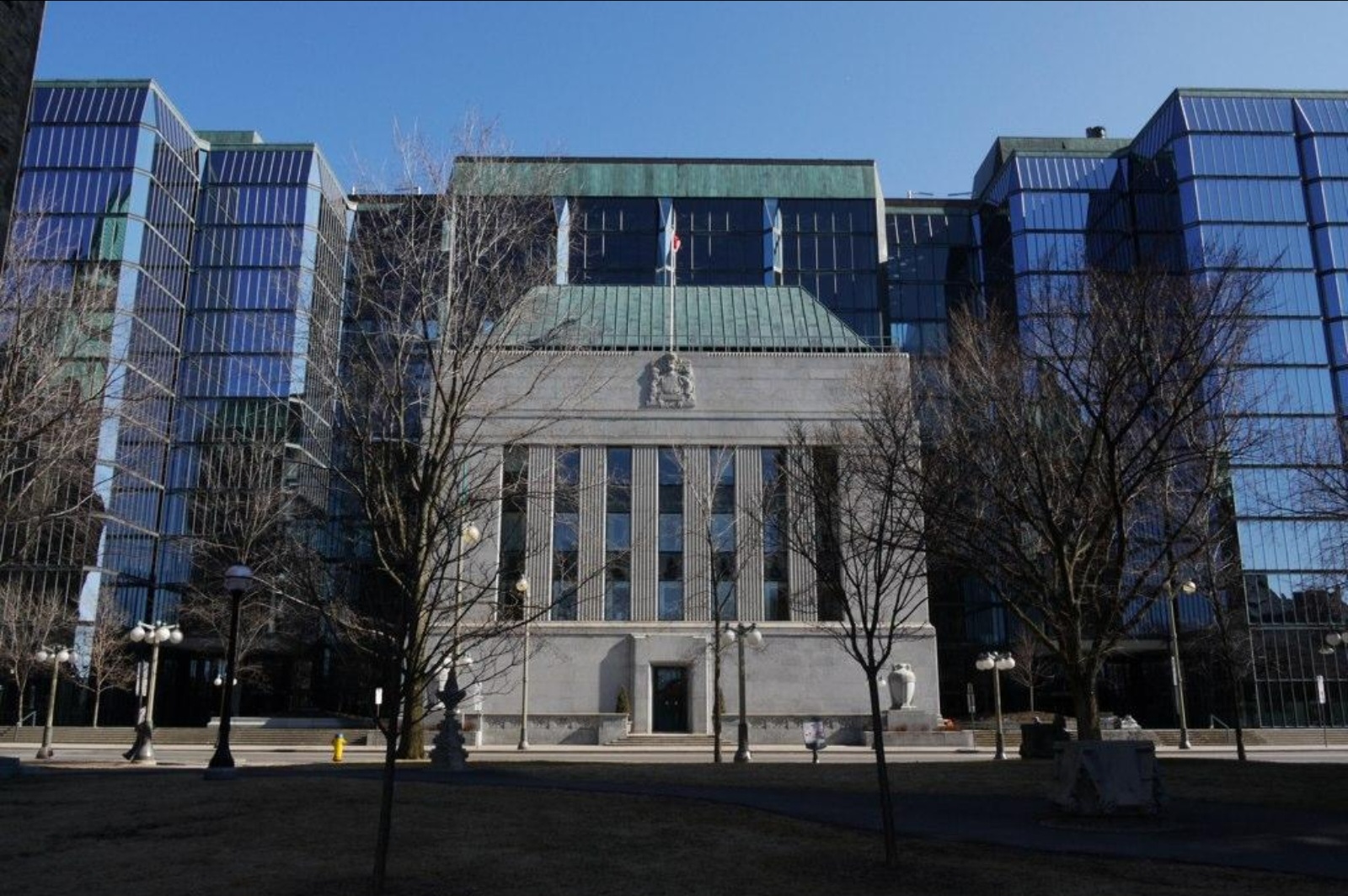
The Bank of Canada left its benchmark interest rate unchanged at 2.25% on Wednesday, marking its fifth consecutive rate hold as policymakers continue to assess an uncertain economic environment.
The decision comes as the central bank faces competing forces. While economic growth has weakened, inflation risks have not disappeared, and recent labour market data have shown unexpected resilience.
The Bank of Canada Is Choosing Patience
In its policy decision, the Bank said uncertainty surrounding trade and inflation continues to cloud the outlook.
Rather than moving quickly, policymakers opted to leave rates unchanged while gathering more evidence about how the economy is evolving.
The latest decision extends the pause that began earlier this year.
Higher Oil Prices Are Creating New Inflation Risks
The Bank also said it will continue to assess the impact of higher oil prices resulting from the conflict involving Iran.
While stronger energy prices can benefit Canada's export sector, they also risk adding to inflationary pressures.
The central bank said it remains prepared to act if inflation begins to become entrenched.
That highlights the difficult balancing act facing policymakers. Lower rates could support growth, but persistent price pressures make it harder to ease policy aggressively.
Strong Employment Data Is Sending a Different Message
Recent labour market figures have suggested that parts of the economy remain more resilient than expected.
Stronger hiring and a stable labour market have reduced the urgency for immediate rate cuts.
For the Bank of Canada, conflicting signals from different sectors of the economy have complicated the outlook.
Trade Uncertainty Is Still a Concern
Questions surrounding future trade relations and tariff policies continue to create uncertainty for businesses and consumers.
Global risks and geopolitical tensions have added another layer of unpredictability, making it harder for policymakers to determine the right path forward.
Why the Decision Matters
Interest rates influence borrowing costs across the economy, affecting mortgages, loans, and savings products.
For households and businesses hoping for a clear signal about where rates are headed next, the latest decision suggests the Bank is taking a cautious approach.
The message from policymakers is increasingly clear.
Canada's economy is sending mixed signals, and the Bank of Canada is not yet ready to change course.
Related
-
What Happens If Canada Enters a Recession? https://twikup.ca/explainers/financial-explainers/what-happens-if-canada-enters-a-recession
-
Where Are Canadian Home Prices Heading Next? https://twikup.ca/explainers/financial-explainers/where-are-canadian-home-prices-heading-next
-
Canada's Exports Are Breaking Records. The US Is Still Driving the Gains https://twikup.ca/canada/trade/canadas-exports-are-breaking-records-the-us-is-still-driving-the-gains
-
CUSMA Renewal Explained: Why Canada's 16-Year Push Matters https://twikup.ca/canada/economy/cusma-renewal-explained-why-canadas-16-year-push-matters