
Key Takeaways
- The CPTPP launched accession working groups for the UAE, Philippines and Indonesia; Costa Rica declined to sign its accession protocol.
- Members created an economic-coercion coordination platform and set a mid-2027 target for upgrade negotiations.
- Canada's exports to CPTPP partners reached $36 billion last year, up 17% from 2021; Sidhu facilitated the CPTPP–EU dialogue in Hanoi.
Three new applicants, one holdout, and a bloc that's becoming Canada's hedge
The CPTPP's 11th Commission meeting in Hanoi ended November 27 with the 12 members launching formal accession working groups for the United Arab Emirates, the Philippines and Indonesia, while Uruguay's accession was urged to a prompt conclusion. One awkward note: Costa Rica declined to sign its Protocol of Accession at the meeting despite negotiations having concluded in May 2026. The bloc also created a coordination platform on economic coercion, set a target to substantially conclude upgrade negotiations — e-commerce, services, customs, women's economic empowerment — by mid-2027, and will open an interim CPTPP Support Office in Japan in 2027.
For Canada, Trade Minister Maninder Sidhu facilitated the CPTPP–EU dialogue, which launched an EU–CPTPP Supply Chain Early Warning Network, and witnessed an MOU signing between Canadian AI firm Cohere and Vietnam's FPT Corporation, according to Global Affairs Canada's readout. The numbers Ottawa keeps repeating: Canadian exports to CPTPP partners hit $36 billion last year, up 17% from 2021 (and up 26% since the agreement took effect), and two-way trade with Vietnam alone reached $20.6 billion in 2025.
Why the queue at the door matters
Every new member stretches the bloc's tariff-free reach for Canadian exporters without a new bilateral negotiation — and the applicants (a Gulf state, two ASEAN economies) signal the CPTPP is becoming the default platform for countries hedging against U.S. tariff exposure. The economic-coercion platform points the same way: this is no longer just a tariff deal but a mutual-defence pact for supply chains.
The Twikup Take
The CPTPP was the trade deal Canada joined almost by accident after the U.S. walked away from the original TPP — and it keeps compounding. With accession queues forming and an EU early-warning network bolted on, the bloc is quietly becoming the rules-based alternative in a fragmenting trade world. Canada's $36 billion export figure is the proof of concept; the next three members would be the scale-up.
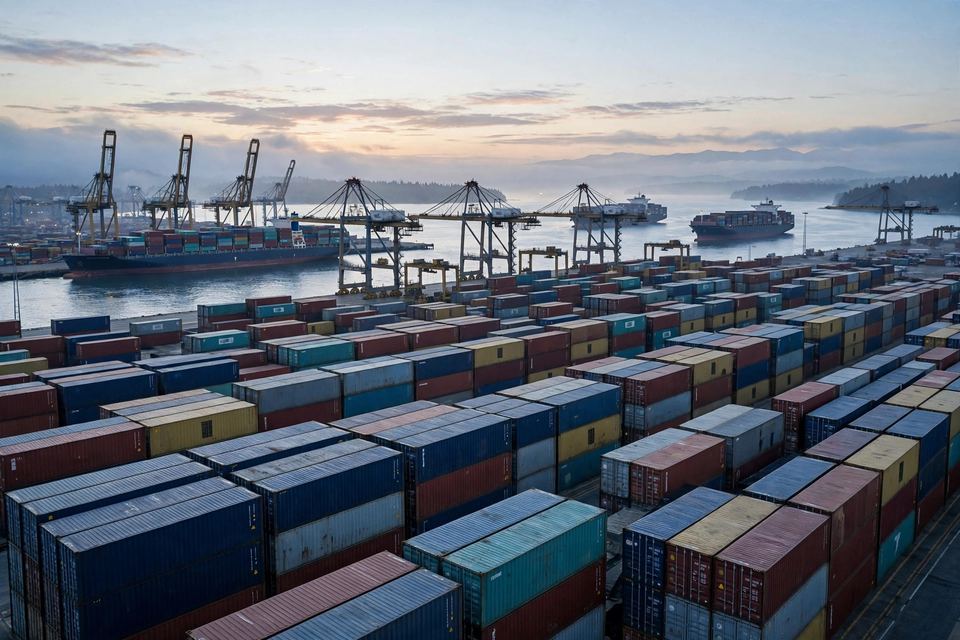
Image: Illustrative image.