
Key Takeaways
- U.S. officers at Canadian preclearance sites act under Canada's Preclearance Act, 2016 — their powers come from Canadian law, and they cannot arrest.
- Intrusive searches are CBSA's role, the Charter applies, and travellers not detained may withdraw and leave (s. 29) with no biometrics collected after withdrawal.
- Billy Bishop (opened March 10, 2026) is the ninth airport site; Canada's own U.S.-side land site at Cannon Corners, NY is still planned, not operating.
The American border inside Pearson airport runs on a Canadian law
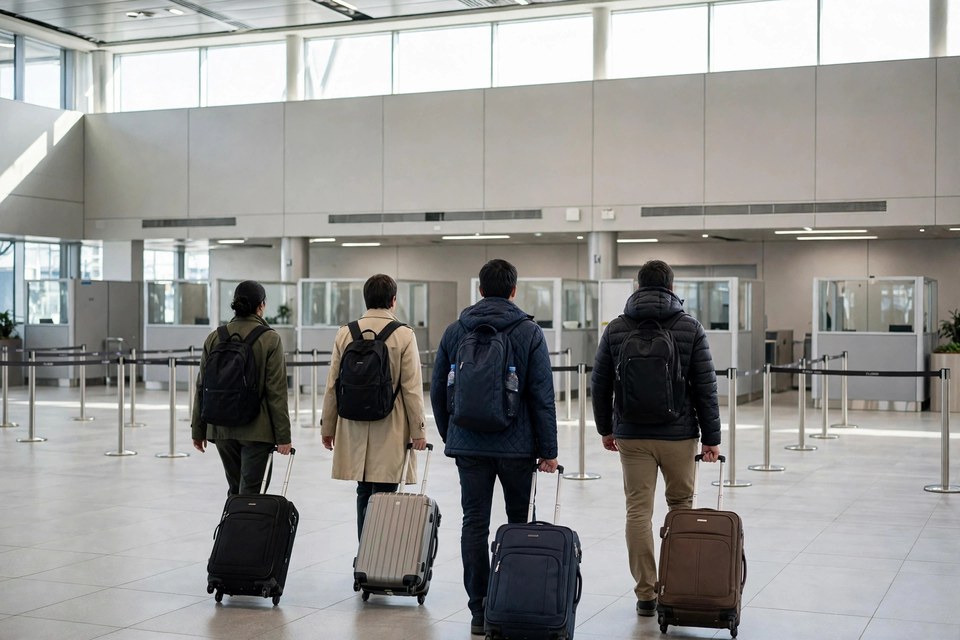
When a U.S. Customs and Border Protection officer questions you at Toronto Pearson, they're not exercising American police powers in Canada — they're exercising powers granted by Canada's Preclearance Act, 2016, under the bilateral agreement signed in 2015 and in force since August 15, 2019. U.S. preclearance now operates at nine Canadian airports — including Billy Bishop, which opened March 10, 2026 as the first new facility in 25 years — plus Vancouver's Pacific Central Station, which became Canada's first rail preclearance site in June 2026, and ferry points. More than 22 million travellers were precleared worldwide in 2025.
The Act draws hard lines. CBP officers may question travellers, examine goods and collect U.S. duties — but section 10(2) states they may not exercise any power of questioning, search, seizure, detention or arrest drawn from U.S. law; every power comes from the Canadian statute. There is no power of arrest: for a suspected Canadian offence, an officer may detain a traveller only to hand them to Canadian police as soon as feasible. The most intrusive steps aren't CBP's at all — a strip search is conducted by CBSA officers, an x-ray or cavity search requires consent and a physician, and the Canadian Charter of Rights applies to everything the officers do.
The right most travellers don't know they have
Until you are detained, you may withdraw from preclearance and simply leave — section 29 guarantees it. After withdrawal, questioning is limited to your identity and reason for withdrawing, officers can't unreasonably delay your exit, and no biometrics may be collected once you've said you're withdrawing. The deal is also becoming two-way: Canada's first land preclearance operation on U.S. soil, at Cannon Corners, New York, is planned as a two-year pilot — announced in January 2025 and still listed as planned in CBSA's 2026-27 departmental plan, not yet operating.
The Twikup Take
Preclearance is a trade: Canada exports its airport congestion problem and imports American border law's convenience — land in the U.S. as a domestic passenger — while keeping the coercive edge of the system Canadian. The safeguards aren't decorative; the withdrawal right and the no-arrest rule are exactly what make a foreign uniform on Canadian soil constitutionally tolerable. Most travellers will never need them, which is precisely when rights like these matter.
Image: Illustrative image.