
Key Takeaways
- Eight companies were selected to compete for lunar cargo deliveries under NASA's new CLPS 2 contract, worth up to $10 billion over 10 years.
- A nuclear-powered rover called PROMISE, built partly from spare Mars rover parts, is targeted to launch in late 2028 to drill for ice at the lunar South Pole.
- Blue Origin received a $94 million contract, with a $140 million option, to deliver PROMISE on its Mark 1 lander.
NASA Is Building a Supply Chain for Its Moon Base
A future Moon base will need more than astronauts. It will need cargo landers, communications, transportation and equipment delivered hundreds of thousands of kilometres from Earth.
NASA has now picked eight companies to compete for that work.
Announced Saturday, the new CLPS 2 contract covers 10 years of lunar delivery services and has a combined maximum value of $10 billion. The eight companies are Blue Origin, Firefly Aerospace, Intuitive Machines, ispace-U.S., Lockheed Martin, Northrop Grumman, SpaceX and Voyager Technologies.
NASA also increased its existing CLPS contract from $2.6 billion to $4.2 billion to support the Moon Base's first phase.
But the most interesting part of the announcement isn't the money. It's a rover designed to explore places on the Moon where sunlight barely reaches.
Meet PROMISE: The Nuclear-Powered Moon Rover
NASA is moving forward with development of PROMISE, a six-wheeled, nuclear-powered rover designed to land at the Moon's South Pole.
Its job? Drill about a metre beneath the lunar surface to investigate possible ice and other resources, study the terrain and collect information that could help NASA select future landing sites.
Nuclear power is the clever part. Unlike solar-powered vehicles, PROMISE can operate during the long lunar night and inside permanently shadowed regions where scientists believe ice may exist.
Even more interesting: NASA's Jet Propulsion Laboratory will build it partly using spare components and engineering test models from the Curiosity and Perseverance Mars rovers.
NASA is reusing technology developed for Mars instead of starting entirely from scratch.
Blue Origin will deliver the rover under a $94 million contract, with an additional $140 million performance-based option. NASA is targeting a late-2028 launch and planning an 18-month mission.
The Moon Needs Its Own Transportation Network
The rover is only one piece of the bigger plan.
NASA also awarded approximately $1.3 billion in launch and in-space transportation task orders to support future Moon Base infrastructure and cargo deliveries.
The agency selected SpaceX separately for a cislunar communications demonstration in 2028.
And that's the bigger picture: NASA isn't simply preparing to send astronauts back to the Moon. It's building the transportation and infrastructure network needed to support a sustained presence there.
"When our astronauts return to the Moon," Administrator Jared Isaacman said, "they will arrive with the first elements of the Moon Base already waiting for them on the surface."
The Twikup Take
The $10 billion headline sounds enormous, but there's an important distinction: eight companies are eligible to compete for future delivery orders. Nobody has been handed $10 billion.
The most interesting investment might actually be PROMISE. NASA is combining nuclear power, lunar exploration and proven Mars rover technology to tackle one of the biggest challenges of living on the Moon.
Before humans build a home on the Moon, robots will have to figure out how to make it livable.
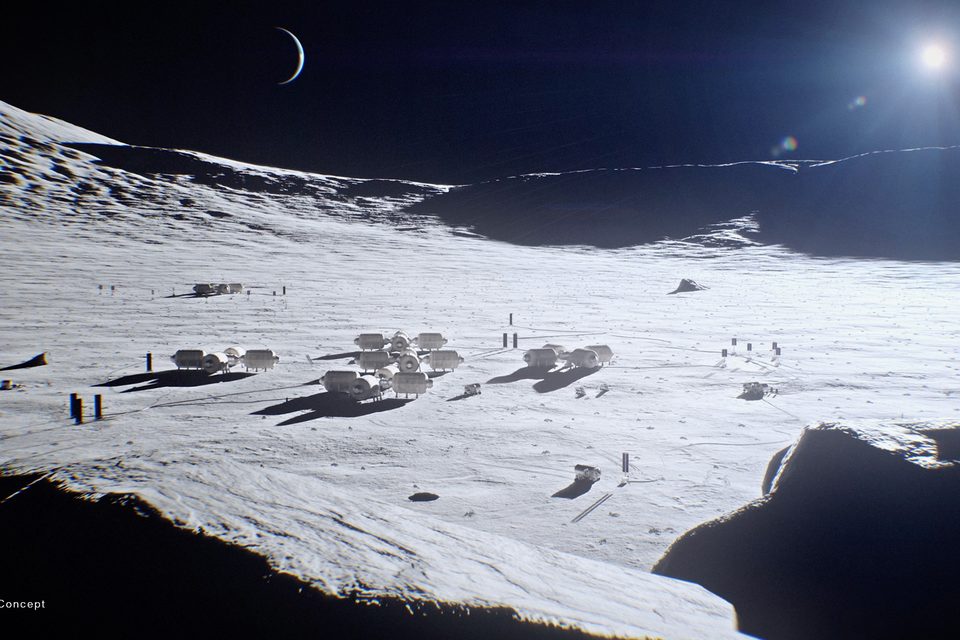
Image: Artist's concept of NASA's Moon Base on the lunar surface, NASA.