
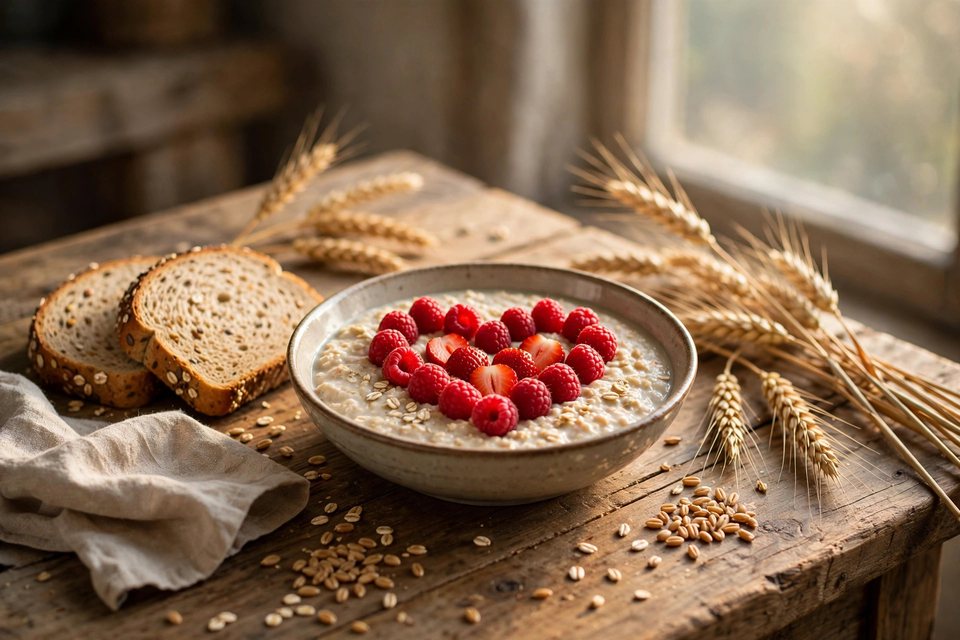
The Swap You Make Half-Asleep at the Breakfast Counter
You reach for the whole-wheat bread instead of the white. Or you pour a bowl of oatmeal instead of the sugary cereal. It feels like a tiny, almost boring choice.
New research suggests that small swap may quietly nudge a whole row of heart risk factors in the right direction — at the same time.
What the Researchers Found
A team pooled 87 randomized controlled trials covering more than 6,500 adults, in a meta-analysis published online September 15, 2026, in the European Heart Journal. For each extra three servings of whole grains a day (48 grams, dry weight), the analysis found modest drops across the board:
- LDL ('bad') cholesterol fell by 0.07 mmol/L, and total cholesterol by 0.10 mmol/L
- Triglycerides fell by 0.04 mmol/L
- Systolic blood pressure fell by about 0.8 mmHg
- Fasting blood sugar fell slightly, and so did body weight, waist size, and interleukin-6, a marker of inflammation
The biggest gains for most measures clustered around 60 to 100 grams of whole grains a day — roughly four to six servings. One serving is a slice of whole-wheat bread or half a cup of cooked whole grains like brown rice or oatmeal.
That's not a diet overhaul. That's a few easy swaps.
The Honest Part
This is pooled evidence from randomized trials — a strong design — but most trials lasted only about eight weeks, and they measured risk markers, not actual heart attacks or strokes. Certainty was high for some outcomes, like total cholesterol and body weight, and only moderate for LDL, blood pressure, and blood sugar. Each change on its own was small. Nobody can promise what whole grains will do for your personal numbers.
In other words: promising, not magic.
Easy Ways to Add More
- Start at breakfast: oatmeal or whole-grain cereal instead of refined options.
- Swap the sandwich: choose 100% whole-wheat bread over white.
- Rethink the side dish: brown rice, quinoa, or whole-grain pasta in place of the refined version.
The Twikup Take
No single food fixes a heart. But a swap this ordinary — one that moves cholesterol, blood pressure, and blood sugar together — is about as low-effort as prevention gets.
Your next slice of toast won't magically prevent a heart attack. But choosing whole grains more often can add up to something meaningful.
Small grains, many small wins — and small wins add up.
Health note: These findings describe average effects across trial groups, not a treatment for high cholesterol, blood pressure, or blood sugar. If you manage any of those conditions, keep taking your prescribed medication and talk to your doctor or a dietitian before making major changes to your diet.
Image: AI-generated illustration.