
Key Takeaways
- People eating the most ultra-processed food had a 58% higher dementia risk than those eating the least.
- People who ate the most whole foods had a 41% lower risk of dementia.
- Sugary drinks were the biggest ultra-processed source, while processed meats carried the strongest single-food-group risk.
What's actually in your grocery cart?
Frozen pizza for the busy night. A couple of sodas. The big cereal box, deli slices for sandwiches, something sweet for after.
Sound familiar? For most households, that's not a junk-food binge. That's just… groceries.
But a long-running study of older Americans suggests your future brain may be keeping score of exactly those carts.
Researchers followed 5,370 adults over 50 for nearly nine years, tracking what they ate and testing their memory and thinking along the way.
What the researchers found
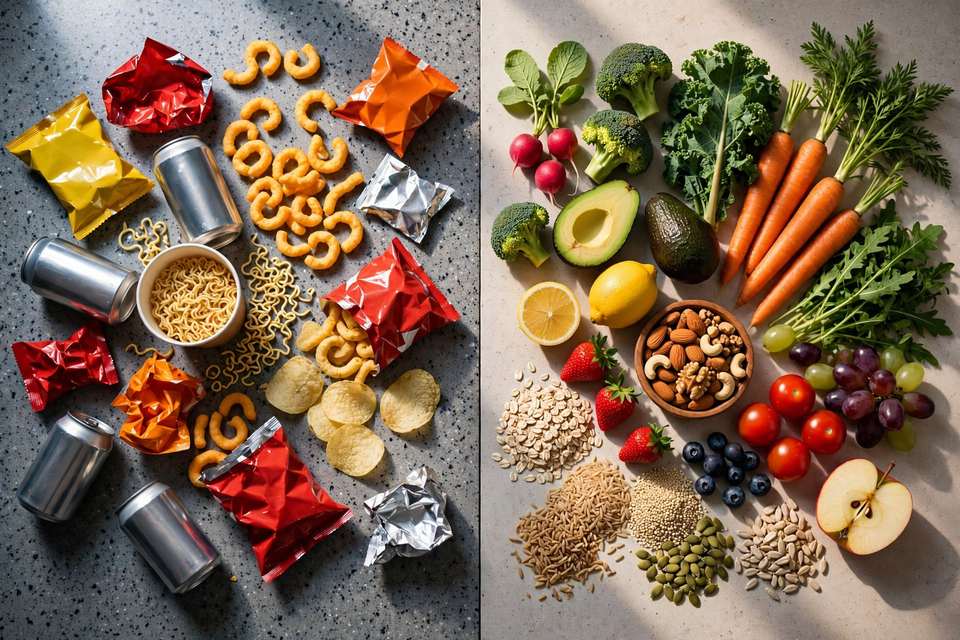
People who ate the most ultra-processed food — the packaged, ready-to-eat, ingredient-list-a-mile-long kind — had a 58% higher risk of dementia than people who ate the least.
They also had a 46% higher risk of cognitive impairment: the stage where memory and thinking slip, but not yet to dementia.
The flip side was just as striking. People who ate the most whole foods had a 41% lower risk of dementia.
The amounts involved aren't exotic. The top group ate roughly a kilogram of ultra-processed food a day; the bottom group, about a fifth of that. And the single biggest source was sugary drinks, while processed meats — bacon, sausages, deli slices — carried the strongest risk of any single food group.
The honest fine print
This is an association, not proof that packaged food causes dementia.
Memory was tested through surveys rather than clinic diagnoses, and the 58% figure on its own is statistically shakier than the rest. People who eat lots of packaged food also differ in income, exercise and overall diet — some of that is surely baked in.
The safer read is the pattern, and it's consistent in both directions: more packaged food, worse brain outcomes. More whole food, better ones.
Swaps that actually fit real life
- Start with soda. Sugary drinks were the biggest ultra-processed source in the study. Swapping even one a day moves the biggest lever.
- Watch the deli counter. Processed meats stood out above everything else — an everyday habit worth making an occasional one.
- Add before you subtract. The whole-food group did best of all. A handful of nuts, beans or an extra vegetable beats a perfect ban list you'll quit by Friday.
- Read the ingredient list. If it reads like a chemistry set, that's the category this study is talking about.
The Twikup Take
Nobody is giving up pizza night, and this study doesn't ask you to. It asks something smaller: notice what share of your cart never saw a farm.
Your brain eats what you eat — feed it food, not food products.
Health note: This article is general information about a research study, not medical advice. If you're worried about memory changes — yours or a family member's — a doctor can check for treatable causes.
Image: AI-generated illustration.