
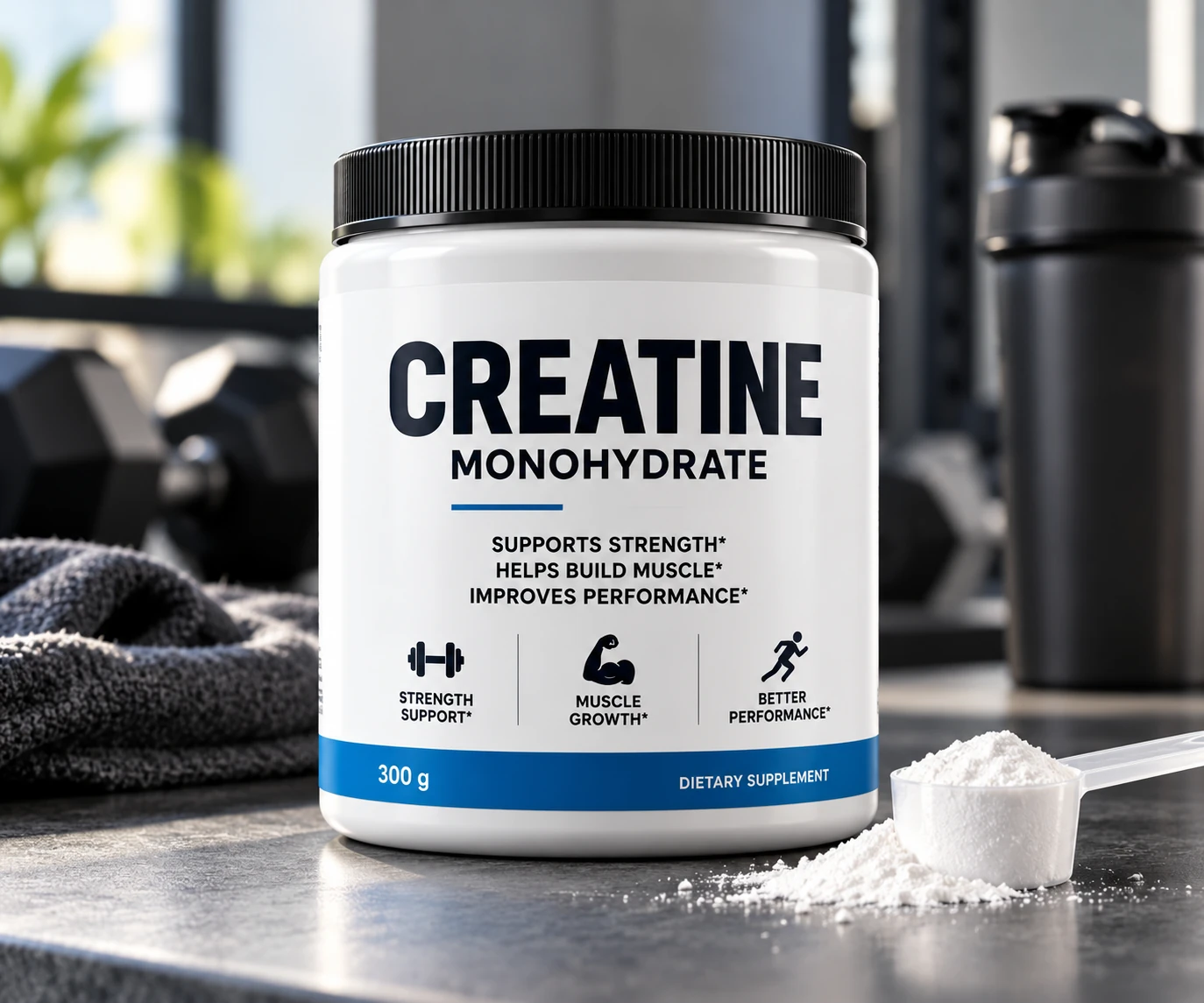
Creatine Can Help Your Workout. It Can’t Do It for You.
Creatine has excellent marketing for something that still requires you to go to the gym.
The powder gets billed like a shortcut to bigger muscles. The reality is less cinematic, but useful: it can help your muscles produce energy during short, intense efforts, such as lifting weights or sprinting. That may mean another rep, a stronger set, or better performance across repeated bursts.
The catch? You still have to do the set.
What you’re actually buying
Creatine helps replenish a quick-access energy supply in your muscles. Think of it as a little more charge in the battery when the work gets demanding.
Combined with resistance training, it can support improvements in strength and muscle growth. It does not replace training, adequate food, or recovery. Buying the tub is the easy part. Unfortunately, that part does not count as exercise.
Harvard Health’s 2024 explainer also notes a potential role alongside resistance training and a balanced diet in countering age-related muscle loss.
Useful? Yes. A gym membership in powder form? Sadly, no.
The boring version is the one to know
Creatine monohydrate is the most widely studied form. A common maintenance dose is 3 to 5 grams daily, according to NIH guidance.
A brief higher-dose “loading” phase can fill muscle creatine stores faster, but it is optional. A smaller daily dose gets there more gradually. Your supplement routine does not need a launch sequence.
Creatine is not an anabolic steroid. And an early jump on the scale can reflect extra water in your muscles—not an overnight delivery of new muscle tissue.
Research generally supports its safety at commonly studied doses in healthy adults. People with kidney disease or other medical concerns should get individual advice before taking it.
Read the label. Then look beyond it.
In the United States, the FDA regulates supplements, but it does not approve them for safety and effectiveness before sale. The label is not an FDA stamp of approval. FDA explanation
Independent quality testing can help check ingredients and contaminants. It cannot promise results. NIH guidance
And a premium price does not make an exotic creatine blend better than plain monohydrate.
The Twikup Take
Creatine earns a place in the conversation because it has evidence behind it. The hype starts when a useful training aid gets sold as the main event.
If you already train consistently, it may offer an extra edge. If you’re still building the habit, put your attention there first.
Buy it for what it can add to your training. The workout is still sold separately.
Health note: This article provides general information, not medical advice. Consult a qualified health professional before taking a supplement, especially if you have a medical condition, are pregnant or breastfeeding, or take medication.