
Your Grip Strength May Reveal More About Your Future Than You Think
Opening a stubborn jar. Carrying groceries through the front door. Getting off the sofa without pushing yourself up.
These are ordinary moments—until they start getting harder.
Research suggests the strength behind those movements may offer clues about something much bigger: how long we live.
A squeeze, a chair, and eight years of follow-up
In a study published in JAMA Network Open in February 2026, researchers followed 5,472 women aged 63 to 99 for an average of roughly eight years.
Their strength checks were refreshingly simple. One measured how firmly they could squeeze a grip-testing device. The other timed five repetitions of standing up from a chair and sitting back down without using their hands.
Women with stronger grips and faster chair stands had a lower risk of dying during follow-up. In one adjusted analysis, a 7-kilogram difference in grip strength was associated with about a 15% lower mortality risk; a six-second faster chair-stand time was associated with about a 9% lower risk.
Those figures compare women with different strength levels. They do not mean adding seven kilograms to your grip will automatically cut your personal risk by 15%. The study found an association, and its participants were older women.
Still, the message deserves attention: everyday strength can carry information we overlook.
The real stakes are closer to home
Longevity is an abstract goal. Being able to carry your own shopping is immediate.
Muscle strength helps make everyday independence possible. Its value shows up in the stairs you climb, the chair you rise from, and the tasks you can still do for yourself.
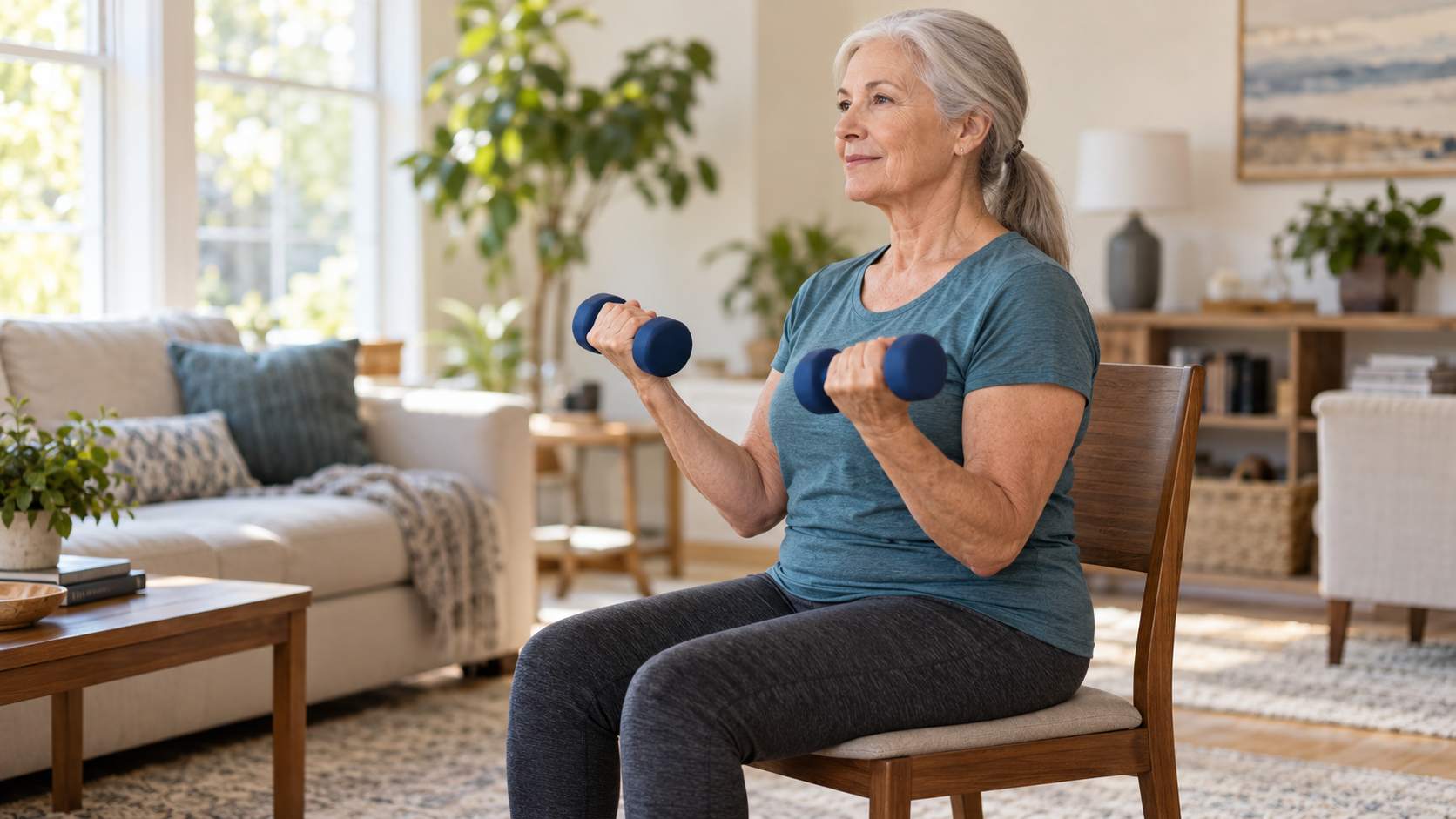
The encouraging part is that strength remains trainable in later life. Resistance exercises can include weights, bands, or adapted body-weight movements. Muscle-strengthening activity is recommended at least twice a week, with exercises suited to a person’s abilities and health.
A grip test needs proper equipment. Neither a firm handshake nor a quick chair stand can tell you how many years you have left.
But growing difficulty with ordinary movements is worth discussing with a health professional.
The Twikup Take
We tend to notice strength when someone lifts something impressive. We should notice it when someone lifts themselves out of a chair.
After 60, the reward for getting stronger can be deeply practical: carrying the groceries, climbing the stairs, keeping more of daily life in your own hands.
Health note: This article provides general information based on published research and is not medical advice. Consult a qualified health professional before beginning a new exercise program, particularly if you have a medical condition, balance problems, or pain.