
Key Takeaways
- In a 12-month trial, dental-device users had median nightly use of 5.5 hours versus 4.9 hours for CPAP users.
- Both CPAP and custom-fitted dental devices modestly lowered blood pressure and reduced excessive daytime sleepiness.
- CPAP remains the preferred therapy; discuss a custom-fitted dental device with a sleep clinician if CPAP is intolerable.
The CPAP is in the closet. Again.
You meant to wear it. But the mask itches, the hose tangles, and somehow "tomorrow night" has lasted four months.
Sound familiar?
You're far from alone — and a new trial offers a useful Plan B for some people.
A mouthguard-style challenger
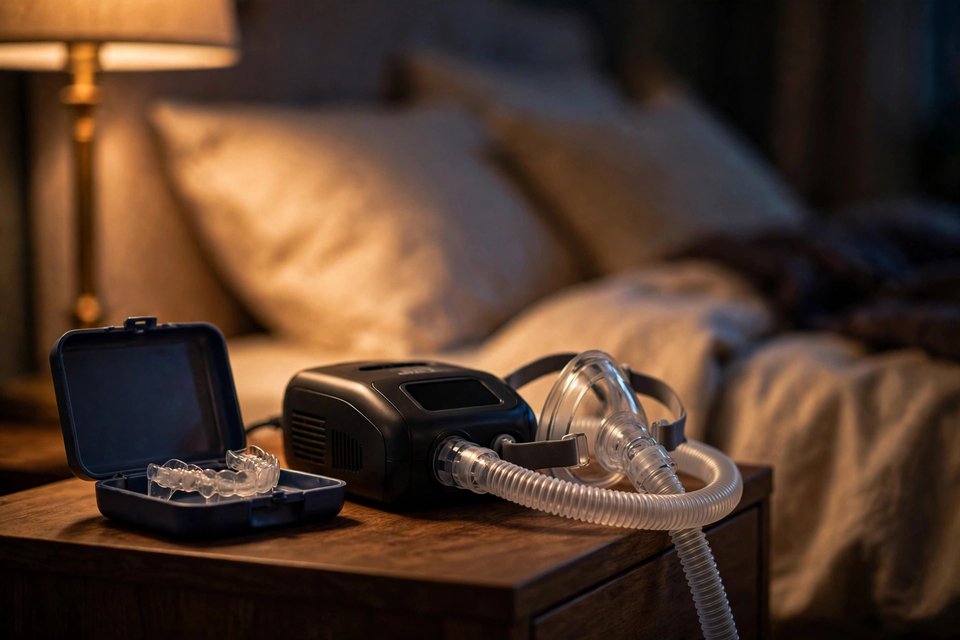
The study, published in The American Journal of Medicine, randomly assigned 180 people with moderate to severe sleep apnea and high blood pressure to use either CPAP or a custom-fitted dental device — fitted over the upper and lower teeth, it repositions the jaw to keep the airway open. They were followed for 12 months.
The dental-device group actually used theirs longer: a median of 5.5 hours a night, versus 4.9 hours for the CPAP group. Blood pressure fell modestly in both groups — an average of 2.3 points with the dental device and 1 point with CPAP. Both groups reported less excessive daytime sleepiness, and unplanned hospitalizations declined in both groups after the first six months.
The side effects were a trade: jaw pain and tooth discomfort with the dental device; dryness and pain in the nose and mouth with CPAP.
The part that matters most
Harvard is explicit, and so are we: CPAP should still be considered the preferred therapy for moderate to severe sleep apnea, especially for people with high blood pressure and other cardiovascular risk factors. This was also a small trial — 180 people, 85% of them men. A dental device is an alternative to discuss with a sleep clinician if you truly can't tolerate CPAP — not something to order online and self-prescribe.
If your mask is collecting dust
- Don't quit quietly: untreated apnea strains your heart — tell your clinician the CPAP isn't working for you.
- Ask the question: "Would a custom-fitted dental device be appropriate for me?"
- Get it fitted properly: the trial used custom-molded devices — the fit is part of the treatment.
The Twikup Take
The best apnea treatment is the one that actually gets used all night, every night. But which one that is belongs in a conversation with your clinician — not in an online shopping cart.
An honest conversation about the closet CPAP beats another month of dust.
Health note: This article is general information based on published research — it is not medical advice. Do not stop using a prescribed CPAP or switch sleep apnea treatments without talking to your doctor or another qualified health professional.