
Key Takeaways
- Canada and the EU officially launched the OceanEye International Alliance for the Global Ocean Observing System in New York.
- Partner countries have secured more than €211 million in combined financial and in-kind pledges for global ocean observation.
- Canada pledged C$82 million over five years, while the EU committed €50 million for ocean observation activities.
Canada and EU Lead New Ocean Observation Initiative
The OceanEye International Alliance is designed to build stronger international support for the Global Ocean Observing System. The initiative brings countries and partners together to expand ocean monitoring and improve access to reliable ocean data.
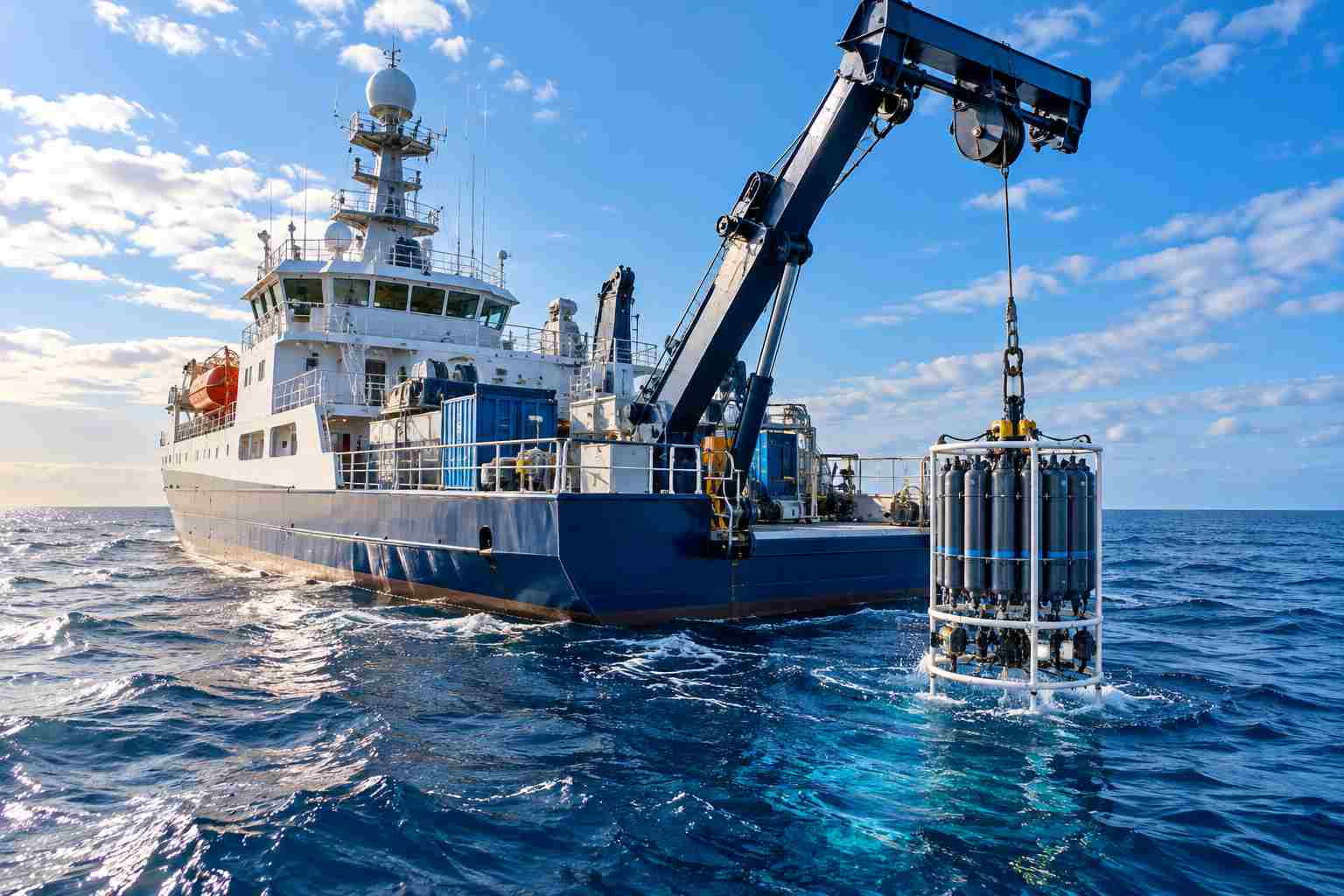
Canada pledged $82 million over five years to expand its ability to observe the ocean. The European Union separately pledged €92 million for ocean-observation activities.
According to the Canadian government, the event secured over $339 million, equivalent to about €211 million, in pledges from participating partners. The commitments include financial contributions, in-kind support and assets such as research vessels, sensors, drones and data-processing facilities.
What the Funding Will Support
The pledges are intended to strengthen several parts of the global ocean observation system.
Funding and other support will help maintain existing observation platforms, close critical data gaps and strengthen the GOOS Secretariat and coordination hubs.
The commitments will also support the OceanOPS data-reporting centre, which plays a role in coordinating and managing information from ocean observation systems.
Reliable ocean data is important for understanding changes in marine environments and improving forecasts and planning. The Canadian government says stronger ocean observation supports safe navigation, weather forecasting, climate predictions, coastal protection and a sustainable blue economy.
OceanEye Alliance Expands International Cooperation
The OceanEye International Alliance currently includes 31 members, comprising Canada, the European Union and 29 countries.
The initiative builds on the European Commission's OceanEye programme, which was adopted in June 2026. The EU describes OceanEye as a plan to strengthen global ocean observation and improve the collection, sharing and use of ocean data.
The European Commission says ocean observation provides information needed for maritime safety, weather forecasting, climate projections, coastal resilience, ocean restoration and protection, and the blue economy.
The OceanEye initiative aims to secure long-term support for GOOS and establish a framework for coordinated international action, including reliable, open and free access to ocean data for the EU and international partners.
Why Global Ocean Observation Matters
The Global Ocean Observing System is co-sponsored by the Intergovernmental Oceanographic Commission of UNESCO and the World Meteorological Organization.
According to the Canadian government, GOOS delivers around 120,000 observations each day through 8,000 platforms operated by 64 countries and 17 global observation networks.
These observations help scientists and authorities understand and forecast weather and climate conditions, improve maritime safety, protect coastal communities, support marine biodiversity and enable sustainable ocean-based economic activity.
The Canadian government also noted that GOOS remains vulnerable to financial shortfalls and geopolitical disruptions. Expanding the network of contributors is intended to provide a broader and more stable support base for global ocean observation.
More Funding Expected
The September 23 launch is the beginning of a wider international mobilisation effort covering 2026-2028 and beyond.
Further opportunities for financial and in-kind pledges will be offered at upcoming international gatherings, including COP31 and the 12th Our Ocean Conference in Halifax, Nova Scotia.
The 12th Our Ocean Conference is to be held in Halifax, Nova Scotia.
The OceanEye International Alliance is therefore intended to provide a longer-term framework for international cooperation on ocean observation, data and sustainable ocean management.