
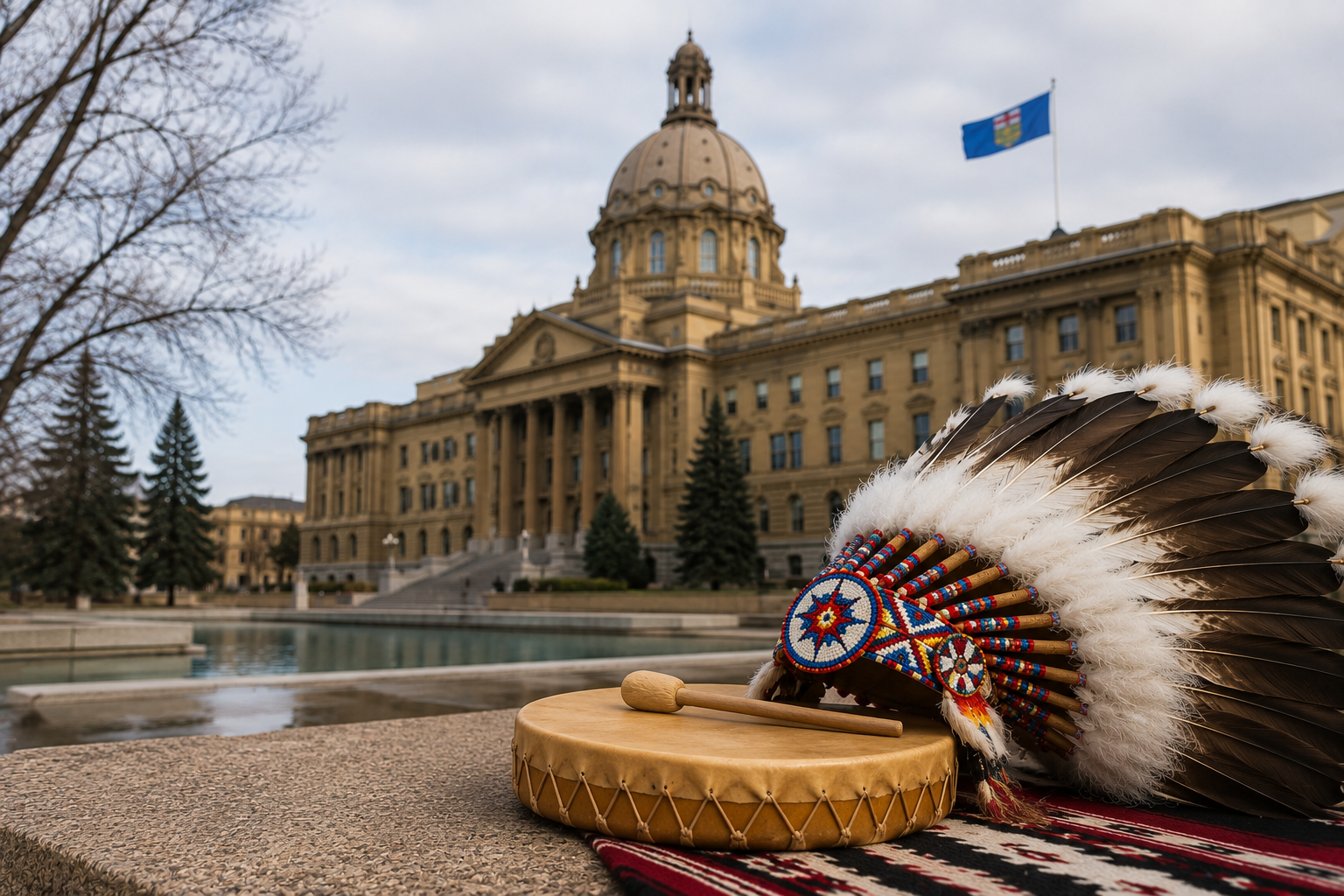
Alberta's proposed referendum on separation is facing growing resistance from First Nations leaders, who argue the province cannot move forward without consulting Indigenous communities whose treaty rights predate Alberta itself. Some chiefs now say civil disobedience could become necessary if their concerns continue to be ignored.
Treaty Leaders Escalate Opposition to Alberta's Referendum Plan
Treaty 8 Grand Chief Trevor Mercredi renewed calls for Premier Danielle Smith's government to halt the referendum process, arguing that Alberta has failed to meet its constitutional obligations to consult First Nations.
Speaking alongside leaders from several Indigenous communities in Edmonton, Mercredi said First Nations have not granted consent for a process that could fundamentally alter constitutional arrangements affecting treaty lands and rights.
He warned that Indigenous leaders are organizing responses that could include acts of civil disobedience if other avenues fail.
The referendum is scheduled for Oct. 19, when Albertans will vote on whether to remain in Canada or begin the process toward a second, binding referendum on separation.
A Court Ruling and Historic Treaties Fuel the Dispute
At the centre of the conflict is the question of consultation.
Mercredi pointed to a recent court decision that paused a separation petition effort after concerns were raised about the government's constitutional duty to consult First Nations.
Treaty leaders argue that Alberta cannot make decisions affecting the province's constitutional future without Indigenous participation because:
- Treaty rights are constitutionally protected agreements.
- Several treaty territories span large portions of Alberta.
- Many treaties were signed before Alberta became a province in 1905.
- Government actions affecting treaty rights may trigger consultation obligations.
An open letter from Treaty 8 chiefs emphasized that Treaty No. 8 was signed in 1899, years before Alberta entered Confederation as a province.
The chiefs argue that Alberta inherited treaty obligations when it was created and cannot override them through provincial political processes.
Competing Interpretations of Constitutional Authority
The dispute reflects a deeper disagreement over how treaty rights intersect with provincial decision-making.
Premier Smith has repeatedly stated that she supports Alberta remaining within Canada. However, she maintains that Albertans deserve an opportunity to settle longstanding debates about the province's place in Confederation through a democratic vote.
The provincial government rejects the argument that the referendum question itself creates a legal duty to consult First Nations.
In response to the chiefs' concerns, Smith's office said the referendum resulted from public petitions and expressed confidence that Albertans would openly debate the issue before making a decision.
Critics see the situation differently.
The Alberta NDP has accused the government of disregarding constitutional obligations and creating unnecessary political instability by advancing the referendum despite legal concerns.
Separation Debate Expands Beyond Alberta Politics
Indigenous leaders say the consequences are already being felt within their communities.
Mercredi argued that public discussion surrounding separation has contributed to increased hostility toward Indigenous people, including reports of harassment and online abuse directed at those defending treaty rights.
He said confidence in the provincial government has been severely damaged and indicated that First Nations intend to raise the issue with the federal government.
Treaty leaders are also seeking stronger federal involvement through mechanisms such as the Clarity Act, which gives Parliament a role in assessing separation-related questions.
Support for their position has emerged beyond Alberta. Manitoba Premier Wab Kinew publicly backed Treaty 8 chiefs and urged Alberta's government to at least pause the referendum process.
What Comes Next Before the October Vote
Several major questions remain unresolved before Albertans head to the polls.
- Whether courts will become involved again in challenges related to consultation.
- Whether the provincial government will alter its referendum plans.
- How the federal government responds to requests for intervention.
- Whether negotiations between Alberta and First Nations can reduce tensions.
- Whether opposition from treaty nations affects public debate ahead of the vote.
With constitutional arguments, treaty rights, and provincial politics now colliding, the referendum debate is increasingly becoming a national issue rather than a purely provincial one.
Related Perspectives
Treaty Rights in Canada
Alberta Separation Movement
The Clarity Act and Canadian Unity