
Trump Loses Both Chambers as Democrats Take Control of Congress
Donald Trump entered Tuesday's midterm elections with Republicans controlling Washington. By Wednesday morning, that control was gone.
And the political shockwaves could reach all the way to Canada.
Democrats won control of both chambers, ending unified Republican control during Trump's second term.
The figures are based on AP race calls as of Wednesday morning, November 4, 2026. Counting continues, several races remain uncalled, and the seat counts are not final.
The House: Democrats Cross the Finish Line
The magic number was 218. Democrats reached 222 seats called by AP.
All 435 House seats were contested. Republicans entered election night with a narrow 219–215 advantage.
AP calls showed Democrats with 222 seats won, plus leads in about 41 uncalled races. Republicans had 138 seats won and leads in about 34.
The popular vote count told a similar story: approximately 58.9 million votes for Democrats, compared with 46.7 million for Republicans.
Democratic leader Hakeem Jeffries is now expected to become Speaker.
The Senate: Republican Seats Flip Across the Map
If losing the House was painful for Republicans, the Senate results delivered another blow.
Thirty-five of the Senate's 100 seats were contested. Democrats needed a net gain of four seats to overturn the 53–47 Republican majority.
AP calls put Democrats in control at roughly 53–42, with about five races still uncalled.
Democrats flipped seats in Iowa, Kansas, Ohio, North Carolina, South Carolina and Texas.
And several races produced striking results.
In Texas, James Talarico defeated Attorney General Ken Paxton. Roy Cooper won in North Carolina, while Sherrod Brown won in Ohio.
In Maine, Troy Jackson defeated Republican Sen. Susan Collins.
Kansas delivered a historic result: Adam Hamilton became the state's first Democratic senator since 1932.
Why Canada Should Pay Attention
This isn't just an American political earthquake. It could change the conversation around Canada–U.S. trade.
The 120th Congress takes office on January 3, 2027, giving Democrats committee chairmanships and subpoena power.
That means a new congressional check on Trump's agenda, including trade policy.
Congress holds constitutional authority over tariffs, although much of Canada–U.S. trade policy has operated through powers delegated to the president and executive action.
A Democratic-controlled Congress could challenge or reshape those decisions.
But whether lawmakers actually do so remains a major unanswered question for Canada.
The Twikup Take
Trump's Republicans lost both chambers, with Democratic Senate victories reaching Republican territory including Texas, Kansas and South Carolina.
For Canada, the biggest question isn't simply who won Congress. It's whether the new majority will use its power to challenge Trump's trade agenda.
Trump still holds the White House. But Congress is no longer controlled by his party — and that could change the fight over tariffs.
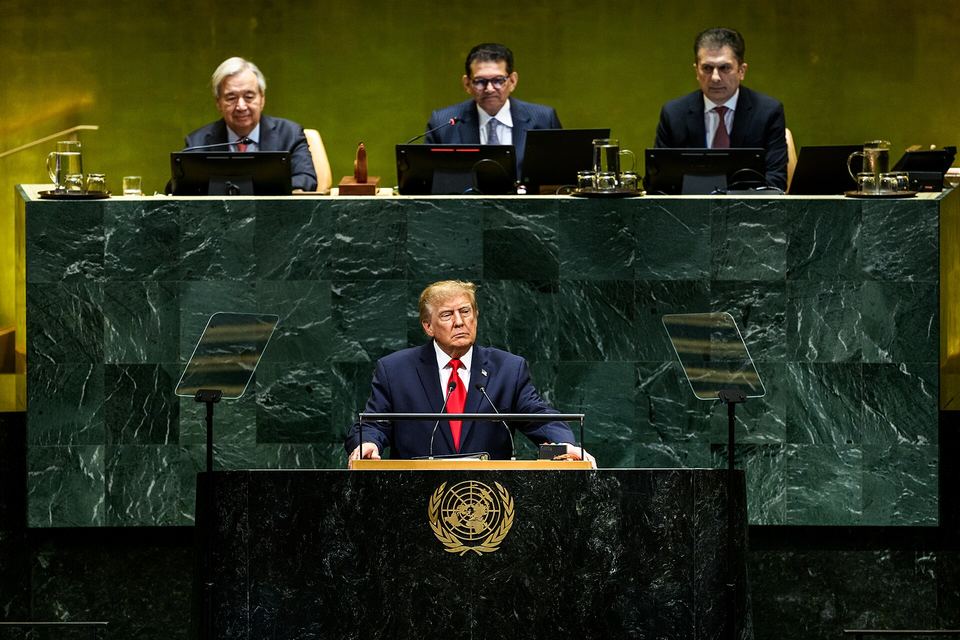
Image: President Donald J. Trump delivers remarks to the 81st session of the United Nations General Assembly by Daniel Torok (The White House), Public domain.