
Key Takeaways
- Turnout reached 64.89 per cent by 6 p.m., exceeding the comparable 2023 figure of 51.93 per cent.
- The student-led “Students Win” list challenged Vučić’s coalition after nearly two years of protests.
- Final Ipsos and NSPM polls conflicted, while official RIK results were still pending.
A country voting like never before
Serbia voted today in a snap parliamentary election that has become a referendum on Aleksandar Vučić's 14 years in power — and voters turned out in numbers not seen in years.
According to the Republic Electoral Commission (RIK), turnout reached 56.38 per cent by 4 p.m. and 64.89 per cent by 6 p.m. — far above the 51.93 per cent recorded at the same point in 2023. The observer group CRTA put turnout at 67.8 per cent by 7 p.m.
A total of 6,451,292 citizens were eligible to vote at 8,392 polling stations, choosing among 18 electoral lists and 2,418 candidates for the 250-seat parliament. Polls ran from 7 a.m. to 8 p.m.
The challengers: a student list
Vučić's main opponent is not a traditional party at all. The "Students Win" list, led by cardiologist Ilija Srdanovic, fields 250 largely unknown candidates — professors, actors and farmers — born out of nearly two years of student-led protests.
The protests began after the collapse of a railway station canopy in Novi Sad killed 16 people, and grew into a nationwide movement against corruption. Vučić resigned as president on September 27 in order to run for prime minister.
Too close to call
The final polls flatly disagreed. An Ipsos survey (October 20–22, commissioned by Vučić's list) put "Aleksandar Vučić – United Serbia" at 47.4 per cent against 40.0 per cent for the Student List. An NSPM poll had the students ahead, 44.5 to 42.7.
CRTA reported voter pressure at 29 per cent of polling stations. Official results from RIK were still to come as the count got underway.
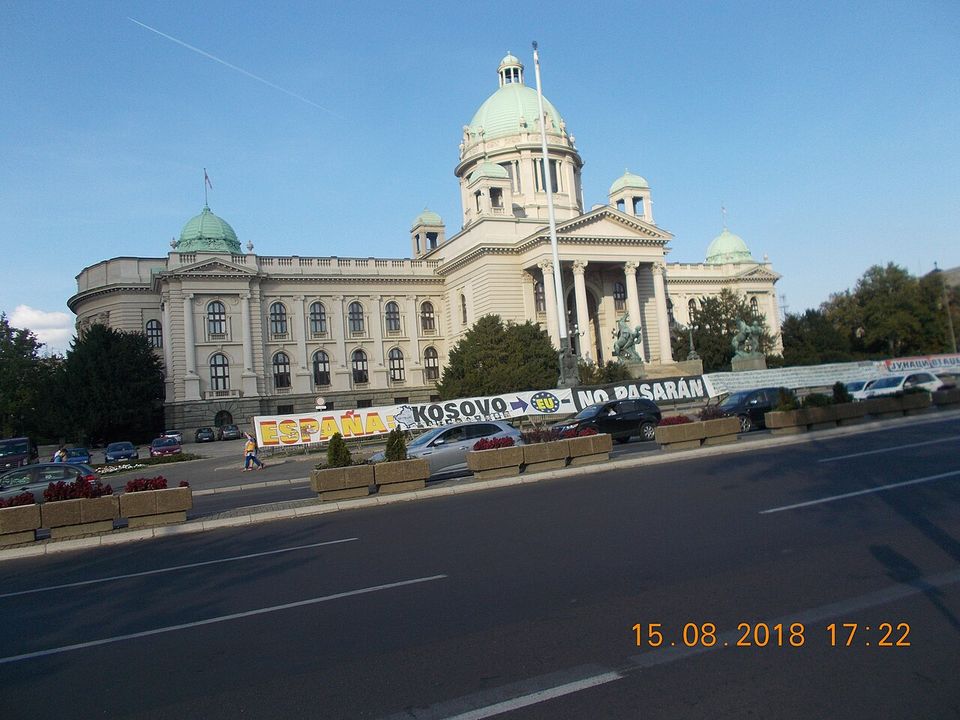
Photo: Rudolph A. Furtado / Wikimedia Commons (CC0) — the House of the National Assembly of Serbia in Belgrade.