
Key Takeaways
- An eSIM is an industry-standard digital SIM on a built-in chip, activated by download or QR code — and every major Canadian carrier and flanker brand offers one
- New iPhones sold in Canada are now eSIM-only: the iPhone 17 family dropped the SIM tray in Canada, while iPhone 16 and earlier Canadian models still have one
- Since June 2026 the CRTC has banned activation fees, but it is now examining replacement charges including a $15 SIM/eSIM fee at TELUS
A SIM card that isn't a card
Imagine you land in a foreign country and want to get online without paying roaming charges or hunting for a tiny piece of plastic. What if your phone could just switch to a local network with a few taps — no SIM card, no store visit, no waiting? That's what an eSIM does.
An eSIM — short for embedded SIM — is, in TELUS's words, "an industry-standard digital SIM that allows you to activate a cellular plan… without having to use a physical SIM card." The SIM's job (proving to the network that your phone is yours) is done by a chip built into the phone, programmed remotely when you scan a QR code, tap a notification, or set up through your carrier's app.
The standard is run by the GSMA, the mobile industry's standards body, whose consumer specification dates to 2016. One chip can hold several carrier profiles — Apple's current iPhones store eight or more eSIMs, with two active at once — and you can enable, disable, delete or swap profiles in settings.
Who offers it in Canada
Essentially everyone. Apple's official carrier page lists eSIM support for Bell, Rogers, Telus and Freedom Mobile, plus the flanker brands — Fido, Koodo, Virgin Plus, chatr, Fizz, Lucky Mobile, Public Mobile — and regional carriers including SaskTel, Eastlink and Videotron. Switching an existing line from a plastic SIM to an eSIM is self-serve at the big carriers, typically through their apps with an identity check.
Two numbers, one phone — and the traveller's trick
Dual SIM is where eSIM earns its keep. An iPhone can run a physical SIM plus an eSIM, and iPhone 13 and later can run two eSIMs at once: both lines stay live for calls and texts (only one can use data at a time), so a work and personal number can share one handset.
Travellers use the second slot differently: keep your Canadian line for calls and banking codes, and buy a local or travel eSIM for cheap data at the destination. Apple has leaned into this — recent iPhones will prompt you to switch the travel eSIM on when you land and your home line back on when you return.
The tray is disappearing — in Canada too
The US market went first: iPhones sold there have been eSIM-only since the iPhone 14. Canada kept the tray longer — Canadian iPhone 14, 15 and 16 models have both a tray and eSIM. That ended with the current generation: iPhone 17, 17 Pro, 17 Pro Max and 17e models purchased in Canada are eSIM-only, and Apple Canada's own buy page says the iPhone 17 "doesn't have a physical SIM tray and activates only using eSIM."
Fees, and the unlocking fine print
Moving to an eSIM is usually free through a carrier app, but the details vary: Freedom Mobile, for example, issues a new eSIM QR code once per billing cycle and allows three on-device transfers per cycle, and charges may apply for an additional printed QR code.
The wider fee picture is in flux. The CRTC banned activation and connection fees effective June 12, 2026 — and in June 2026 it opened a show-cause proceeding into replacement charges it suspects are the same fees renamed, including a $15 charge to buy a SIM card or eSIM at TELUS, a $40 device-handling charge at Bell and a $40 device-setup charge at Rogers. No final decision has been issued.
Unlocking has a new wrinkle too. Since December 2017, the Wireless Code has required phones sold in Canada to be sold unlocked, and free unlocking on request remains guaranteed. But in August 2026 the CRTC temporarily stayed the sold-unlocked rule industry-wide while it reviews the issue: for now, a phone may be sold locked provided it unlocks automatically within two business days of purchase.
The Twikup Take
The plastic SIM card survived thirty years; the eSIM replaces it with an account setting. The practical gains are real — instant carrier switching, a second line for travel, no tray to lose — but Canadians should watch the fee fight: the CRTC banned the activation fee, and the industry's answer, so far, has been to rename it.
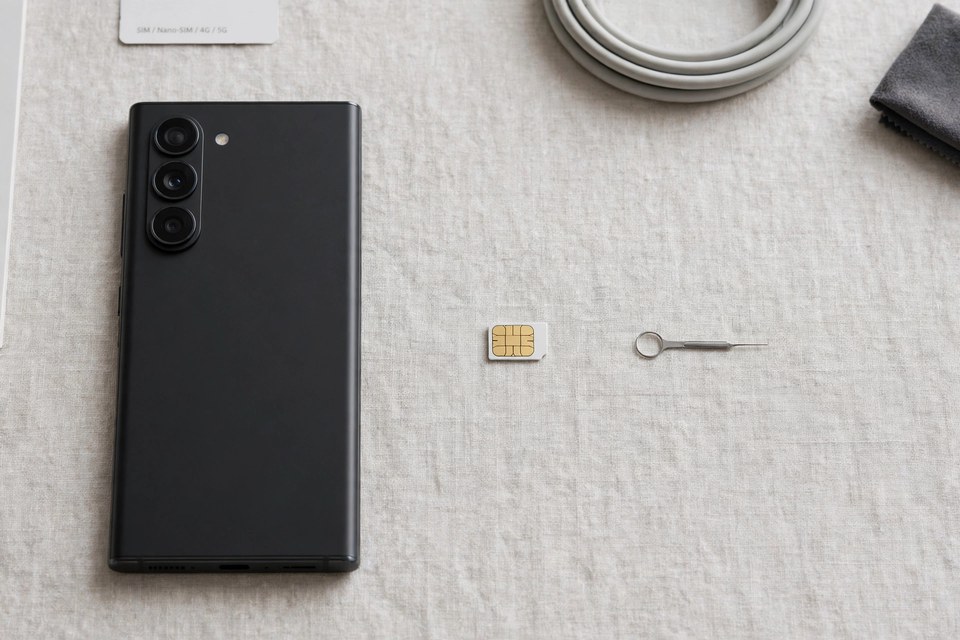
Image: Illustrative image.