
Key Takeaways
- Gimlet Labs is building cloud infrastructure designed specifically for AI-agent inference workloads.
- The company is developing systems that can use different AI hardware and optimize workloads across heterogeneous infrastructure.
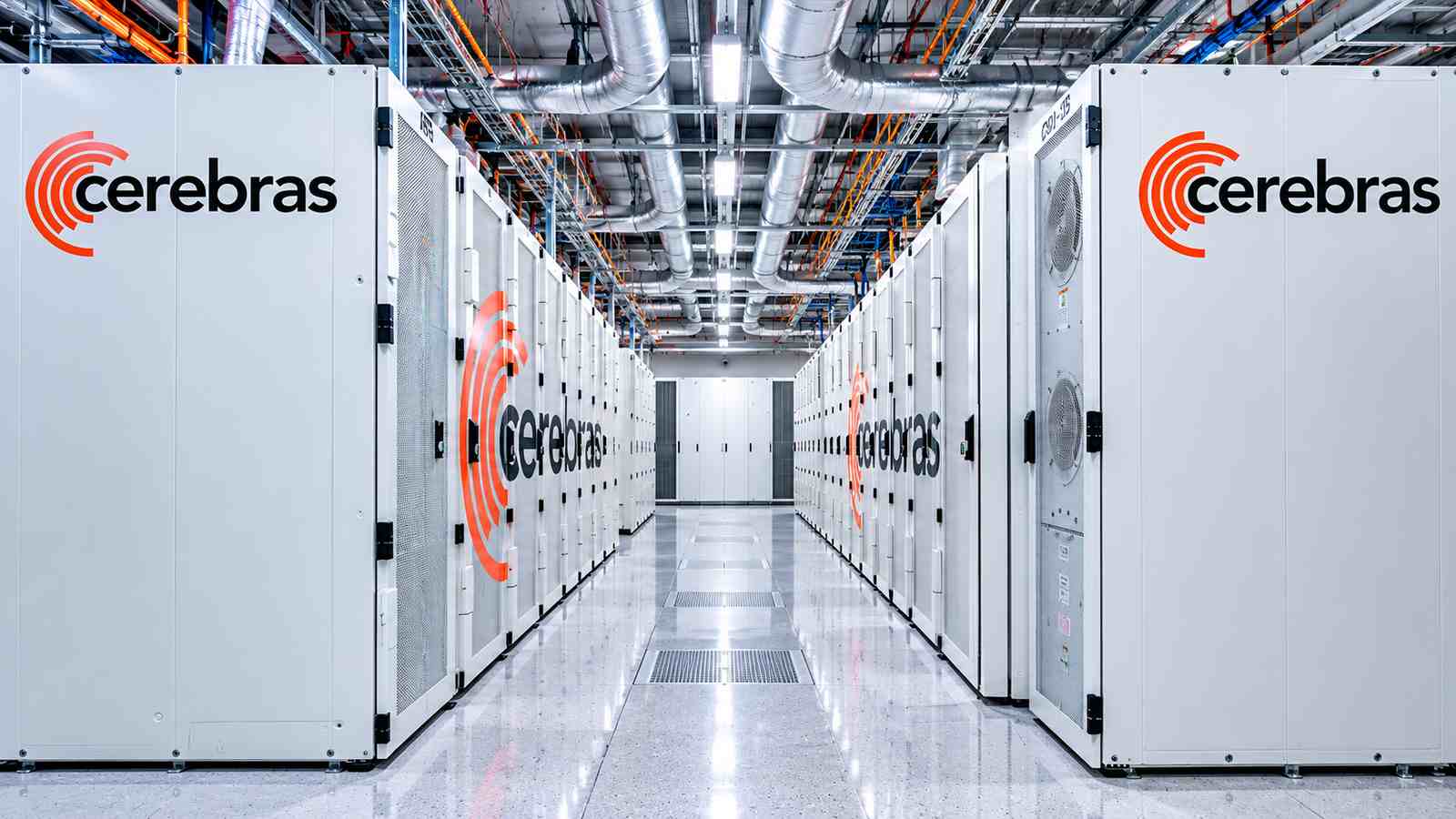
- Cerebras reported more than 600 MW of data-center capacity live or under contract as of June 30, 2026.
Gimlet Labs Expands AI Inference Cloud as Specialized Hardware Demand Grows
Gimlet Labs is expanding its infrastructure for AI inference as the San Francisco-based company develops cloud systems designed to support AI agents and complex multi-model workloads.
The company describes its platform as providing serverless inference for AI agents, allowing developers to run simple agents as well as more complex multi-agent systems with custom logic and data sources.
Gimlet Builds Infrastructure for AI Agents
Gimlet's technology is focused on improving how AI workloads are scheduled, orchestrated and optimized across computing infrastructure.
The company says its platform can handle scheduling and orchestration while allowing workloads to use different types of hardware. This approach is aimed at giving AI applications access to a broader pool of computing resources.
Gimlet's research also focuses on heterogeneous hardware, including systems that can automatically generate optimized kernels for different devices. The company says this can help AI workloads run efficiently across different computing platforms without requiring manual code changes.
$300 Million Series B Supports Expansion
Gimlet announced a $300 million Series B funding round on September 4, 2026. The round was led by Andreessen Horowitz and included investors such as Sapphire Ventures, Menlo Ventures, Arm, Samsung Ventures and Tiger Global Management.
The company said the funding would support its efforts to build infrastructure for the next generation of AI workloads.
Gimlet has also said it is scaling its managed heterogeneous infrastructure to hundreds of megawatts, highlighting the amount of computing capacity required as AI-agent workloads become more complex.
Cerebras Focuses on High-Speed AI Inference
Cerebras is developing specialized infrastructure aimed at accelerating AI inference, the computing process used to generate responses from AI models.
The company's CS-4 system, introduced in August 2026, is designed specifically around high-speed AI inference and large-scale deployment. Cerebras said the system combines its wafer-scale processors with redesigned rack and system architecture.
Cerebras has also been expanding its data-center footprint. In its second-quarter 2026 results, the company reported that data-center capacity live and under contract for delivery by the end of 2027 had increased to more than 600 MW.
Heterogeneous Infrastructure Becomes More Important
Gimlet's research emphasizes the challenges of running AI workloads across different types of processors and accelerators.
Its work includes dynamic data-center scheduling, hybrid edge and cloud workload partitioning, universal AI compilation and cost-aware optimization. These projects are designed to match workloads with suitable hardware while considering performance and infrastructure costs.
The company has also researched the use of specialized accelerators for inference. In March, Gimlet published research comparing SRAM-centric chips, including Cerebras, Groq and d-Matrix, with conventional GPU-based approaches.
TwikUp's Perspective
The development highlights a broader infrastructure shift within the AI industry. Instead of relying on a single type of processor, companies are increasingly exploring systems that can combine different hardware platforms according to the requirements of individual workloads.
For Gimlet, this approach is central to its AI-agent infrastructure strategy. Its research focuses not only on computing hardware but also on the software layer needed to schedule, optimize and move workloads efficiently.
The specific 100 MW Cerebras supply arrangement reported by Reuters on September 28 was not independently confirmed in the official Gimlet Labs or Cerebras sources reviewed for this article. Therefore, it should not be treated as a confirmed company-announced figure without a direct company statement.