
Key Takeaways
- This is the hub of Twikup's tech explainer series: plain-language guides to two-factor authentication, password managers, VPNs, QR codes, AI chatbots and 5G.
- Each explainer separates what the technology actually does from what marketing says it does.
- Newest in the series: how recommendation algorithms decide what you see, and how EV batteries really age.
Your Pocket Is Full of Magic That Isn't Magic
The devices and apps you use every day run on mechanisms that are genuinely clever — and genuinely explainable. This series takes one piece of everyday technology at a time and answers the only question that matters: what is it actually doing? No jargon, no marketing claims taken at face value.
Two-factor authentication: the second lock
A password is something you know, and it can be stolen without you noticing. Two-factor authentication adds something you have — your phone — so a stolen password on its own opens nothing. It's the single highest-value security change most people can make. Full guide: two-factor authentication explained.
Password managers: one password, done properly
The real risk isn't a weak password; it's the same password on fifty sites, so one breach unlocks everything. A password manager generates and remembers a unique password for every account, leaving you exactly one strong master password to protect. Full guide: password managers explained.
VPNs: what they do — and what they don't
A VPN encrypts your traffic and routes it through the provider's server, which hides your activity from your internet provider and the coffee-shop Wi-Fi — and that's roughly where the magic ends. It doesn't make you anonymous, and the VPN company can see what your ISP no longer can. Full guide: what a VPN actually does.
QR codes: a barcode with ambitions
A QR code is just a way to print data — usually a web address — in a pattern any camera can read. The code itself is harmless; the risk is entirely in where it sends you, which is why a sticker over a parking meter's real code is a scam worth knowing about. Full guide: how QR codes actually work.
AI chatbots: prediction, not understanding
A chatbot generates text by predicting, word by word, what should come next, based on patterns learned from enormous amounts of writing. That one mechanism explains both halves of its personality: the fluent confidence, and the ability to state something false in exactly the same tone. Full guide: how AI chatbots actually work.
5G: what's genuinely new
5G isn't one thing — it's new radio spectrum (including short-range, high-capacity millimetre waves), far denser networks of small antennas, and much lower delay between device and tower. The honest summary separates the real gains from the logo on your phone's status bar. Full guide: what 5G actually is.
Also in this series
How encryption scrambles your messages, how tap-to-pay sends tokens instead of your card number, how recommendation algorithms decide what fills your feeds, and how EV batteries are rated, charged and aged — the collection keeps growing.
The Twikup Take
Technology feels less magical and more manageable once you can name the mechanism. Every explainer in this series ends at the same place: you don't need to be an engineer — you just need someone to tell you what the thing is actually doing.
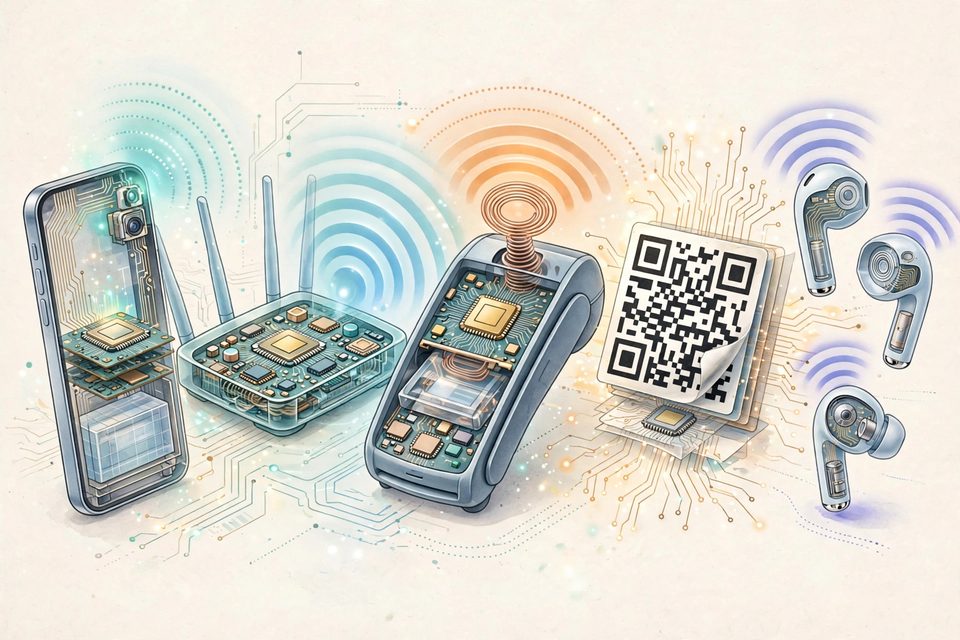
Image: Illustrative image.