
Key Takeaways
- Rated range is a lab figure not a promise in -7°C weather with the cabin heater on,real-world range can fall by about 41%& roughly 2/3of extra energy goes towards heating cabin.
- Charging runs from 40–50 hours on a household outlet to under an hour on a DC fast charger — which deliberately slows down after about 80% to protect the battery.
- Real-world data from more than 22,700 EVs shows batteries losing about 2.3% of capacity a year, and the standard battery warranty is 8 years or 160,000 km.
Your EV's Biggest Promise Comes With a Catch
It's a freezing January morning. Your electric car says you've got 400 kilometres of range. You turn on the heater, pull onto the highway, and watch that number start falling faster than expected.
Welcome to the difference between advertised range and real-world range.
Every EV's advertised range comes from standardized laboratory testing, not an actual road trip. In the US, vehicles are run through standardized cycles until the battery depletes. In Canada, NRCan uses a five-cycle procedure that includes cold-temperature and air-conditioning cycles.
But the published figure is still one combined laboratory number.
There's another detail most buyers miss: manufacturers don't even let you use the entire battery. Hidden buffers at the top and bottom protect the cells, meaning usable capacity is less than the nameplate capacity.
Winter Is Where Your Range Disappears
Cold weather is an EV's biggest range challenge.
US Department of Energy figures drawn from AAA's instrumented testing found that at −7°C (20°F), with the cabin heater running, range can drop by about 41%.
That's a serious difference.
But here's the surprising part: about two-thirds of the extra energy consumption goes toward heating the cabin.
A gasoline engine produces waste heat as it runs. An EV doesn't have that luxury. It has to draw energy from the same battery that powers the wheels.
With the heater off, cold alone costs only about 12% of range.
That's why preheating your car while it's still plugged in and using seat warmers are standard advice for winter EV driving.
Charging: Three Speeds, One Deliberate Slowdown
Not all charging is created equal. EVs generally have three charging options, and each serves a different purpose.
A household outlet, known as Level 1 charging, adds a few kilometres of range per hour. A full charge can take 40–50 hours. Think of it as a top-up tool rather than your primary charging solution.
Level 2 is where home charging gets practical. Using a 240-volt setup, it typically takes roughly 4–10 hours to charge, making overnight charging possible.
Then there's DC fast charging.
This is the road-trip option. It bypasses the car's onboard charger and can add 100–200+ miles in 30 minutes.
But there's a catch.
Why Charging Slows Down at 80%
Ever noticed that an EV charges quickly at first but slows dramatically as it approaches a full battery?
That's intentional.
The battery management system gradually reduces the charging current as cell voltage approaches its safe ceiling. This limits heat and stress on the battery.
The US Department of Energy explains it clearly: with DC fast charging, "the rate of charge decreases when a vehicle's battery is approximately 80% full. This practice helps optimize battery life."
The final 20% can take as long as the first 80%.
That's why experienced EV drivers plan road-trip charging around 10–80% stops rather than waiting for a completely full battery.
How Long Do EV Batteries Actually Last?
Here's where things get interesting.
The best real-world answer comes from telematics firm Geotab's analysis of more than 22,700 EVs.
Its findings show average battery capacity loss of about 2.3% per year, projecting to roughly 82% of original capacity after eight years.
That's fleet data published by the company, not a peer-reviewed study — but it's the largest measured sample available.
And how you charge matters.
Vehicles that fast-charged rarely degraded at about 1.5% a year. Heavy high-power fast-charging pushed degradation to 3.0% a year.
The US Department of Energy's own modelling suggests 12–15 years of battery life in moderate climates.
Your EV Battery Probably Won't Suddenly Die
Here's something many prospective EV buyers worry about: waking up one morning to discover their expensive battery is finished.
That's generally not how battery degradation works.
Capacity fades gradually. At 80% capacity, the car works exactly as before, just with 80% of its original range.
Manufacturers typically warrant the battery for 8 years or 160,000 km, often with a 70%-capacity floor. The battery pack is generally designed to last the life of the vehicle.
The honest summary?
You probably won't wake up to a dead EV battery. You'll watch its range gradually get shorter, year by year, like everything else that ages.
The Twikup Take
An EV battery isn't quite like the one in your phone. Think of it more like a pair of boots: it wears in gradually, predictably, and mostly according to how you treat it.
The biggest lesson isn't that EV batteries wear out. It's that how you charge them, where you drive them and how you manage winter conditions can make a meaningful difference.
Range anxiety fades; charging habits are forever.
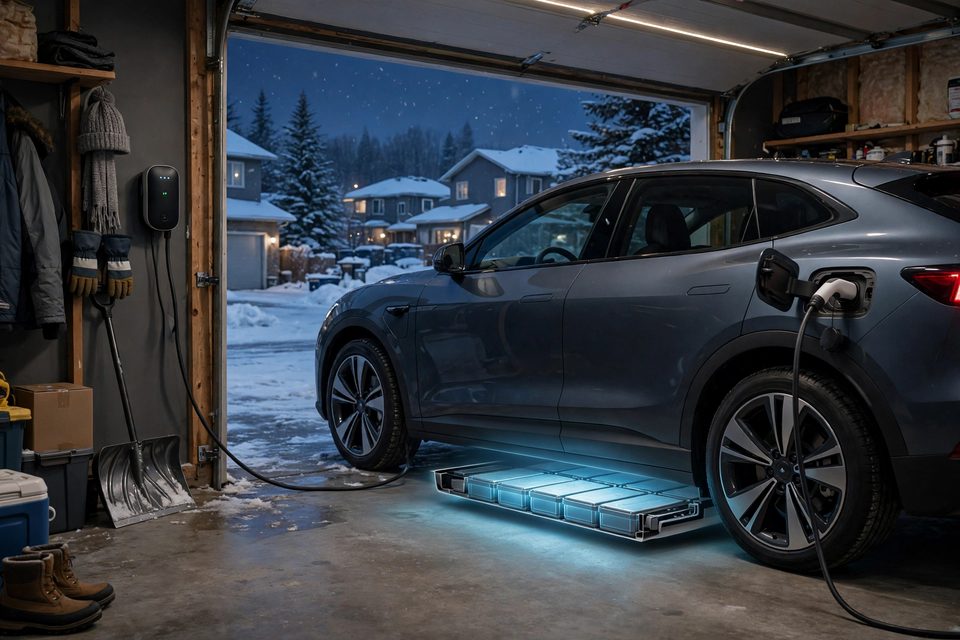
Image: AI-generated illustration.