
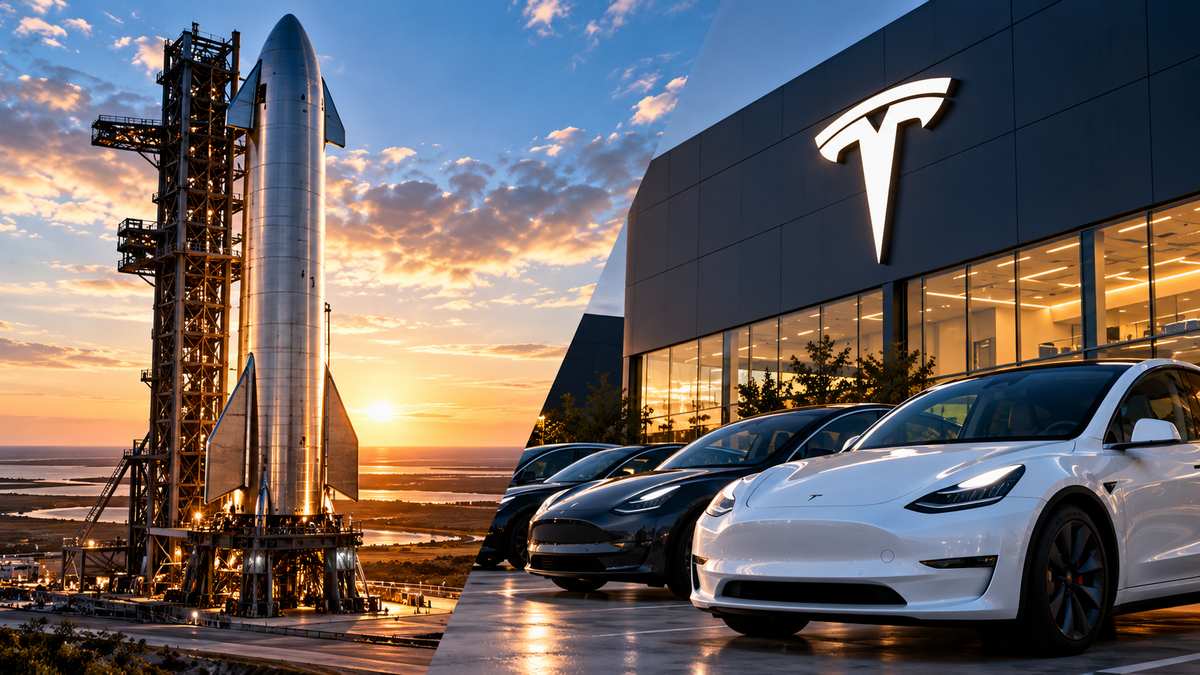
Key Takeaways
- A potential Tesla and SpaceX merger could combine electric vehicles, aerospace, satellite communications and AI infrastructure.
- Independent board committees and shareholder approval are important hurdles before a transaction could proceed.
- No final merger terms or exchange ratio have been confirmed in the sources reviewed.
Tesla and SpaceX Merger Talks Could Reshape Musk’s Technology Empire
What happens when an electric vehicle company and a major space technology business consider joining forces? Tesla and SpaceX are exploring a potential merger that could bring transportation, rockets, satellite communications and artificial intelligence under one corporate structure.
The discussions reflect the growing overlap between Elon Musk’s businesses. Tesla has expanded its focus beyond electric vehicles into autonomous driving, robotics and energy storage, while SpaceX has developed its Starlink satellite network and expanded its artificial intelligence infrastructure.
Why Would Tesla and SpaceX Consider a Merger?
A combined business could connect Tesla’s manufacturing capabilities and energy technology with SpaceX’s launch systems, satellite services and computing infrastructure. Supporters of the idea may see opportunities to share technology, coordinate investment and develop new products across multiple industries.
However, potential advantages do not automatically make a merger financially attractive. Tesla shareholders would need to assess the proposed valuation, the exchange terms and the benefits they would receive in the combined company.
Shareholder Approval Remains a Major Hurdle
Any transaction would face important governance questions. Special committees have been established to examine the potential combination, while the companies would need to resolve the terms before a deal could advance.
The final structure matters because Tesla and SpaceX have different businesses, investors and financial risks. Shareholders would need enough information to judge whether exchanging their interests would serve their financial interests.
Regulatory scrutiny and questions about conflicts of interest could also influence the process, particularly because Musk leads both companies.
TwikUp’s Perspective
The biggest question is not simply whether these businesses can work together, but how the value would be divided. A merger could create strategic opportunities, yet the exchange ratio, voting rights and governance safeguards would determine how those opportunities translate into shareholder value. Until formal terms are published, the proposal remains a possibility rather than a completed transaction.